Flaky Scalp Treatment in Seoul
Flaky Scalp Treatment in Seoul
Flaky scalp treatment in Seoul can range from gentle scalp cleansing and hydration-focused care to dandruff treatment and dermatological evaluation. The appropriate option depends on why the scalp is flaking.
Small flakes may be caused by dry skin, dandruff, product irritation, or changes in the scalp environment. Persistent or heavy flaking can also be associated with conditions such as seborrheic dermatitis, psoriasis, eczema, or fungal infections. Because these conditions can look similar, persistent symptoms may require professional evaluation.
What Causes a Flaky Scalp?
A flaky scalp is a symptom rather than a specific diagnosis. Understanding the possible cause helps determine what type of treatment may be appropriate.
Common causes include:
- Dry scalp: Loss of moisture can lead to fine flakes, tightness, and mild itching.
- Dandruff: A common scalp condition that produces visible flakes and may cause itching.
- Seborrheic dermatitis: Can cause flaky or greasy scales along with inflammation and itching.
- Hair-product irritation: Shampoo, styling products, or hair dye can irritate the scalp.
- Psoriasis or eczema: These inflammatory conditions can affect the scalp and cause persistent scaling.
- Fungal infections: Some infections can produce scaling and may require medical treatment.
Dandruff and dry scalp can appear similar, but they are not necessarily the same problem. Dandruff is often associated with oily skin or seborrheic dermatitis, while simple dry scalp can be related to loss of moisture or irritating hair-care products.
What Is Flaky Scalp Treatment in Seoul?
Flaky scalp treatment depends on the underlying cause.
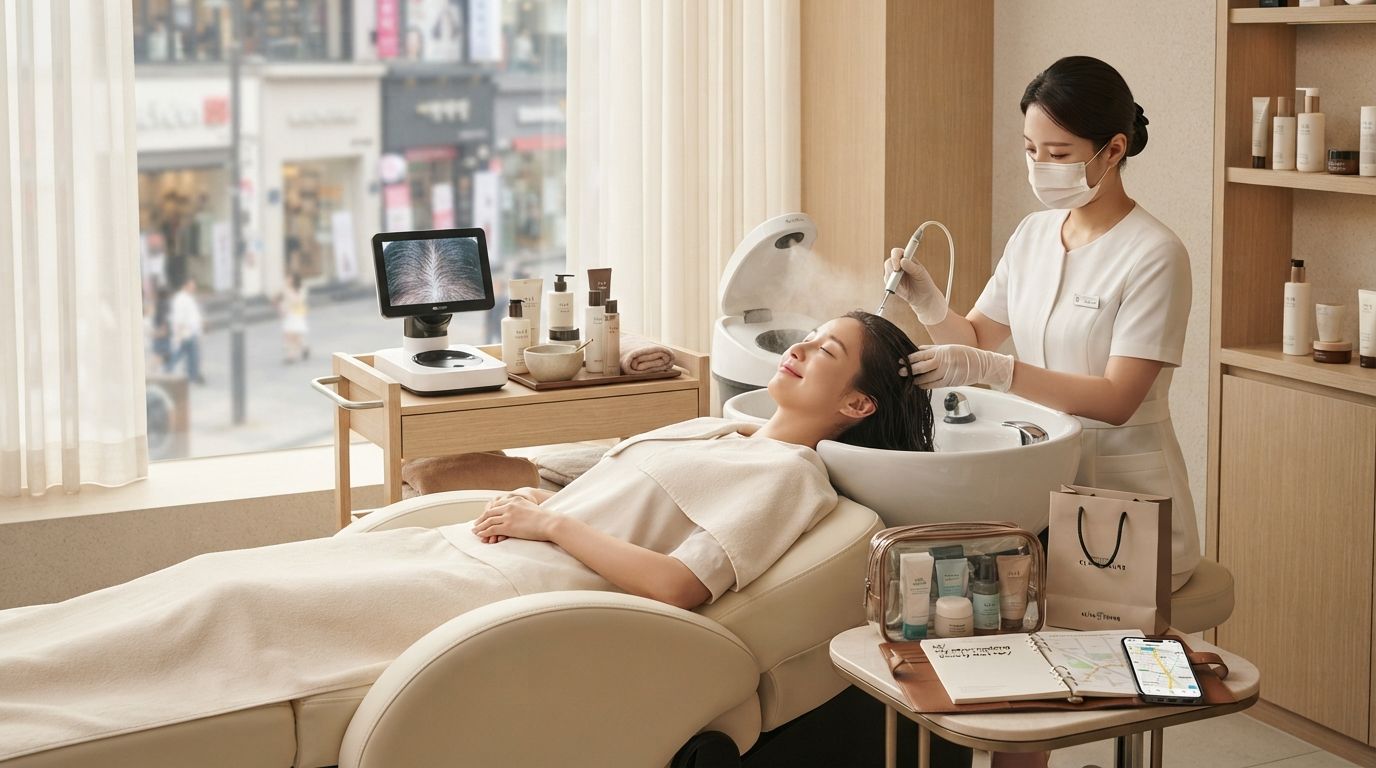
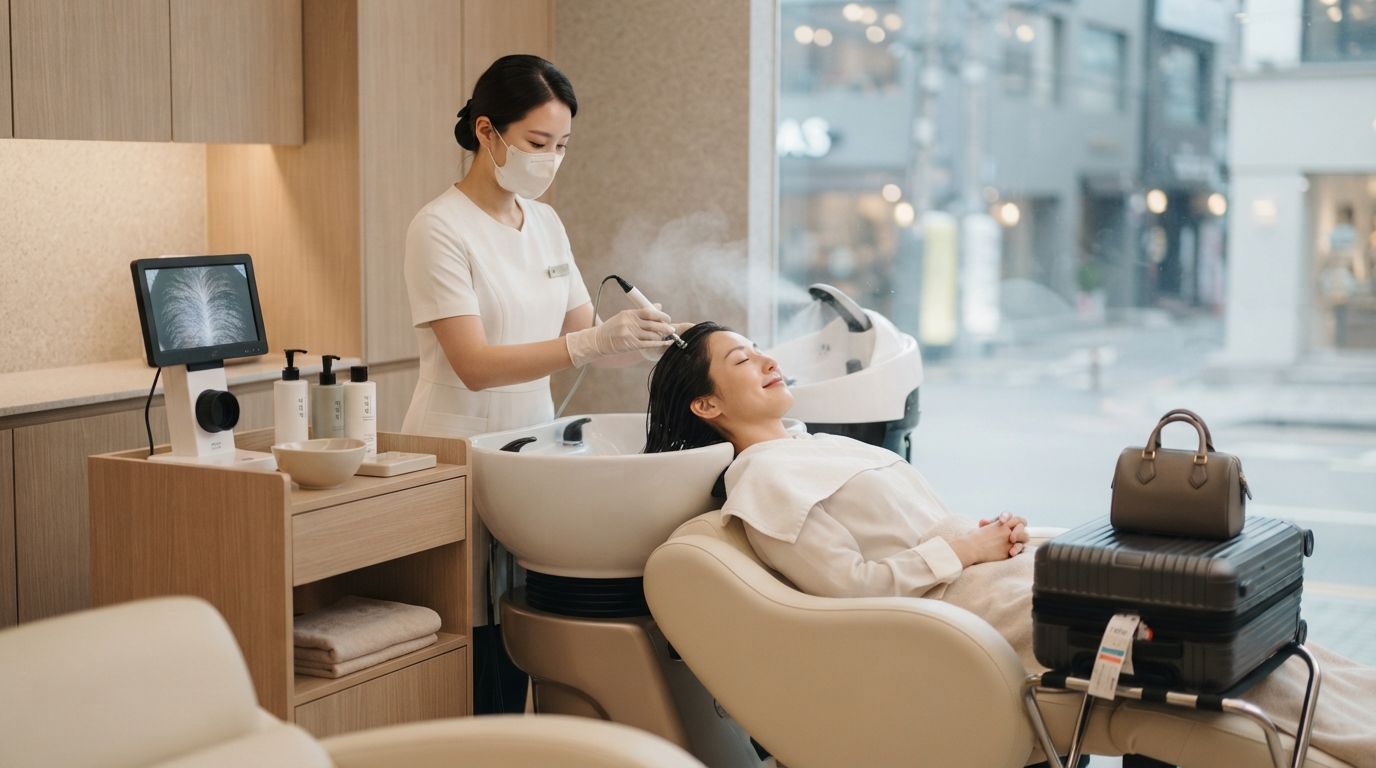
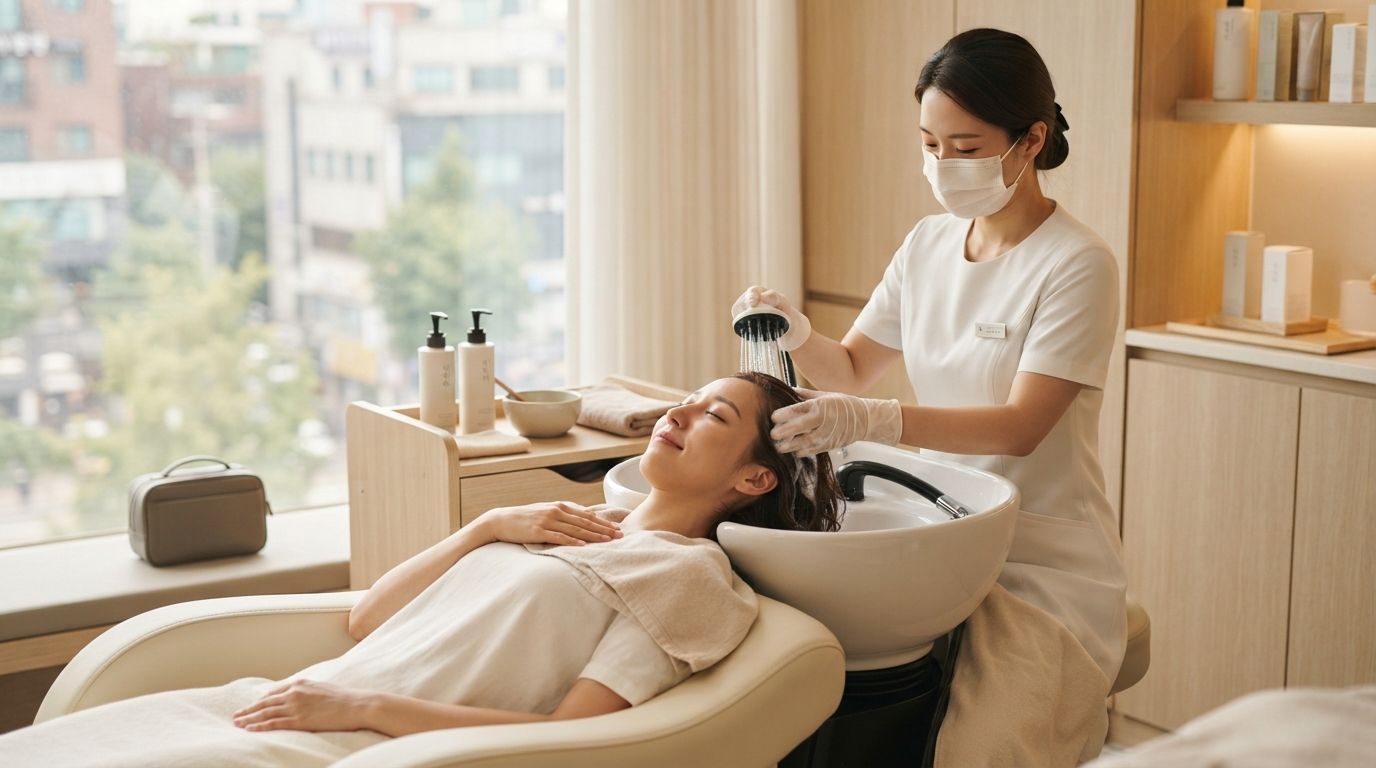
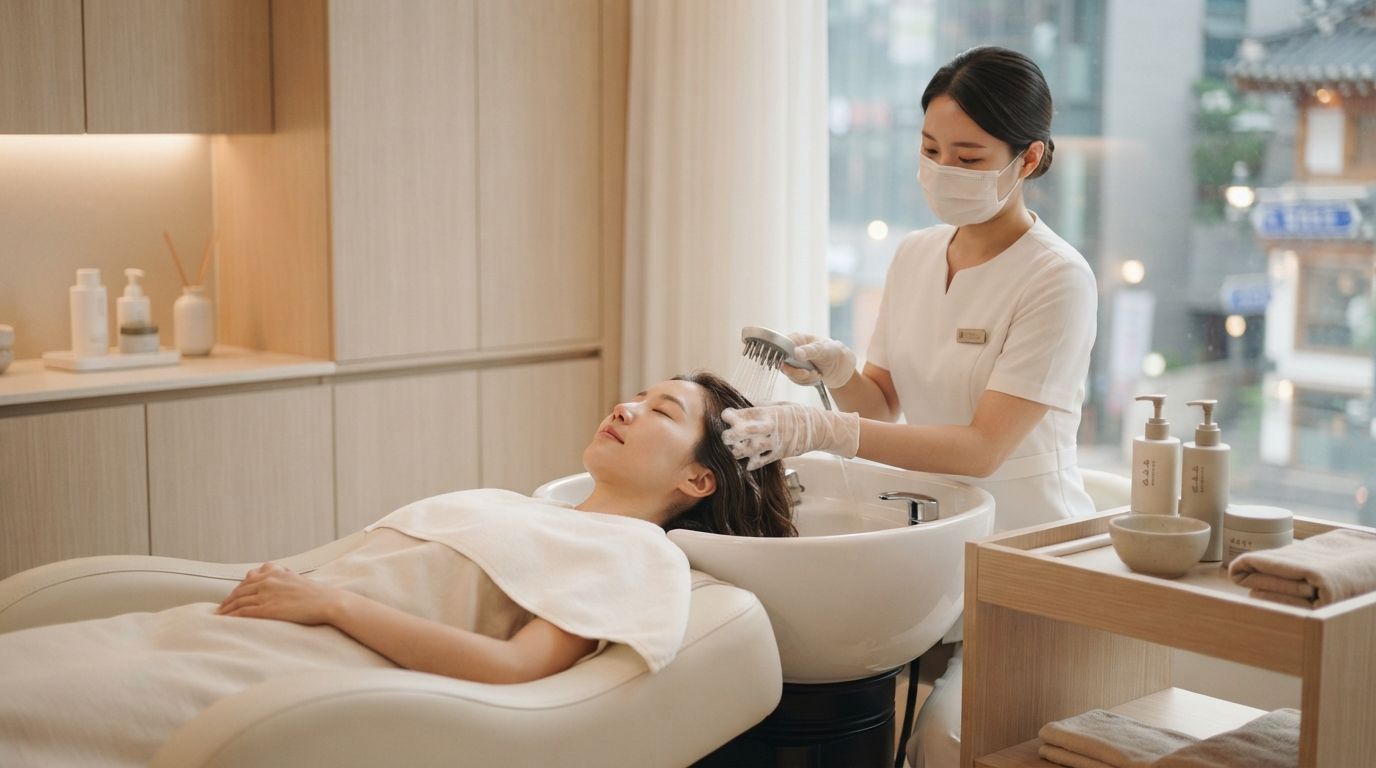
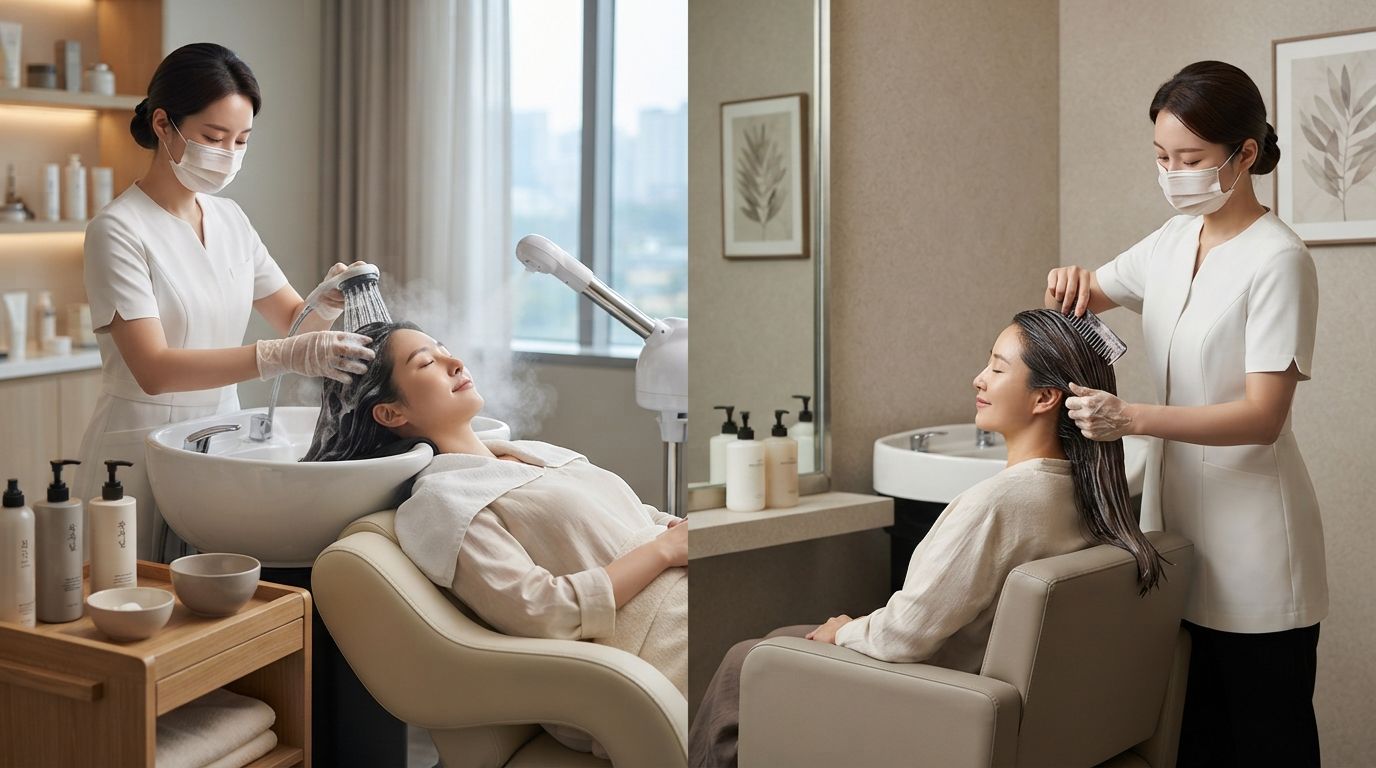
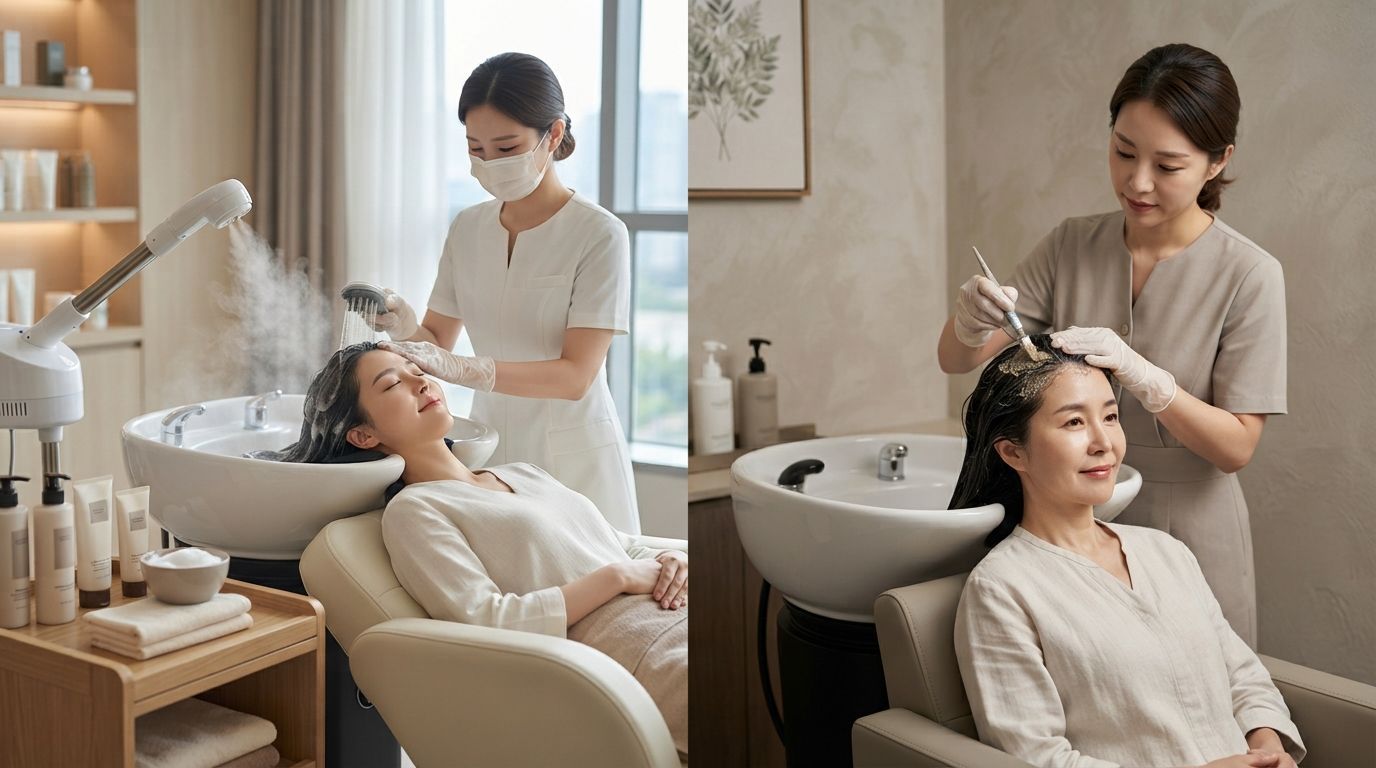
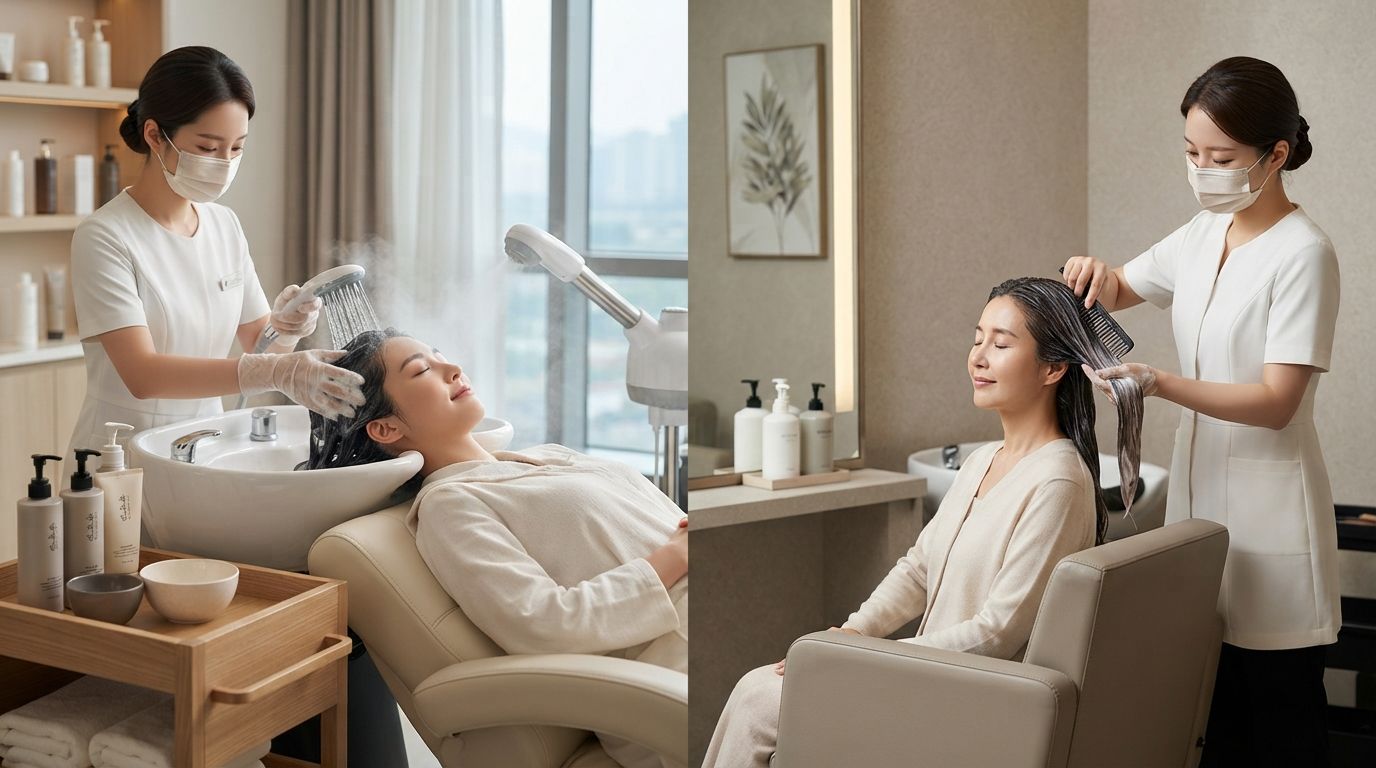
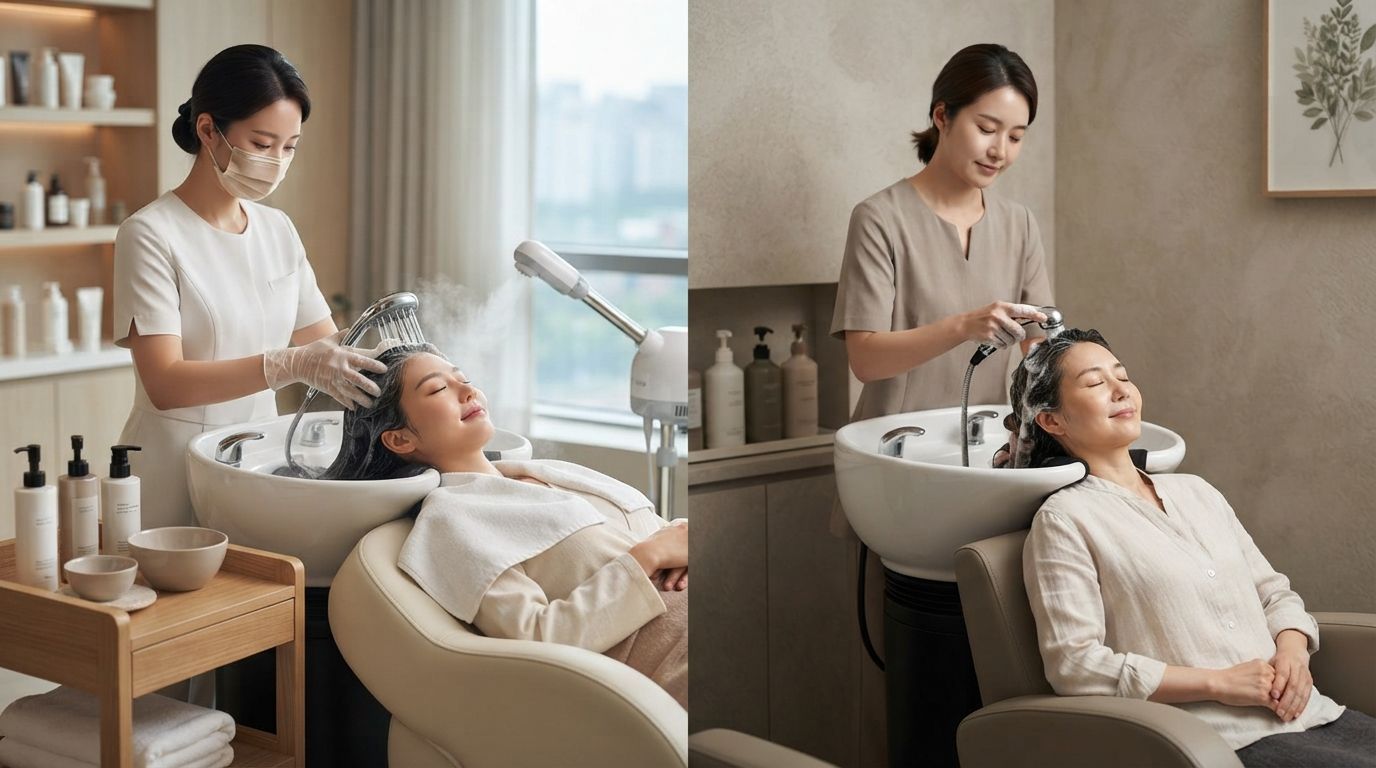
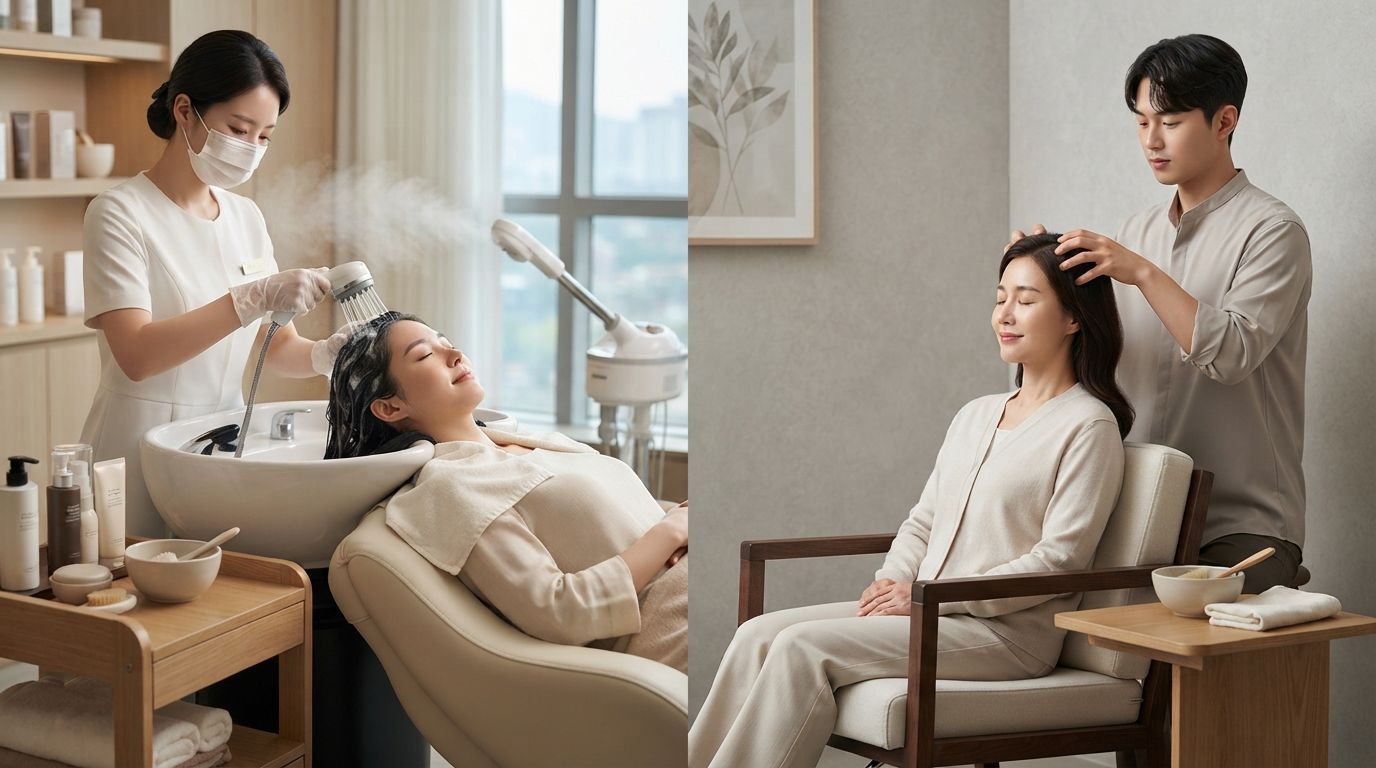
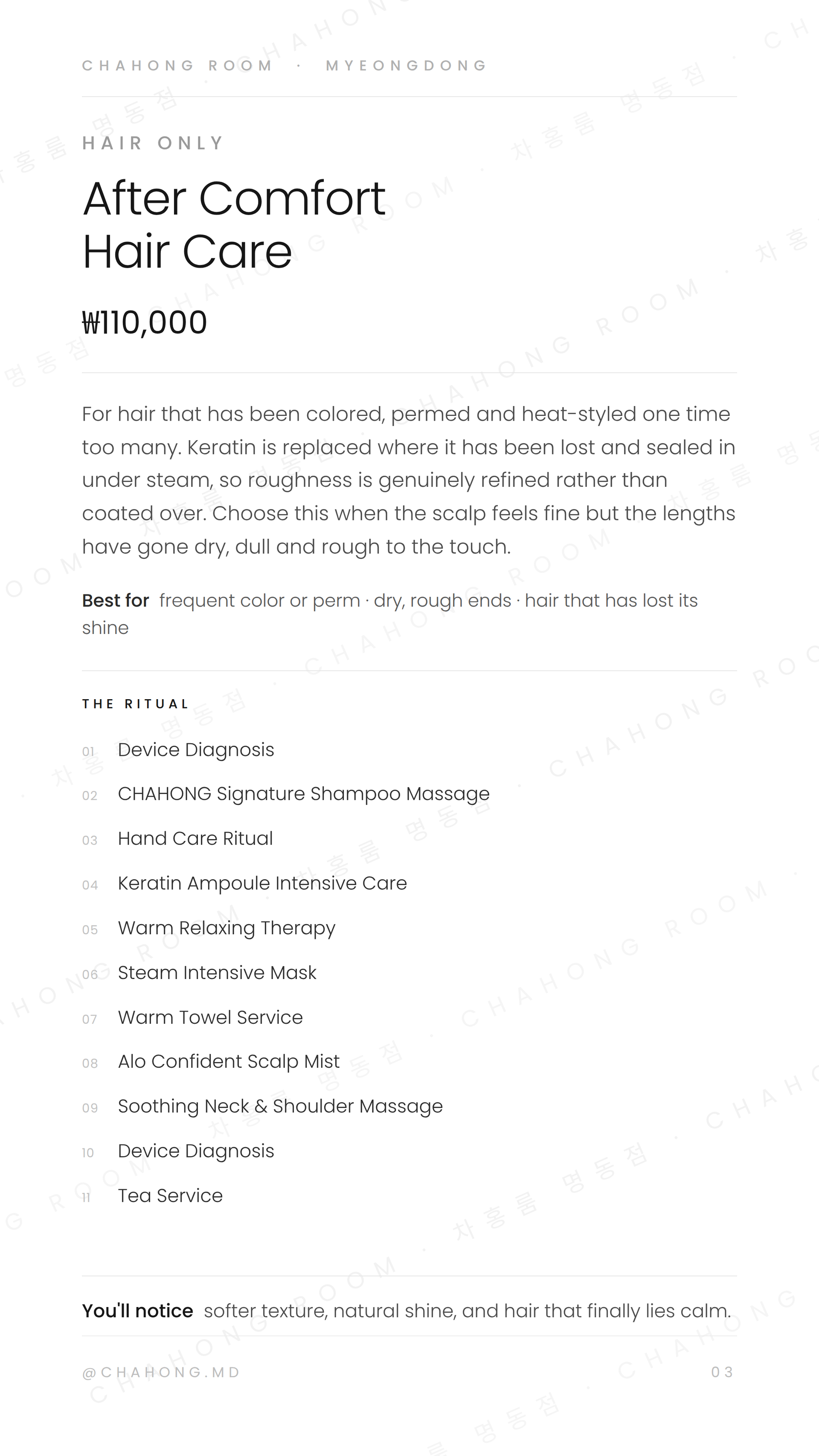
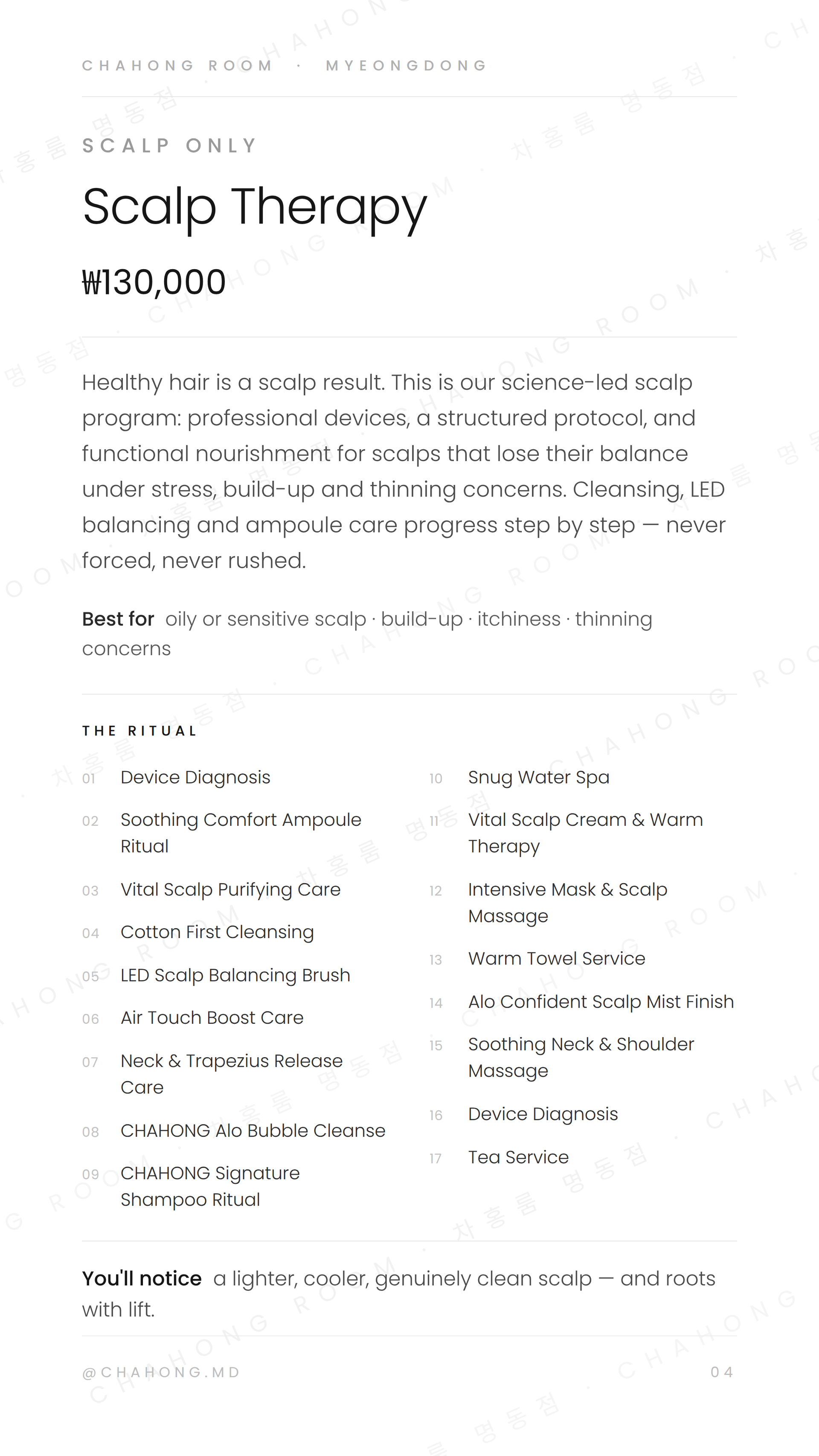
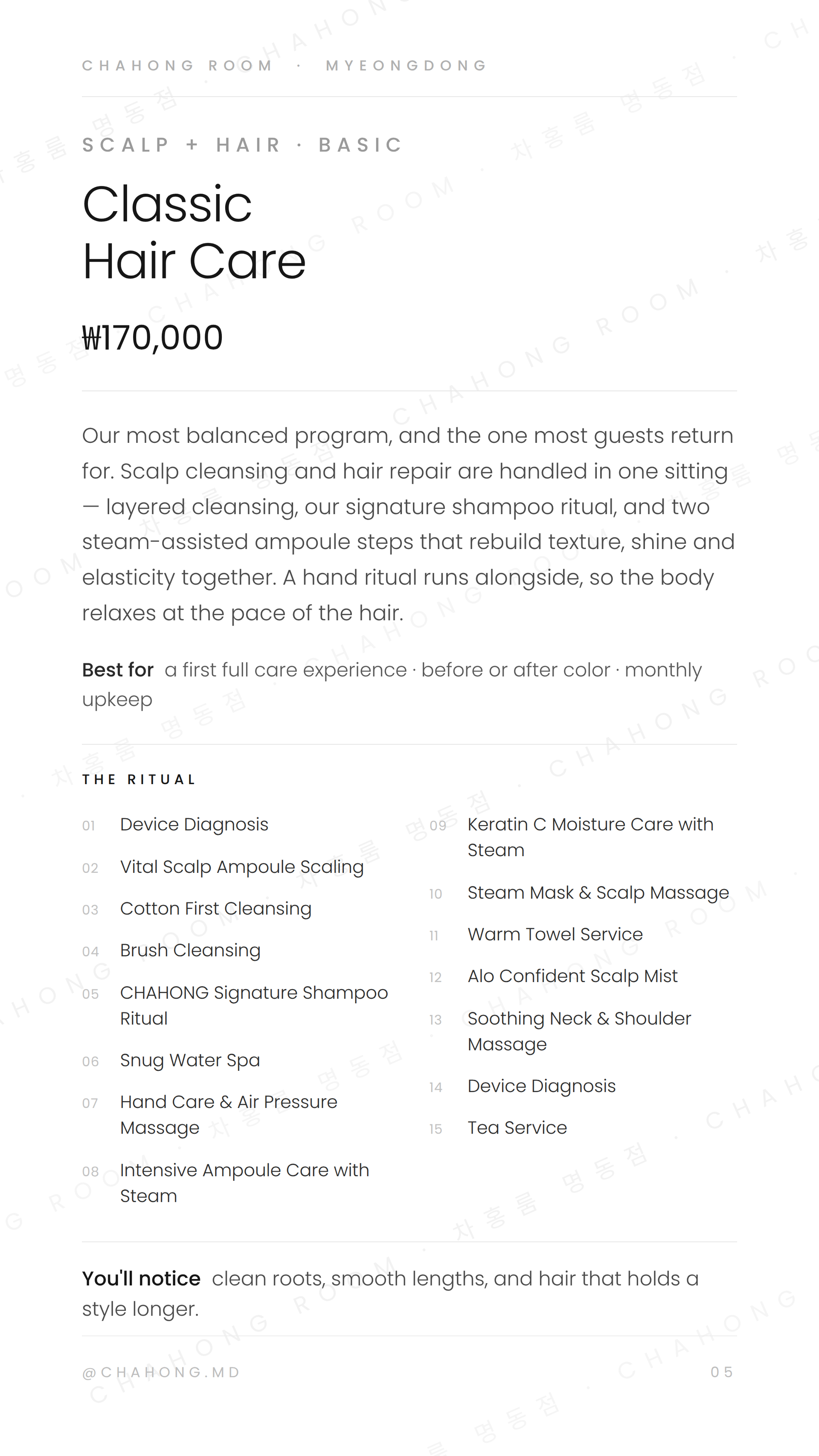
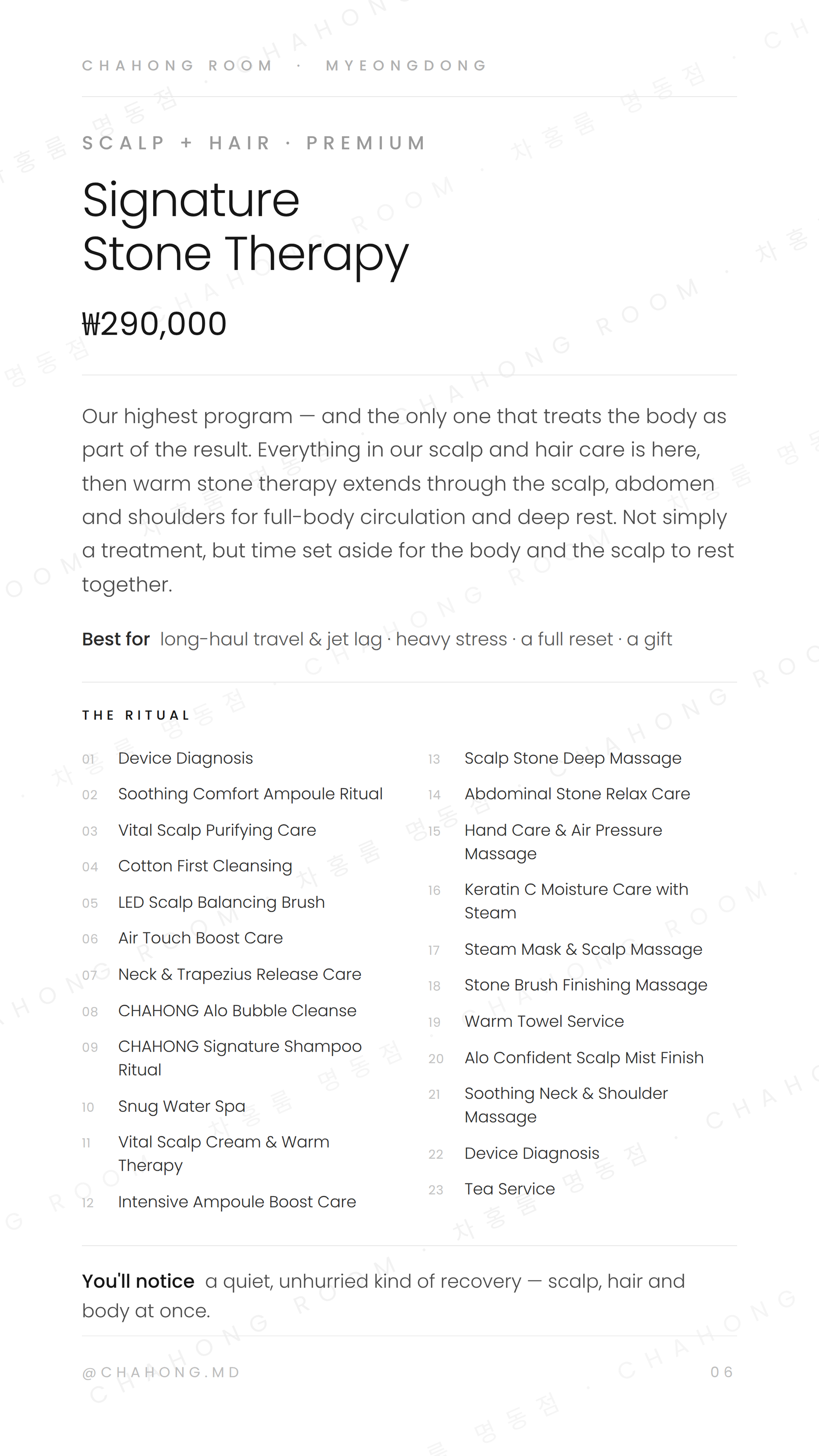
For mild dryness or surface buildup, a professional scalp-care or Korean head spa session may involve gentle cleansing, hydration, soothing products, and scalp massage.
For recurring dandruff or suspected scalp disease, medical evaluation may be more appropriate. A dermatologist can examine the scalp and determine whether the flaking is consistent with dandruff, seborrheic dermatitis, psoriasis, eczema, infection, or another condition.
What Happens During a Scalp Treatment?
A cosmetic scalp treatment in Seoul may include several steps.
Scalp Assessment
The scalp may first be examined for visible flakes, dryness, oiliness, and buildup. This helps determine whether a gentle cleansing or hydration-focused treatment is suitable.
Gentle Cleansing
A cleansing step removes sweat, excess oil, and product residue. Thorough rinsing is important because leftover shampoo or cleanser can irritate the scalp.
Scalp Exfoliation
Some scalp treatments include exfoliation to loosen surface buildup and flakes. This should be performed gently, particularly when the scalp is sensitive or inflamed.
Hydration and Soothing Care
Moisture-supporting products may be applied when dryness contributes to flaking or scalp discomfort.
Scalp Massage
A head spa may include massage as part of the treatment. This can make the experience relaxing, but massage itself should not be considered a treatment for an underlying scalp disorder.
Finishing Care
The session may finish with conditioning, drying, and recommendations for maintaining the scalp at home.
Flaky Scalp Treatment vs. Dandruff Treatment
Although the symptoms can overlap, the two approaches are not identical.
Scalp-care treatment may be suitable when:
- Flaking is mild
- The scalp feels dry or tight
- There is little inflammation
- Symptoms may be related to product buildup
- You want hydration and gentle cleansing
Dandruff-focused treatment may be more appropriate when:
- Flakes repeatedly return
- The scalp is also oily
- Itching accompanies the flaking
- Symptoms continue despite changing your hair-care routine
- There are signs consistent with seborrheic dermatitis
For mild dandruff, dermatologists may recommend specially formulated dandruff shampoos. Depending on the product, active ingredients can include substances such as ketoconazole, selenium sulfide, salicylic acid, sulfur, or zinc pyrithione.
Can a Korean Head Spa Help a Flaky Scalp?
A Korean head spa may help when flakes are associated with mild dryness, surface buildup, or an unsuitable cleansing routine.
The potential benefits can include:
- Gentle scalp cleansing
- Removal of surface buildup
- Hydration-focused care
- Temporary improvement in scalp comfort
- Relaxation through scalp massage
However, a head spa should not be considered a universal treatment for scalp flaking. If the flakes are caused by an inflammatory condition, infection, or persistent seborrheic dermatitis, cosmetic scalp care may not address the underlying cause.
How Long Does Flaky Scalp Treatment Take?
Treatment duration varies according to the type of service.
A basic scalp-care session may focus on cleansing and hydration, while a more comprehensive head spa can include scalp analysis, cleansing, exfoliation, treatment application, massage, and finishing care.
Before booking, ask:
- How long does the treatment take?
- Is scalp analysis included?
- Is exfoliation part of the service?
- Is hydration treatment included?
- Is the treatment suitable for sensitive scalps?
- What products are used?
If you are seeking medical treatment rather than cosmetic scalp care, also confirm whether a dermatologist or other qualified medical professional performs the assessment.
How Often Should You Treat a Flaky Scalp?
There is no universal schedule. Frequency depends on the cause of the flaking, scalp sensitivity, hair type, lifestyle, and treatment being used.
For mild dryness, occasional professional scalp care may be enough when combined with an appropriate home routine.
If flakes continue to return despite regular care, increasing the frequency of exfoliation or cleansing may not solve the problem. Recurrent symptoms can be a reason to seek professional evaluation.
Flaky Scalp Care at Home
Simple habits may help reduce irritation and flaking:
- Use a gentle shampoo if your scalp is dry or sensitive.
- Rinse shampoo and conditioner thoroughly.
- Avoid very hot water.
- Avoid aggressive scratching.
- Do not over-exfoliate the scalp.
- Stop using a product if flaking or irritation began after introducing it.
- Follow the instructions when using a dandruff shampoo.
- Give medicated shampoo enough contact time when the product instructions require it.
For dandruff, washing frequency should also take hair type and scalp oiliness into account.
When Should You See a Dermatologist?
Consider professional evaluation if flaky scalp symptoms are persistent, severe, or accompanied by other changes.
Important signs include:
- Significant redness or inflammation
- Severe or persistent itching
- Thick scales or plaques
- Sores, crusting, or oozing
- Burning or pain
- Patches of unexplained hair loss
- A spreading rash
- Symptoms that repeatedly return despite appropriate scalp care
A dermatologist can distinguish dandruff from other scalp conditions and develop treatment according to the diagnosis.
Flaky Scalp Treatment for International Visitors in Seoul
International visitors may encounter several types of scalp services in Seoul, including Korean head spas, scalp-care programs, and medical dermatology clinics.
Before booking, determine whether you need:
Cosmetic scalp care: Suitable for cleansing, hydration, relaxation, and mild scalp discomfort.
Medical evaluation: More appropriate when persistent flaking is accompanied by inflammation, severe itching, sores, or hair loss.
If you are visiting Seoul temporarily, it can also be useful to ask about English-language assistance, treatment duration, aftercare, and whether follow-up is available if symptoms continue.
Benefits and Limitations
Appropriate flaky scalp care may provide:
- Cleaner-feeling scalp
- Reduced surface buildup
- Improved scalp comfort
- Temporary reduction in visible flakes
- Hydration and relaxation
However, cosmetic treatment does not necessarily treat the underlying cause of recurring flaking. Medical conditions may require targeted treatment such as medicated shampoos or other therapies recommended by a dermatologist.
Conclusion
Flaky scalp treatment in Seoul can include gentle cleansing, hydration-focused scalp care, Korean head spa treatments, dandruff-focused care, or medical dermatological treatment depending on the cause.
Mild dryness or surface buildup may improve with appropriate scalp care, while persistent flaking, inflammation, severe itching, thick scaling, or hair loss should be evaluated professionally. Identifying the reason for the flakes is more important than simply choosing a stronger or more frequent scalp treatment.
Frequently Asked Questions
What is the best treatment for a flaky scalp?
There is no single treatment for every flaky scalp. Treatment depends on whether the cause is dryness, dandruff, product irritation, seborrheic dermatitis, psoriasis, eczema, or another condition.
Can a Korean head spa remove scalp flakes?
A head spa can help cleanse the scalp and remove some surface buildup and loose flakes. It may improve comfort but does not necessarily treat the medical cause of recurring flaking.
Is a flaky scalp always dandruff?
No. Dry scalp, product irritation, eczema, psoriasis, seborrheic dermatitis, and other conditions can also cause flaking.
Should I exfoliate a flaky scalp?
Gentle exfoliation may help with surface buildup in some situations, but aggressive or frequent exfoliation can irritate the scalp. It is particularly important to be cautious if the scalp is red, painful, or inflamed.
Can dandruff shampoo help a flaky scalp?
It can help when dandruff or seborrheic dermatitis is responsible for the flakes. Different dandruff shampoos contain different active ingredients, so follow the product directions or professional recommendations.
When should I see a dermatologist for scalp flakes?
Seek professional evaluation if flaking is persistent or severe, or if it occurs with significant redness, intense itching, sores, thick scaling, or unexplained hair loss.