How to Remove Scalp Buildup
How to Remove Scalp Buildup
Scalp buildup can make your hair feel greasy, heavy, or coated even after washing. It may develop when excess oil, dead skin cells, sweat, and hair-care products accumulate on the scalp.
The most practical way to remove ordinary scalp buildup is to wash regularly with a suitable shampoo, rinse thoroughly, and use gentle scalp exfoliation only when appropriate. If residue persists, a professional scalp-cleansing treatment may help remove surface buildup. However, persistent flakes, itching, or inflammation may indicate a scalp condition that requires medical assessment.
This guide explains how to remove scalp buildup at home, when professional cleansing may be useful, and what to avoid.
What Causes Scalp Buildup?
Scalp buildup is not always caused by poor hygiene. Several factors can contribute to residue accumulating on the scalp.
Common Causes
- Excess sebum: The scalp naturally produces oil, which can mix with sweat and loose skin cells.
- Hair-care products: Styling creams, gels, dry shampoo, oils, and leave-in products may leave residue.
- Inadequate rinsing: Shampoo or conditioner left behind can contribute to a coated feeling.
- Infrequent washing: Depending on your scalp and product use, washing too infrequently may allow oil and residue to accumulate.
- Scalp conditions: Dandruff and other skin disorders can cause flakes that resemble ordinary buildup.
Understanding the cause matters because not every form of scalp flaking responds to the same cleansing approach.
How to Remove Scalp Buildup at Home
For ordinary oil and product residue, a consistent and gentle hair-care routine is usually a sensible starting point.
1. Wash With a Suitable Shampoo
Choose a shampoo appropriate for your scalp and hair type.
If your scalp feels oily or coated, a cleansing shampoo may help remove excess oil and product residue. If your scalp is dry or sensitive, a gentler formula may be more comfortable.
Apply shampoo to the scalp and massage gently with your fingertips rather than scratching with your nails.
The right washing frequency varies. Some people need to wash more often than others, particularly if they have an oily scalp or use styling products frequently.
2. Rinse Thoroughly
Incomplete rinsing can leave shampoo or conditioner residue behind.
During washing:
- Rinse the scalp carefully.
- Make sure shampoo is removed from the roots.
- Keep heavier conditioners primarily on the hair lengths if they tend to make your roots feel greasy.
- Rinse until the hair and scalp feel clean without excessive rubbing.
Thorough rinsing is a simple step that may help when the problem is product residue rather than a medical scalp condition.
3. Use Scalp Exfoliation Carefully
Scalp exfoliation is intended to loosen or remove accumulated surface debris and dead skin cells.
Some products use chemical exfoliating ingredients, while others rely on physical particles or specialized cleansing techniques.
Exfoliation is not essential for everyone. Excessive scrubbing or frequent use of strong exfoliating products may irritate the scalp.
If your scalp is already red, sore, inflamed, or unusually sensitive, avoid aggressive exfoliation and consider professional advice.
4. Review Your Hair-Care Products
Heavy styling products, oils, and dry shampoos can contribute to residue, particularly when used frequently.
If buildup is a recurring concern, review which products you apply near the roots.
You may find it helpful to:
- Reduce unnecessary product layering.
- Avoid applying heavy products directly to the scalp unless intended for that use.
- Cleanse according to your scalp's needs.
- Rinse products thoroughly.
You do not necessarily need to stop using all styling products. The goal is to find a routine that keeps your scalp comfortable and manageable.
5. Avoid Scratching or Harsh DIY Remedies
Scratching may temporarily relieve an itchy feeling but can damage or irritate the scalp.
Avoid trying to remove buildup with sharp tools, rough brushes, or abrasive scrubs.
Household remedies such as undiluted vinegar, lemon juice, or baking soda can irritate the skin and are not necessary for routine scalp cleansing.
If a product causes burning, pain, or increased redness, stop using it.
Can a Korean Head Spa Remove Scalp Buildup?
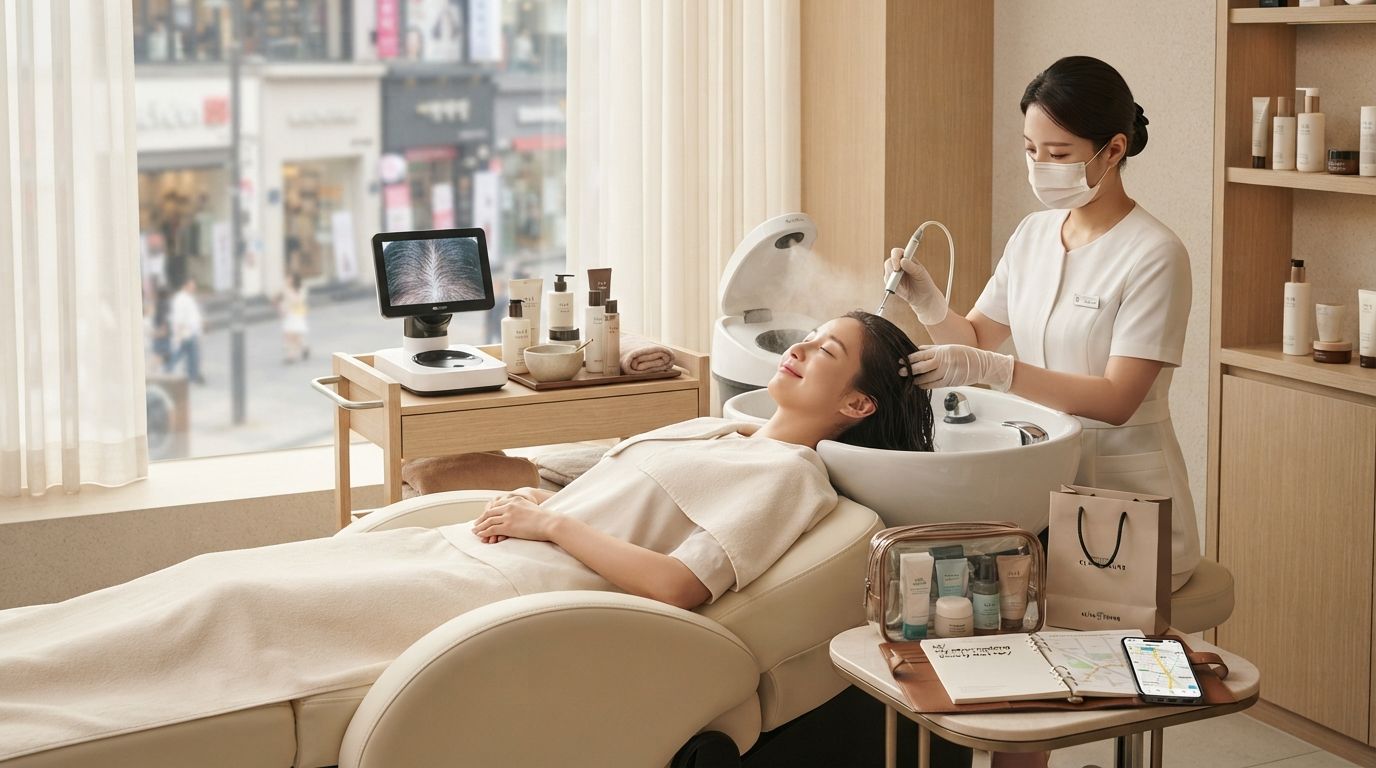
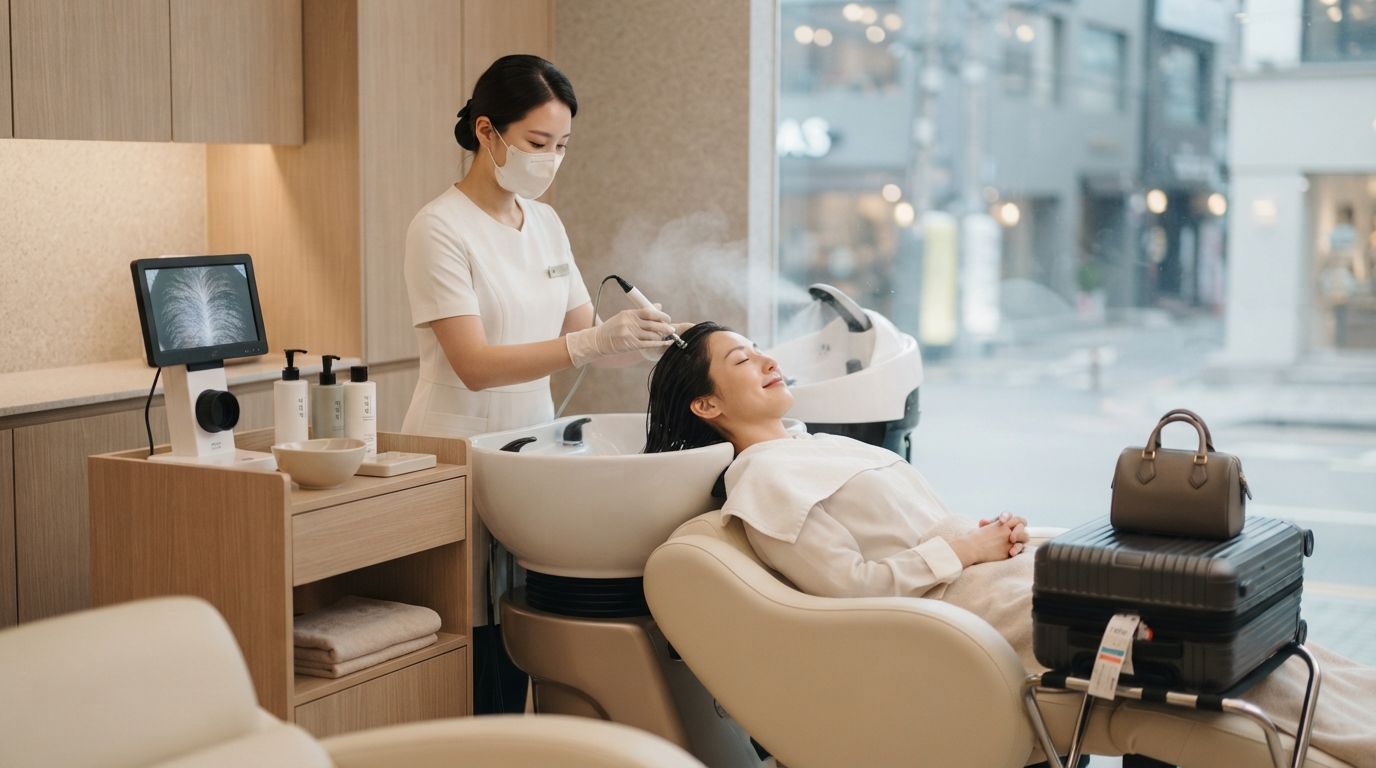
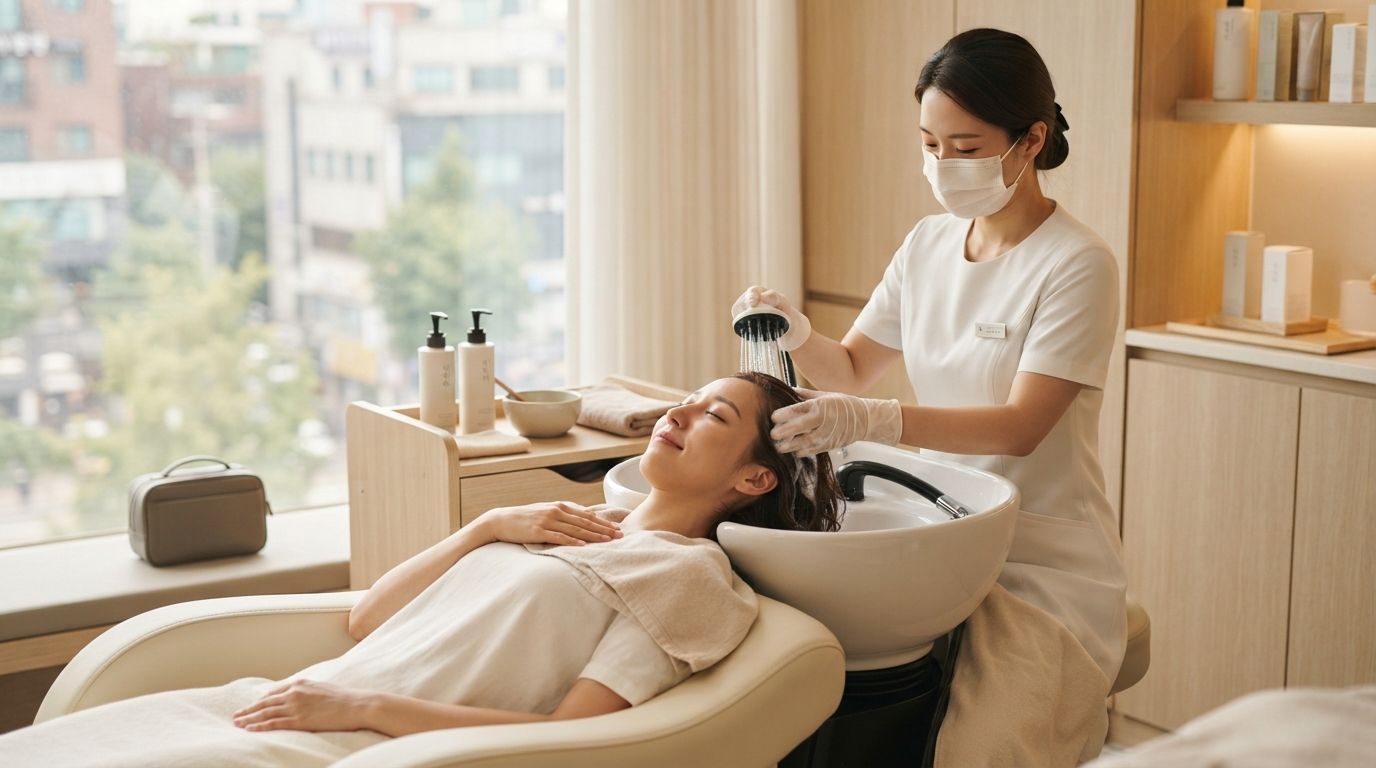
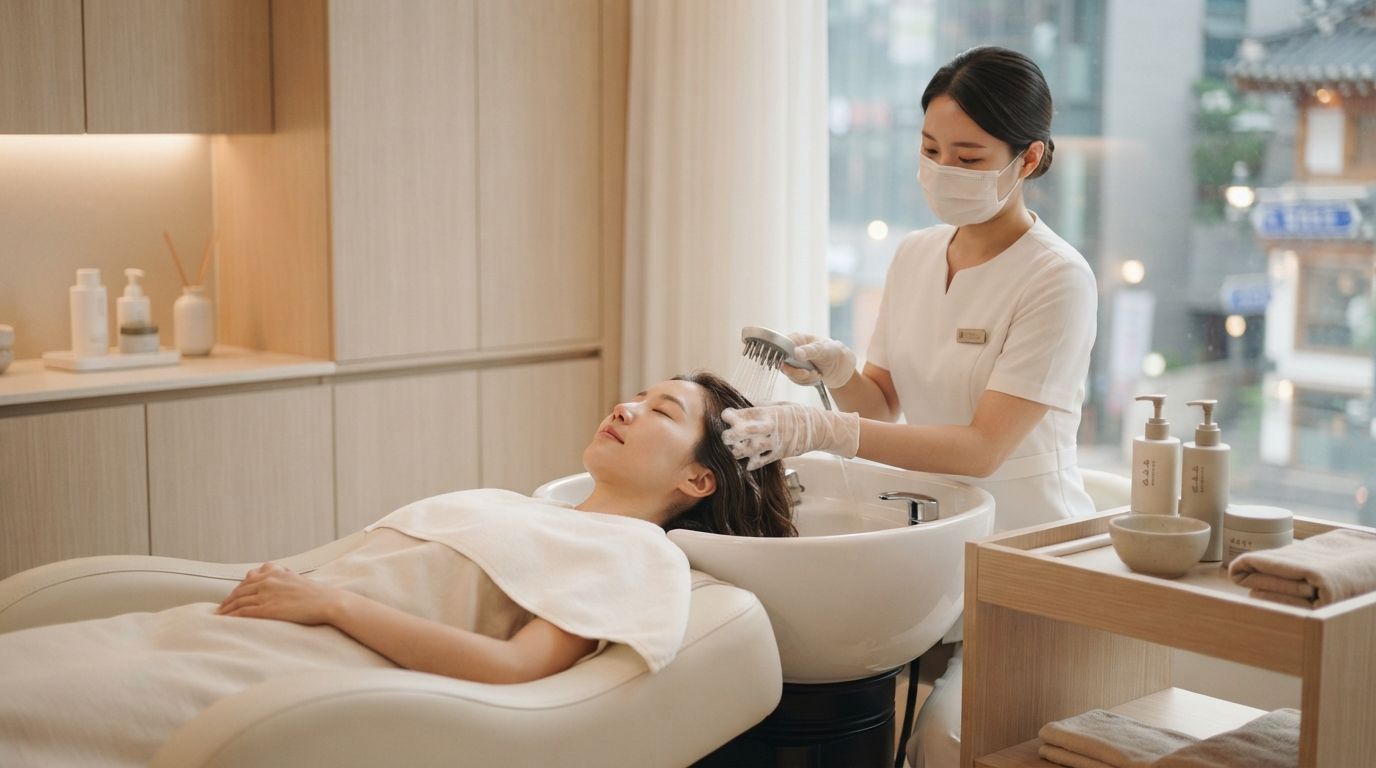
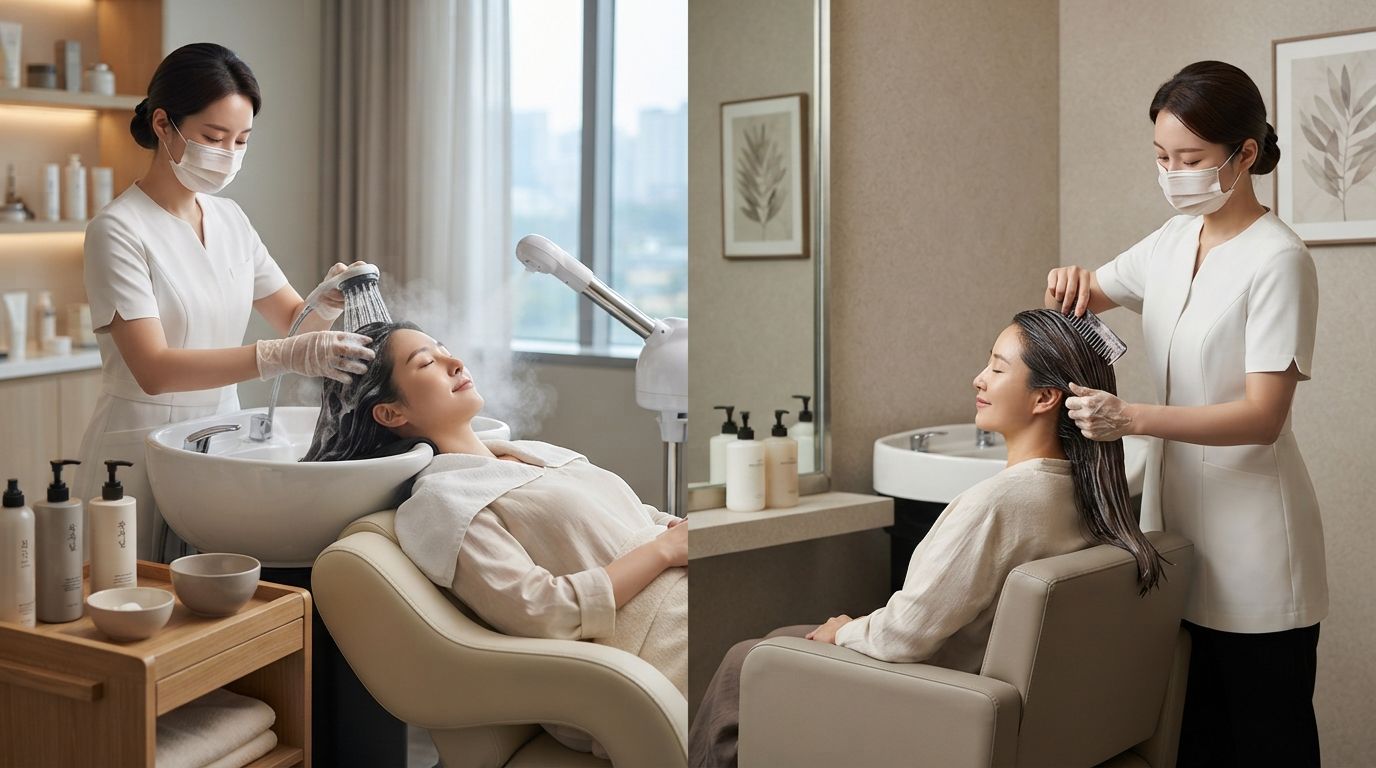
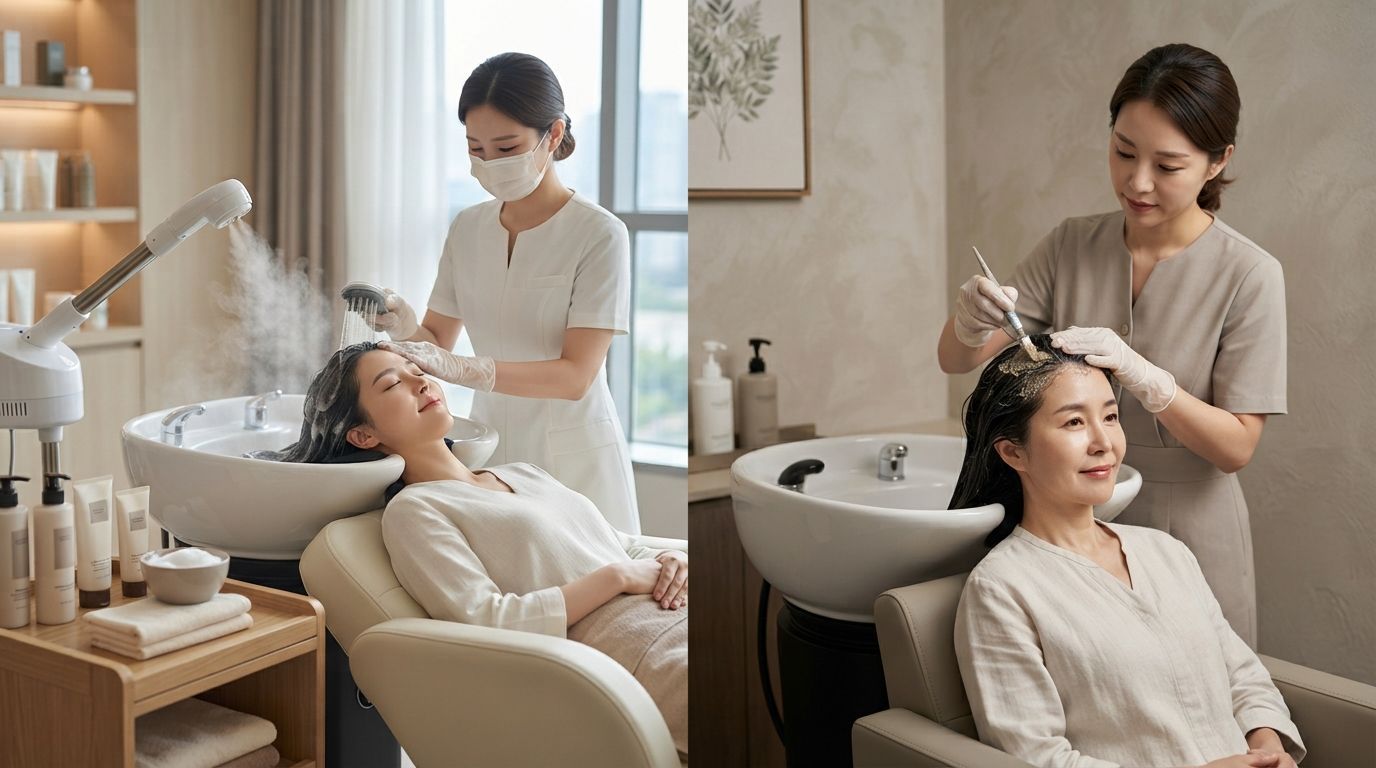
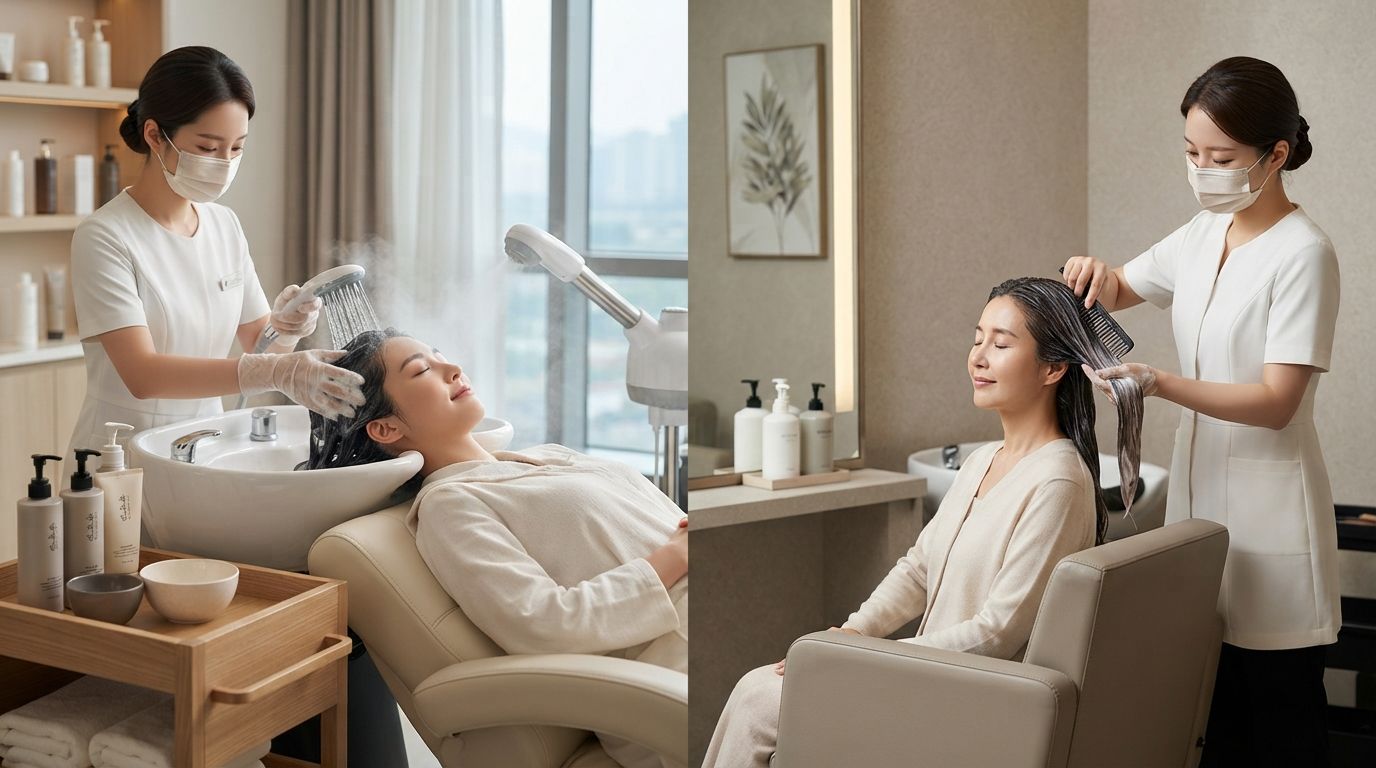
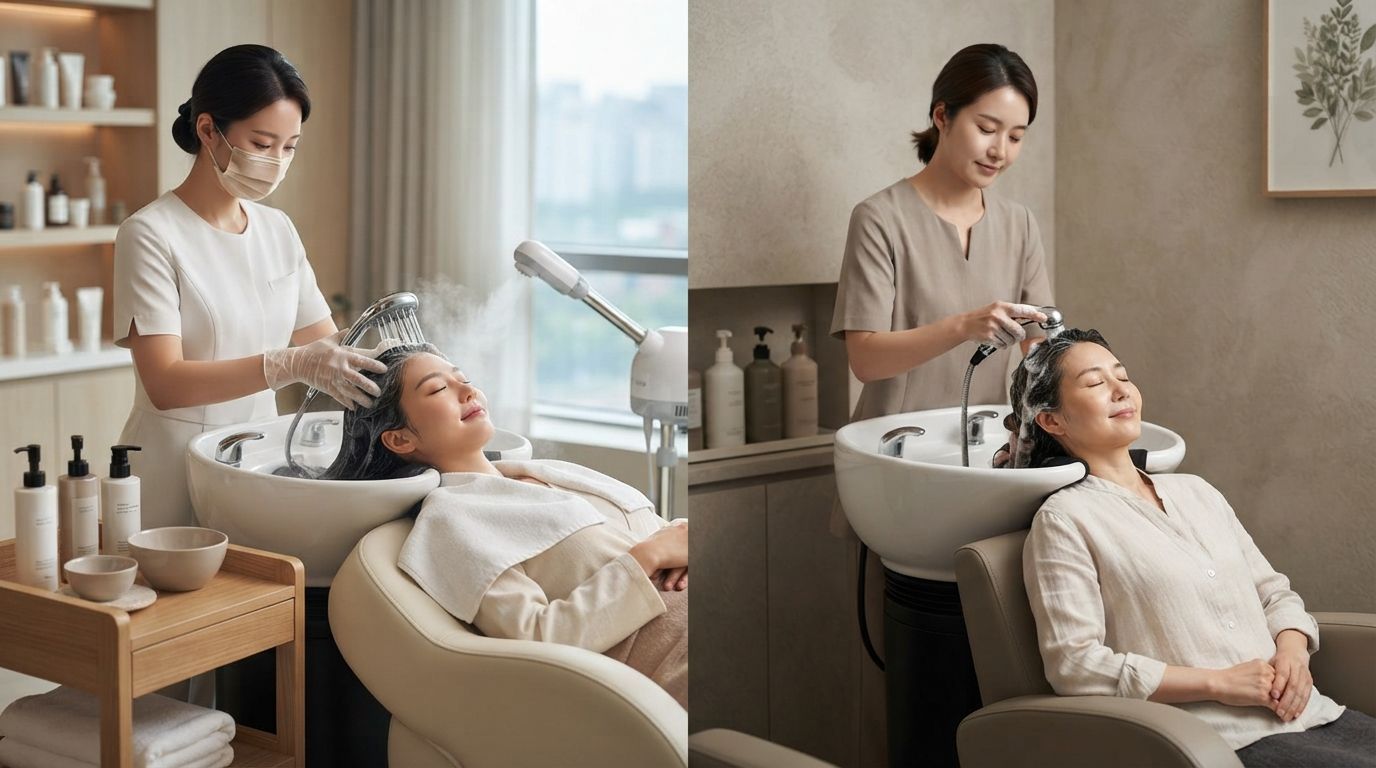
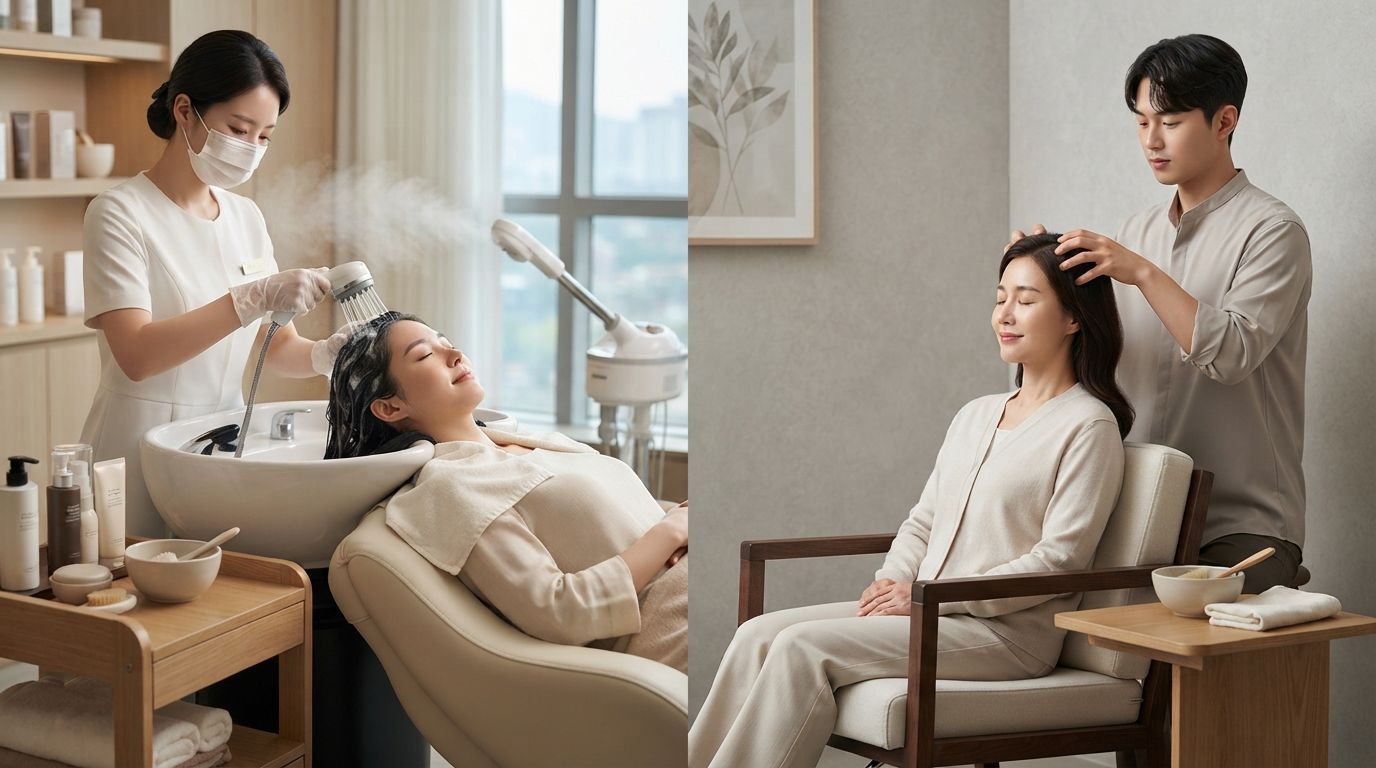
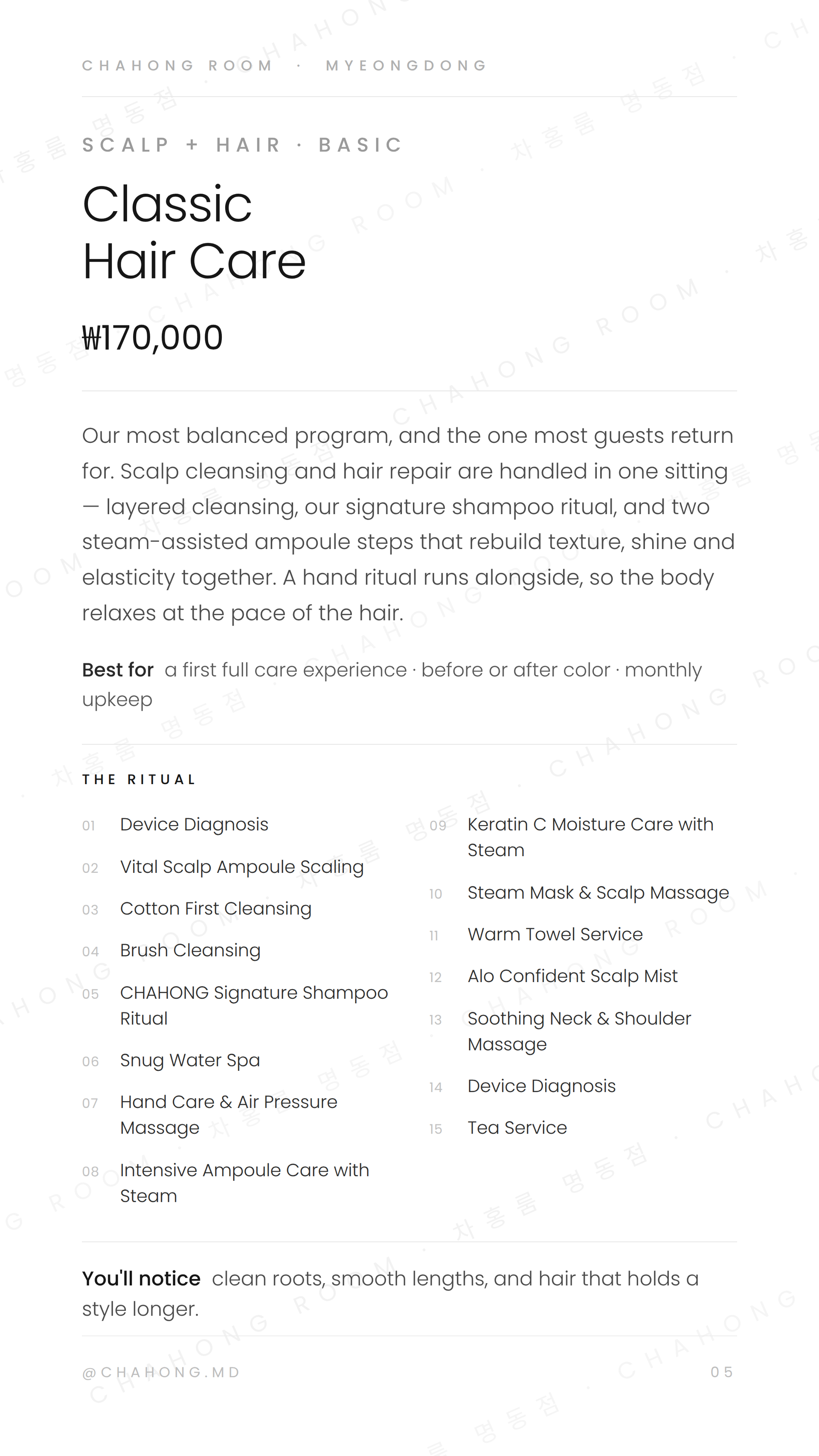
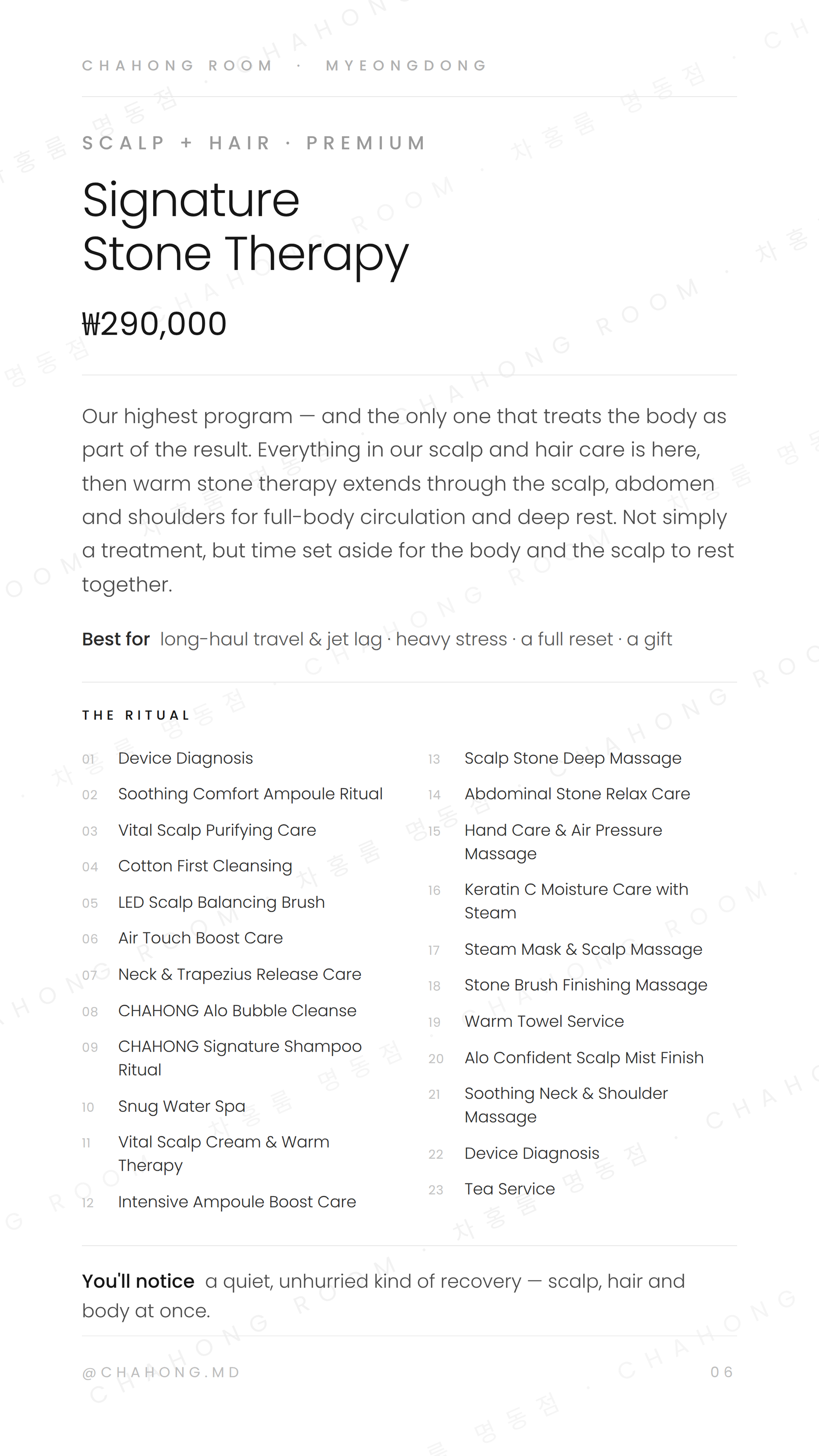
A Korean head spa may offer a professional cosmetic scalp-cleansing experience that combines cleansing, scalp massage, and other treatments.
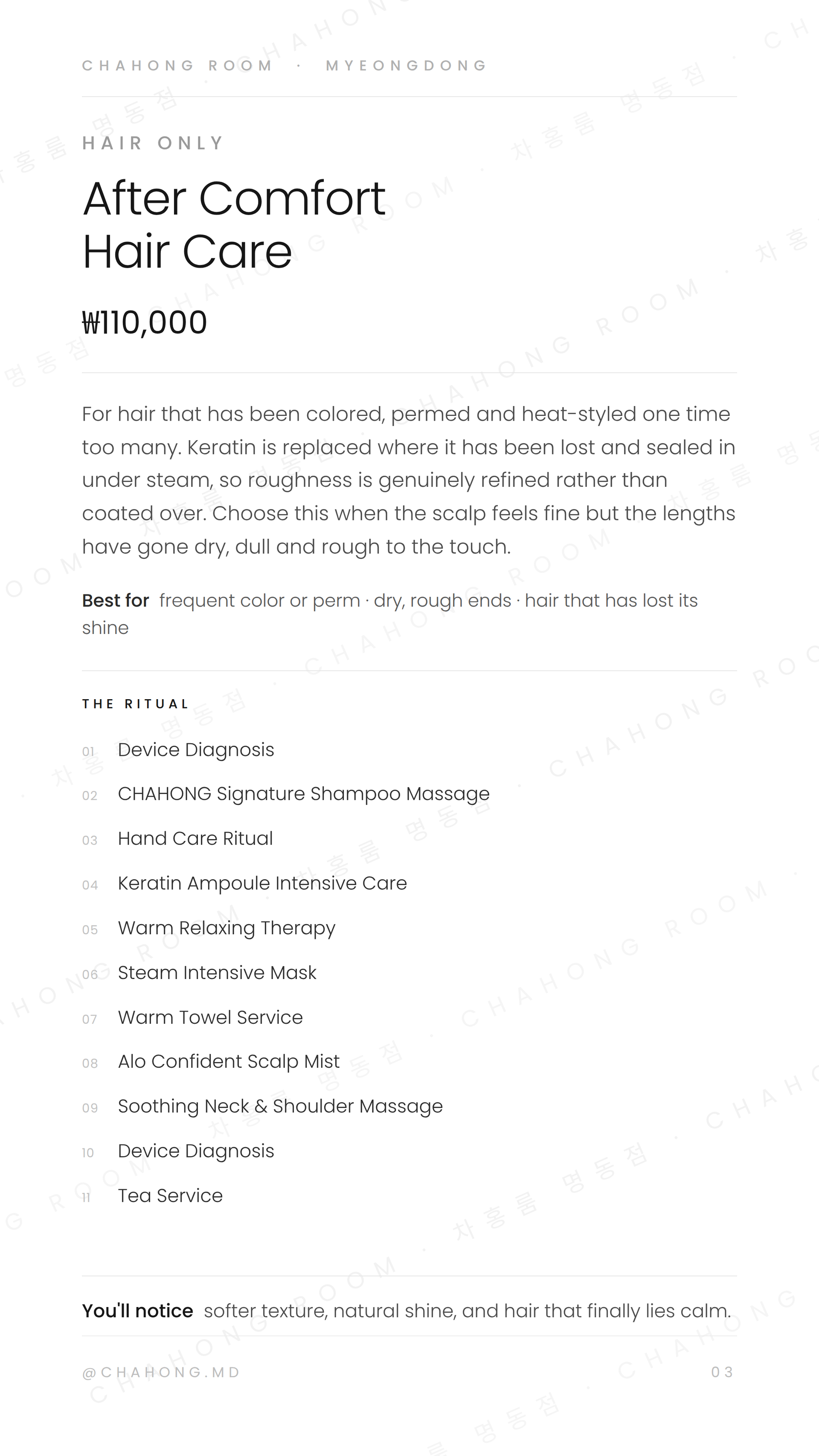
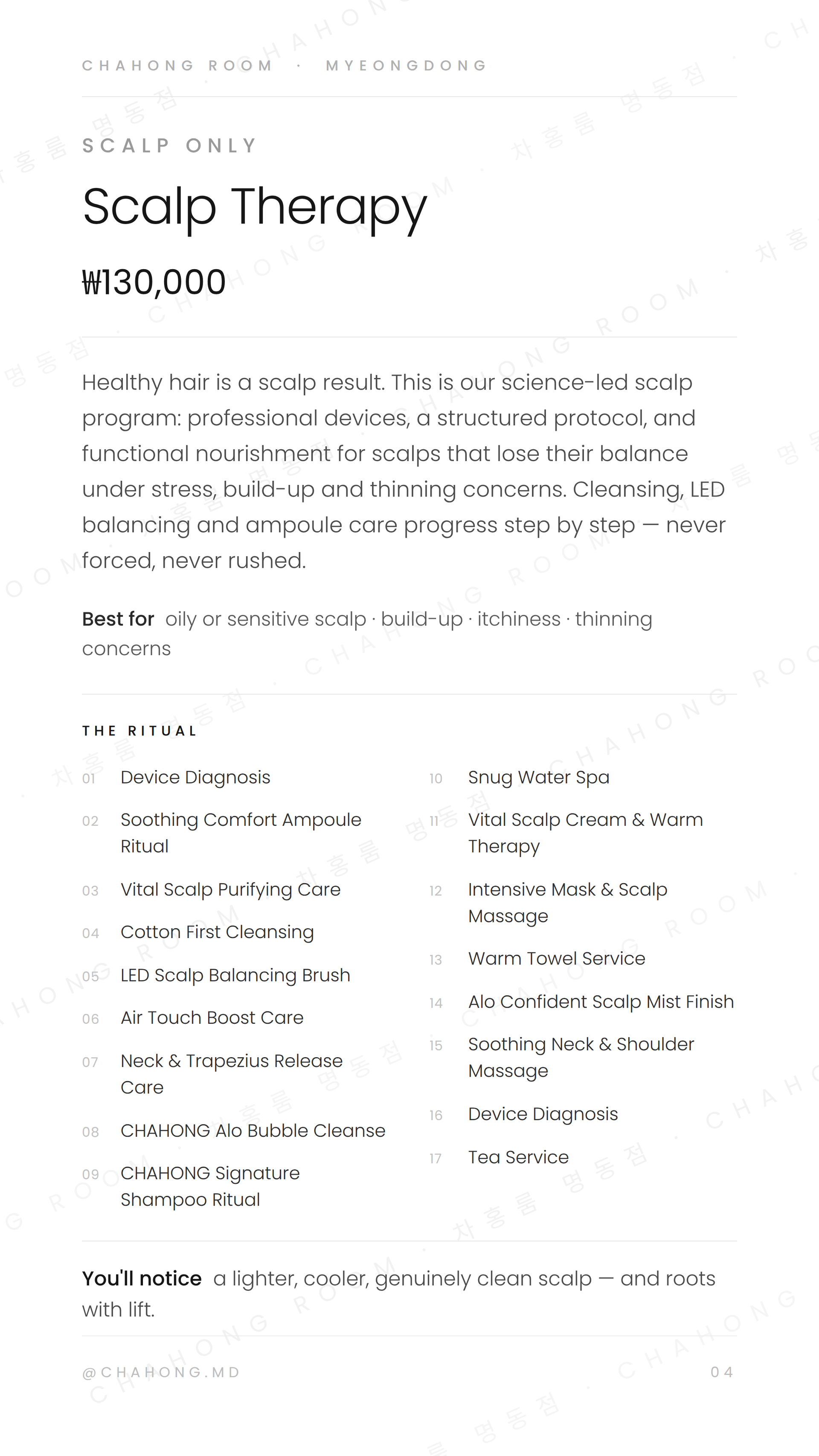
Depending on the menu, a session may include:
- Scalp consultation or visual analysis
- Pre-cleansing
- Scalp scaling or gentle exfoliation
- Shampooing and deep cleansing
- Scalp massage
- Conditioning or moisturizing treatments
- Rinsing and hair drying
These services can help remove surface oil and product residue. They may also provide a relaxing experience.
However, a head spa is generally a cosmetic service. It should not be considered a medical cure for dandruff, psoriasis, seborrheic dermatitis, or hair loss.
When Professional Scalp Cleansing May Be Useful
You might consider a professional scalp-cleansing service if:
- Your scalp feels coated despite your usual washing routine.
- You frequently use styling products.
- You want help selecting an appropriate scalp-care routine.
- You prefer a professional cleansing and relaxation experience.
The treatment should be selected according to your scalp's condition, not simply because a more intensive service sounds more effective.
How Long Does It Take to Remove Scalp Buildup?
The time needed depends on the type and amount of residue, your hair-care habits, and whether the issue is ordinary buildup or an underlying scalp condition.
ApproachTypical timeRegular shampooingA few minutes during a normal washAdditional cleansing or rinsingA few extra minutesProfessional scalp-cleansing sessionVaries by salon and package
A single wash may remove some ordinary product residue, but recurring buildup can return if the contributing habits continue.
There is no universal number of washes or professional sessions required. Avoid repeatedly washing or exfoliating aggressively in an attempt to remove every visible flake.
Scalp Buildup vs. Dandruff: What Is the Difference?
Scalp buildup and dandruff can look similar, but they are not necessarily the same problem.
Scalp Buildup
Ordinary buildup may involve oily residue, styling products, or accumulated surface debris. It may make the roots feel heavy or coated.
Suitable cleansing may help when removable residue is the main cause.
Dandruff
Dandruff commonly involves recurring flakes and may be accompanied by itching. It is associated with scalp skin processes and is not simply a sign that someone has failed to wash their hair properly.
A cosmetic scalp treatment may remove loose flakes temporarily, but it may not address the underlying cause.
If you have persistent dandruff, ask a healthcare professional or pharmacist about appropriate treatment options rather than relying only on deep cleansing.
When Should You See a Dermatologist?
Not every scalp concern should be managed with cosmetic cleansing.
Consider medical evaluation if you experience:
- Persistent or severe itching
- Significant redness or inflammation
- Painful areas, sores, or discharge
- Thick or recurring scales
- Sudden or unexplained hair loss
- Symptoms that continue despite a reasonable hair-care routine
A dermatologist can assess whether the symptoms may be related to dandruff, seborrheic dermatitis, psoriasis, infection, or another condition.
Avoid treating persistent symptoms with repeated exfoliation without understanding the cause.
Conclusion
The simplest way to remove ordinary scalp buildup is to use a suitable shampoo, rinse thoroughly, review products that may leave residue, and avoid aggressive scrubbing.
Professional scalp cleansing, including Korean head spa treatments, may help remove surface oil and product buildup while providing a relaxing experience. However, it cannot guarantee a permanent solution or replace medical treatment for a scalp disorder.
If buildup keeps returning or is accompanied by persistent itching, inflammation, or hair loss, seek appropriate medical advice.
FAQs
What is the fastest way to remove scalp buildup?
For ordinary product residue, thorough shampooing with a suitable cleanser may help. Avoid aggressive scrubbing or repeated harsh washing.
Can I remove scalp buildup with regular shampoo?
Yes, regular shampoo may remove oil and product residue. The appropriate shampoo and washing frequency depend on your scalp and hair-care routine.
Is scalp buildup the same as dandruff?
No. Buildup may involve oil and product residue, while dandruff is a scalp condition that can cause recurring flakes and itching.
Does a Korean head spa remove scalp buildup?
A cleansing-focused head spa may help remove surface oil and residue. Results depend on the service, and it is not a medical treatment for scalp disease.
How often should I exfoliate my scalp?
There is no universal schedule. Exfoliation may not be necessary for everyone, and excessive use can irritate the scalp. Follow product directions and consider professional advice if you have sensitivity.
Can scalp buildup cause hair loss?
Do not assume that buildup is the cause of hair loss. Persistent or unexplained shedding or thinning should be assessed by a qualified healthcare professional.