What Can a Scalp Camera Detect?
What Can a Scalp Camera Detect?
A scalp camera can detect or visually highlight several surface and hair characteristics that are difficult to see with the naked eye. Depending on the equipment, it may show excess oil, scalp buildup, dryness, flakes, redness, follicle appearance, hair density, and hair-shaft thickness. More advanced systems may use digital measurements or AI-assisted analysis to organize these findings.
However, a scalp camera does not automatically diagnose a medical scalp condition or determine the cause of hair loss. It is best understood as a visual assessment tool.
What Does a Scalp Camera Show?
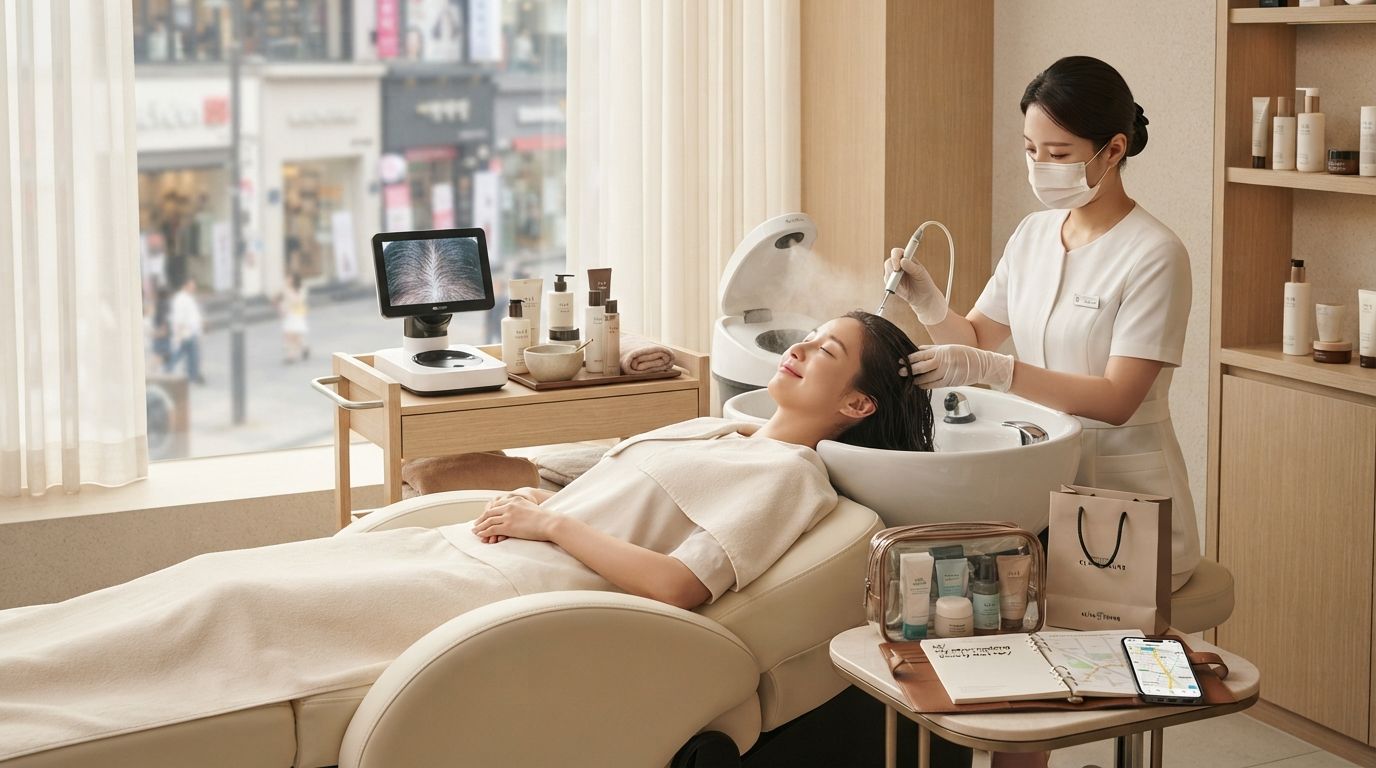
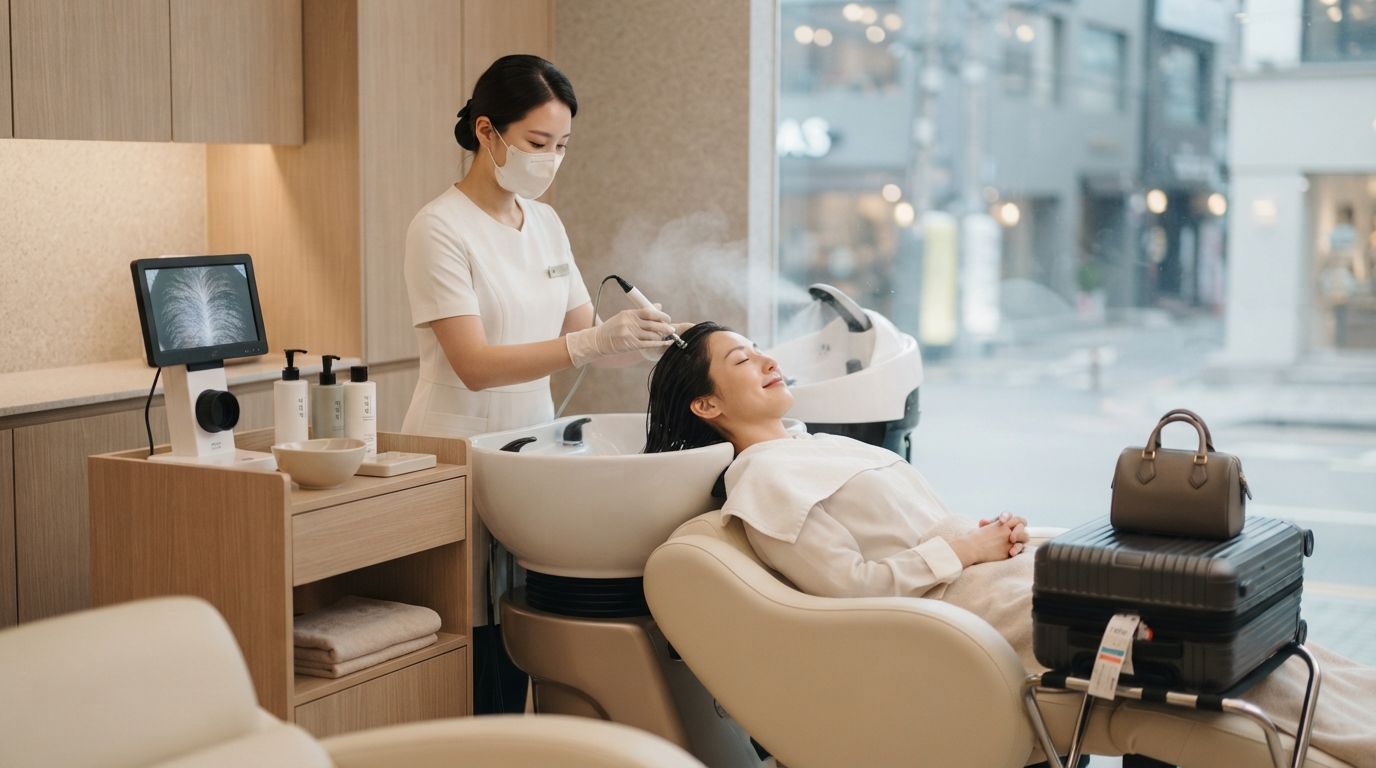
A scalp camera uses magnification and specialized lighting to produce enlarged images of the scalp and hair. During a Korean scalp analysis or head spa consultation, these images may be displayed on a screen so you can see specific areas of your scalp.
The exact information depends on the camera and software being used, but common observations include the following.
Excess Oil and Sebum
A scalp camera can make oily areas and visible sebum easier to identify.
You may see oil around the follicle openings or areas where the scalp appears particularly shiny or congested. This information can help a scalp-care provider determine whether a cleansing-focused treatment may be appropriate.
However, having an oily scalp is not necessarily a medical problem. Oil production naturally varies between individuals and can also change with weather, washing habits, exercise, and hair products.
Scalp Buildup
Magnification can reveal material that is difficult to notice during a normal visual inspection.
Depending on the individual, this may include:
- Excess sebum
- Dead skin
- Styling-product residue
- Dry shampoo residue
- Other visible deposits on the scalp
A scalp camera can therefore be useful before a scalp-cleansing or head-spa treatment.
Dryness and Visible Flakes
A camera can show areas where the scalp appears dry or where flakes and scaling are visible.
This can be useful for understanding the current appearance of the scalp, but visible flakes do not necessarily identify their cause.
For example, different scalp conditions can produce similar-looking scaling. Persistent or severe flaking may require assessment by an appropriate healthcare professional rather than relying only on a cosmetic scalp analysis.
Redness and Visible Irritation
Some scalp cameras use specialized lighting that can make visible redness or changes in the scalp surface easier to examine.
This can help identify areas that appear more irritated than others.
A camera image, however, cannot by itself determine why redness is present. Temporary irritation, product sensitivity, environmental factors, and medical scalp conditions can have overlapping visible features.
If redness is persistent, painful, spreading, or accompanied by sores or significant itching, professional medical evaluation may be appropriate.
Hair Density
Some advanced scalp-analysis systems can assess visible hair density.
Images may help show whether certain areas appear more or less densely covered with hair. Taking images from consistent locations can also create a visual baseline for later comparison.
Hair density measurements can be useful, but they should be interpreted carefully. Lighting, camera angle, hair length, hairstyle, and image quality can affect how dense the hair appears.
Hair Thickness
Certain digital systems can measure or estimate hair-shaft thickness.
This can be particularly relevant when someone is monitoring changes in hair appearance over time. Some advanced Korean scalp-analysis technologies combine magnified imaging with software-based measurements.
A scalp camera may document differences in hair thickness, but this does not automatically establish the medical reason for those differences.
Follicle Appearance
High-magnification imaging can provide a closer view of follicle openings and the surrounding scalp.
A practitioner may use these images to discuss visible follicle characteristics, oil accumulation, or other surface features.
It is important not to interpret every unusual-looking follicle as evidence of a disease. Professional interpretation and, when appropriate, clinical examination are necessary for medical conclusions.
What a Scalp Camera Cannot Reliably Detect
A scalp camera can provide useful visual information, but there are important limitations.
It generally cannot independently determine:
- The exact cause of hair loss
- Hormonal causes of thinning
- Nutritional deficiencies
- Autoimmune conditions
- Internal medical conditions
- The precise cause of persistent scalp inflammation
- Whether a treatment will definitely produce hair growth
For these questions, a medical evaluation may involve medical history, physical examination, dermoscopy, blood testing, or other diagnostic methods depending on the situation.
Scalp Camera vs. Medical Scalp Examination
The purpose of the examination matters.
A scalp camera analysis at a head spa or scalp-care center is generally focused on visible scalp and hair characteristics. It can help personalize cosmetic or wellness treatments.
A medical scalp examination is designed to investigate symptoms and possible medical conditions. A dermatologist can combine visual examination with the patient's history and additional diagnostic methods when necessary.
Therefore, a scalp camera can complement scalp care, but it should not be presented as a replacement for medical diagnosis.
Why Use a Scalp Camera Before a Korean Head Spa?
Scalp imaging can make a head-spa consultation more informative.
Instead of discussing your scalp only from how it feels or looks from above, you may be able to see magnified images showing areas of oil, buildup, dryness, or visible flaking.
This can help you understand why a provider recommends particular cosmetic steps, such as cleansing, exfoliation, hydration, or scalp massage.
It can also establish a visual baseline before treatment.
What Should You Ask About Your Scalp Camera Results?
If you receive a scalp analysis, ask the practitioner:
- What exactly does this image show?
- Is this a visible observation or a medical conclusion?
- What does the equipment measure?
- Can the images be saved for comparison?
- What treatment is being recommended based on the findings?
- Should I seek medical evaluation for any of these findings?
These questions help separate objective observations from treatment recommendations.
Is a Scalp Camera Analysis Worth It?
For people interested in Korean head spas or cosmetic scalp care, a scalp camera can be useful because it provides a closer look at features that are difficult to see normally.
Its value is greatest when the provider explains the images clearly and does not treat every visible variation as a medical problem.
If your primary concern is significant hair loss, persistent itching, painful lesions, severe inflammation, or another ongoing scalp problem, consider a medical evaluation rather than relying exclusively on a scalp camera.
Final Thoughts
A scalp camera can detect or visually highlight oil, sebum, buildup, dryness, flakes, redness, follicle appearance, hair density, and hair thickness, depending on the equipment used.
It is particularly useful for visual scalp assessment before a Korean head spa or other cosmetic scalp-care treatment. However, camera images have limitations and should not be confused with a medical diagnosis.
Understanding what the camera can—and cannot—show helps you use scalp analysis as a useful information tool without overinterpreting the results.
Frequently Asked Questions
Can a scalp camera detect dandruff?
It can show visible flakes or scaling, but it cannot necessarily determine the underlying cause of those findings.
Can a scalp camera detect hair loss?
It can show visible changes in hair density or thickness when the equipment supports those measurements. Determining the cause of hair loss requires appropriate clinical assessment.
Can a scalp camera detect scalp oil?
Yes. Magnified imaging can make visible sebum and oily areas easier to identify.
Can a scalp camera detect dry scalp?
It may show visible dryness, flakes, or scaling. However, these observations do not necessarily establish why the scalp is dry or flaky.
Can a scalp camera detect scalp inflammation?
It can highlight visible redness or other surface changes, but it cannot independently determine the medical cause of inflammation.
Is a scalp camera a medical diagnostic tool?
Not necessarily. Many scalp cameras used in Korean head spas and cosmetic scalp-care settings are assessment tools rather than standalone medical diagnostic devices.