Dry Scalp Treatment in Seoul
Dry Scalp Treatment in Seoul
Dry scalp can cause tightness, itching, small flakes, roughness, and general discomfort. In Seoul, dry scalp treatment can range from gentle hydration-focused scalp care and Korean head spa treatments to professional evaluation when symptoms may be related to a scalp condition.
The right approach depends on why the scalp is dry. Simple dryness may improve with gentle cleansing and moisture-supporting care, while persistent redness, severe itching, thick scaling, sores, or ongoing hair loss may require assessment by a medical professional.
What Is Dry Scalp Treatment?
Dry scalp treatment is designed to improve scalp comfort by addressing dryness, tightness, flaking, and sensitivity. Depending on the treatment setting, it may involve scalp assessment, gentle cleansing, hydration-focused products, soothing care, massage, and advice for maintaining the scalp at home.
A key point is that dry scalp is not always the same as dandruff. Both can cause visible flakes, but they may have different causes and therefore require different approaches.
What Causes a Dry Scalp?
Several factors can contribute to scalp dryness or irritation, including:
- Frequent shampooing or use of harsh cleansing products
- Hot water
- Dry seasonal weather
- Excessive heat styling
- Hair coloring, bleaching, or chemical treatments
- Products that irritate sensitive skin
- Changes in climate or daily routine
- An underlying scalp condition
Seoul's changing seasonal conditions can also influence scalp comfort. However, persistent flaking or irritation should not automatically be assumed to be simple dryness.
What Does a Dry Scalp Treatment in Seoul Involve?
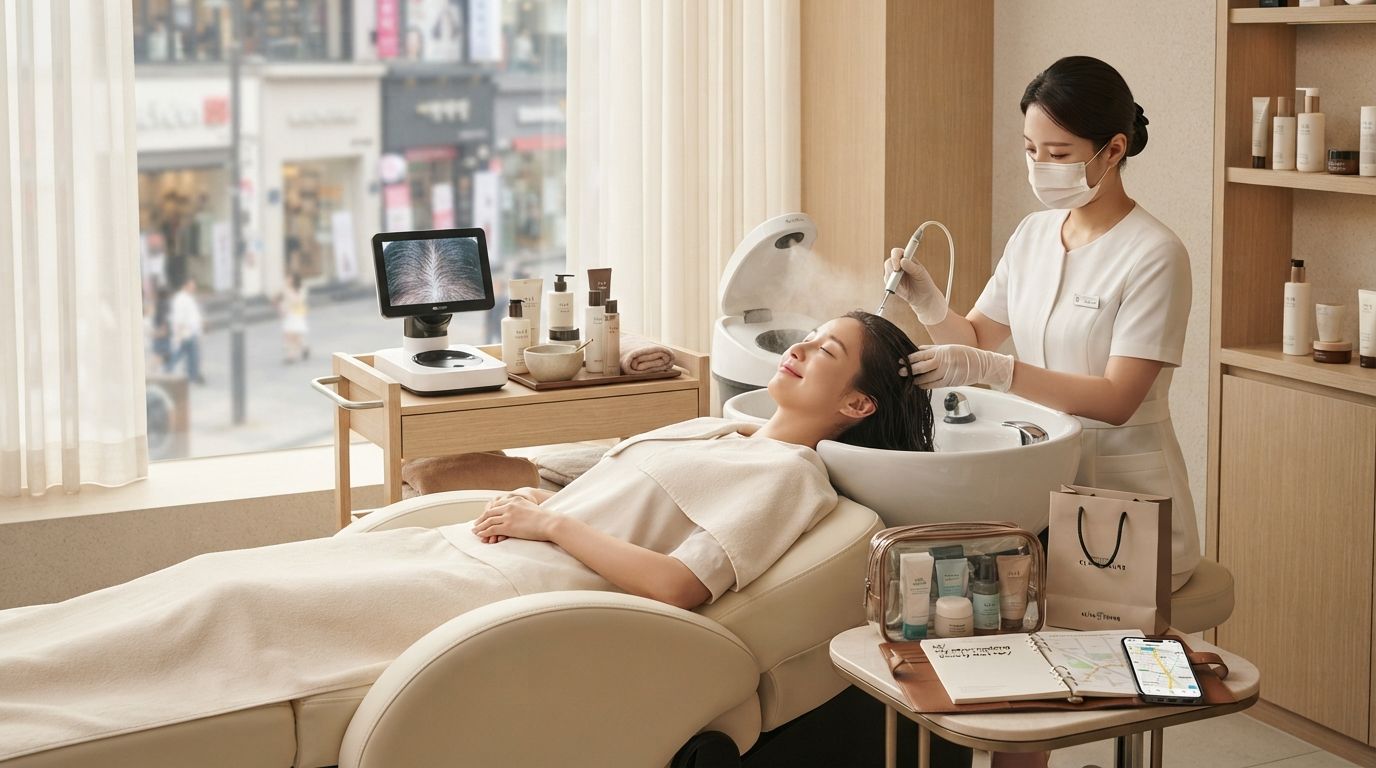
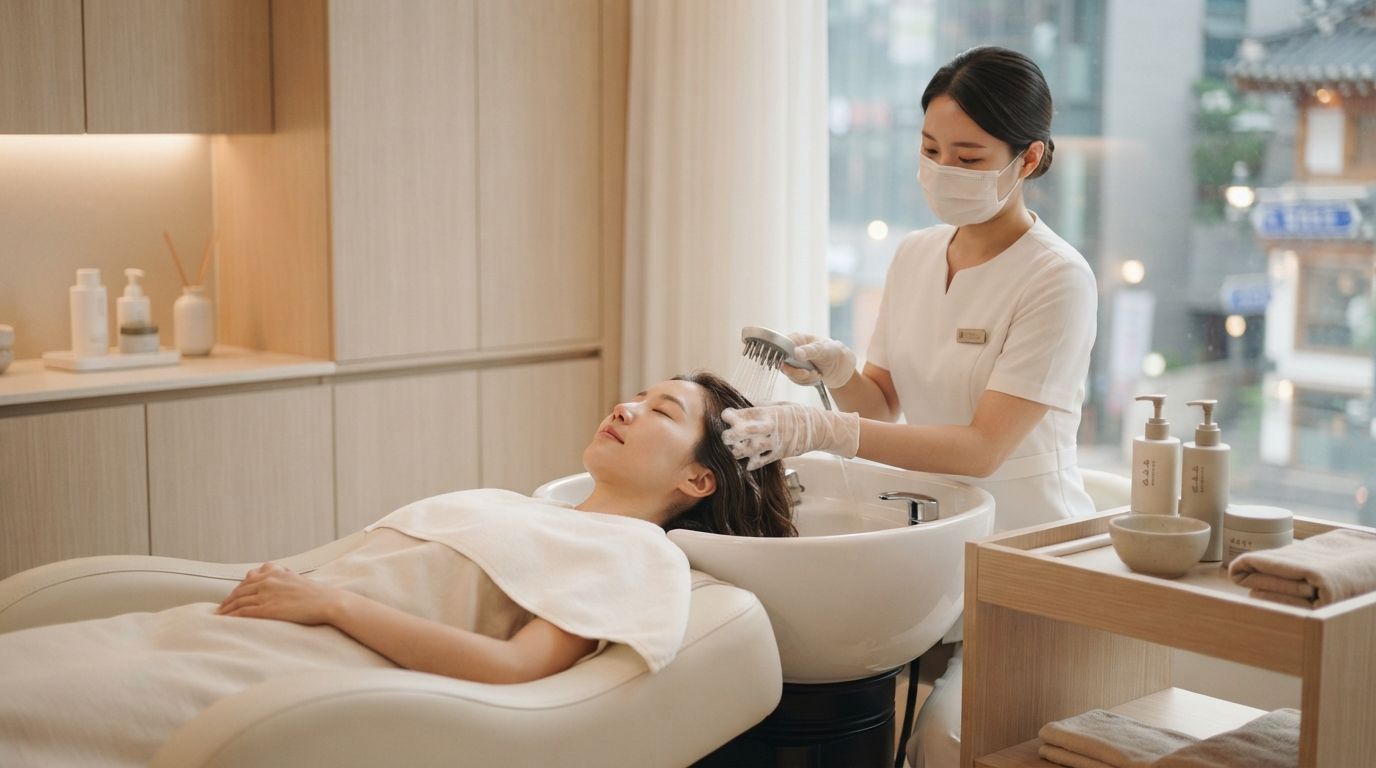
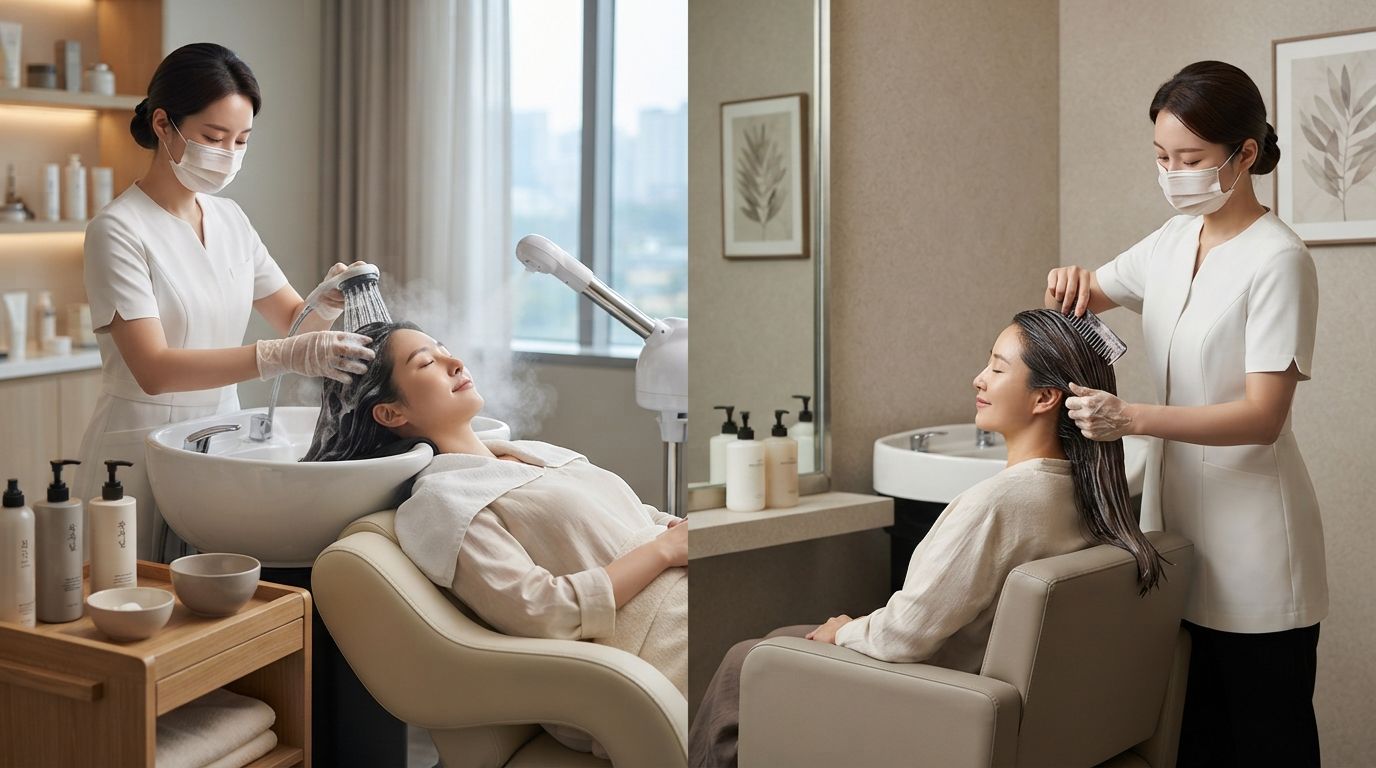
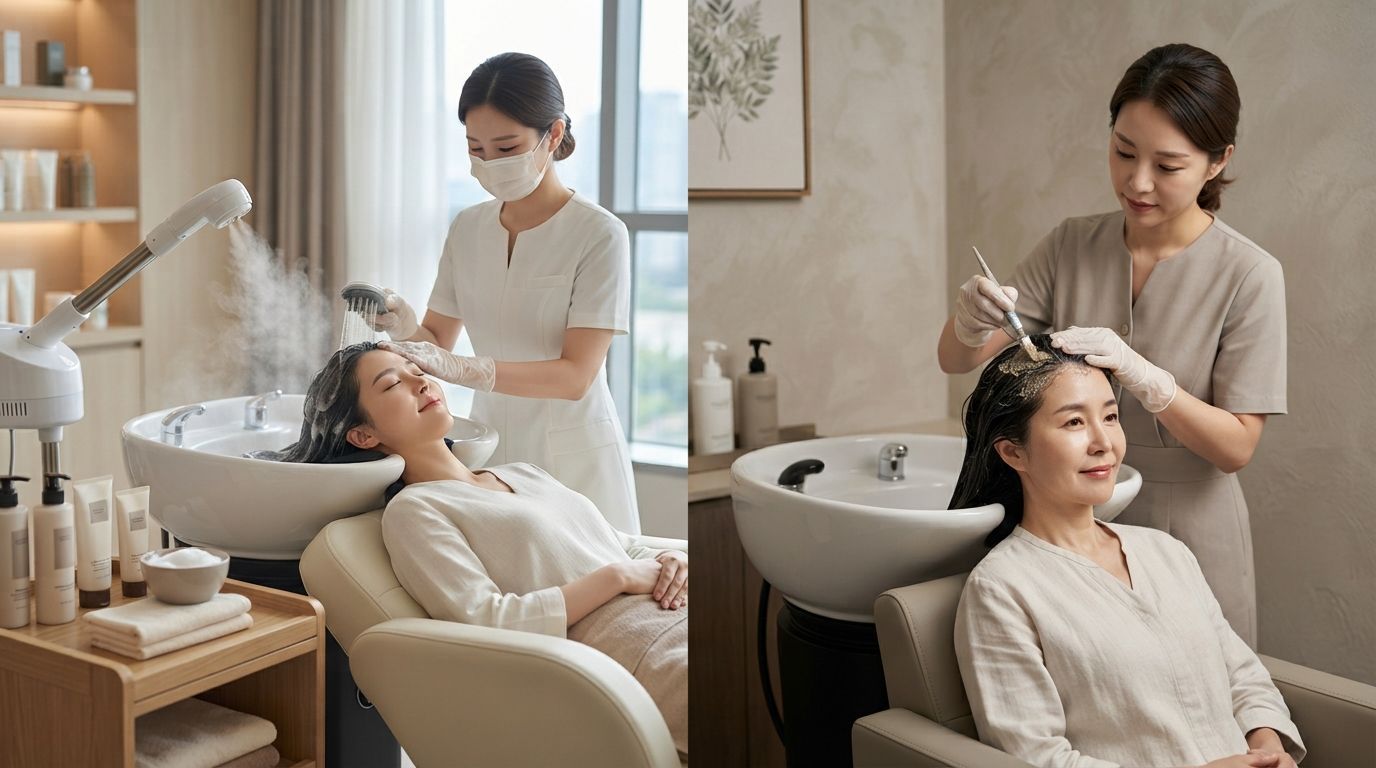
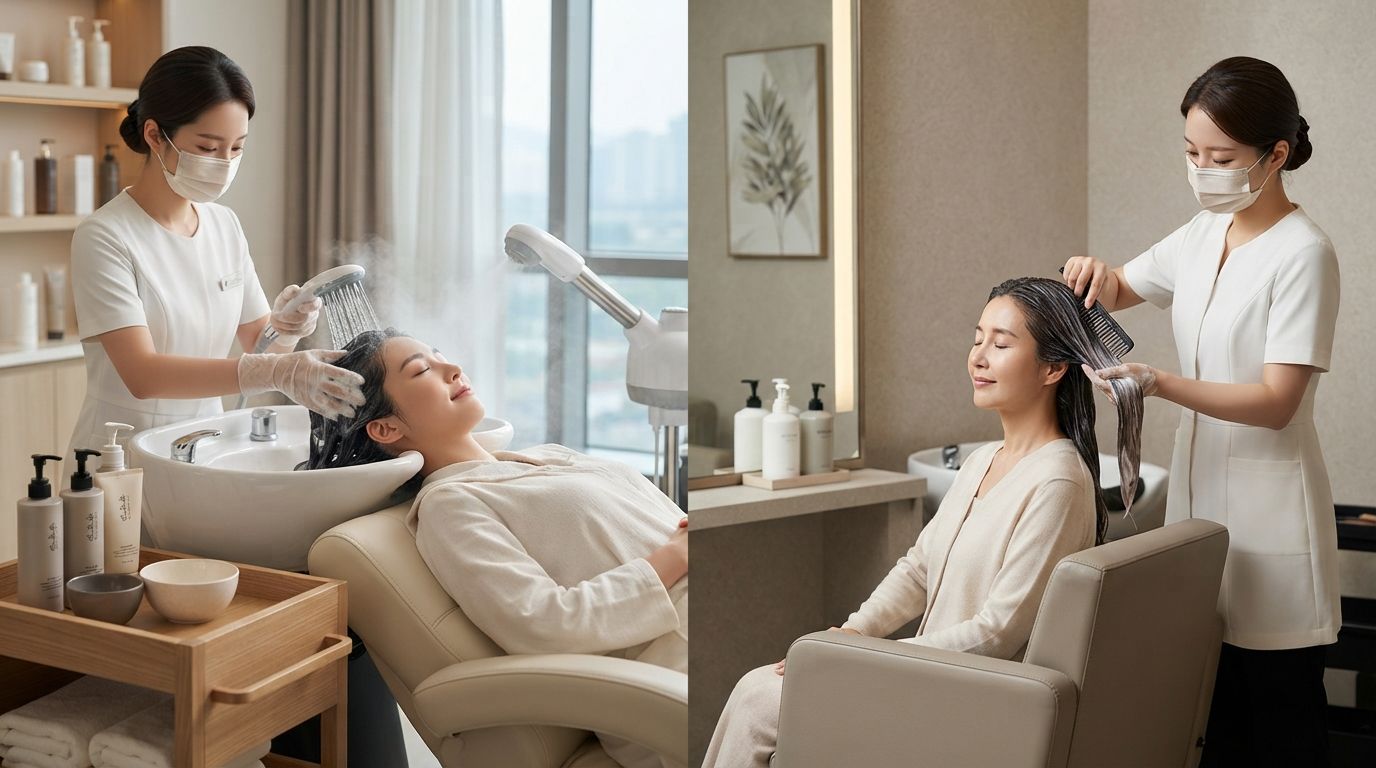
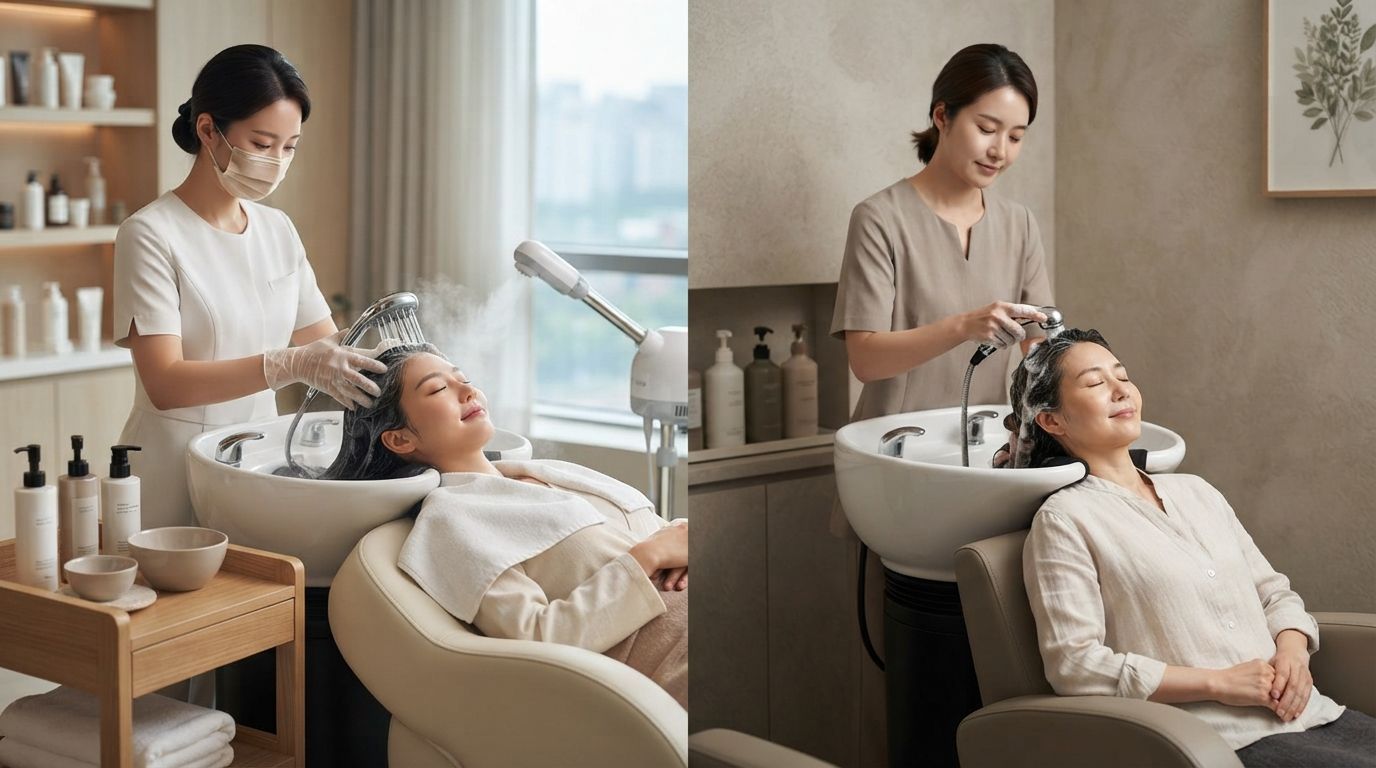
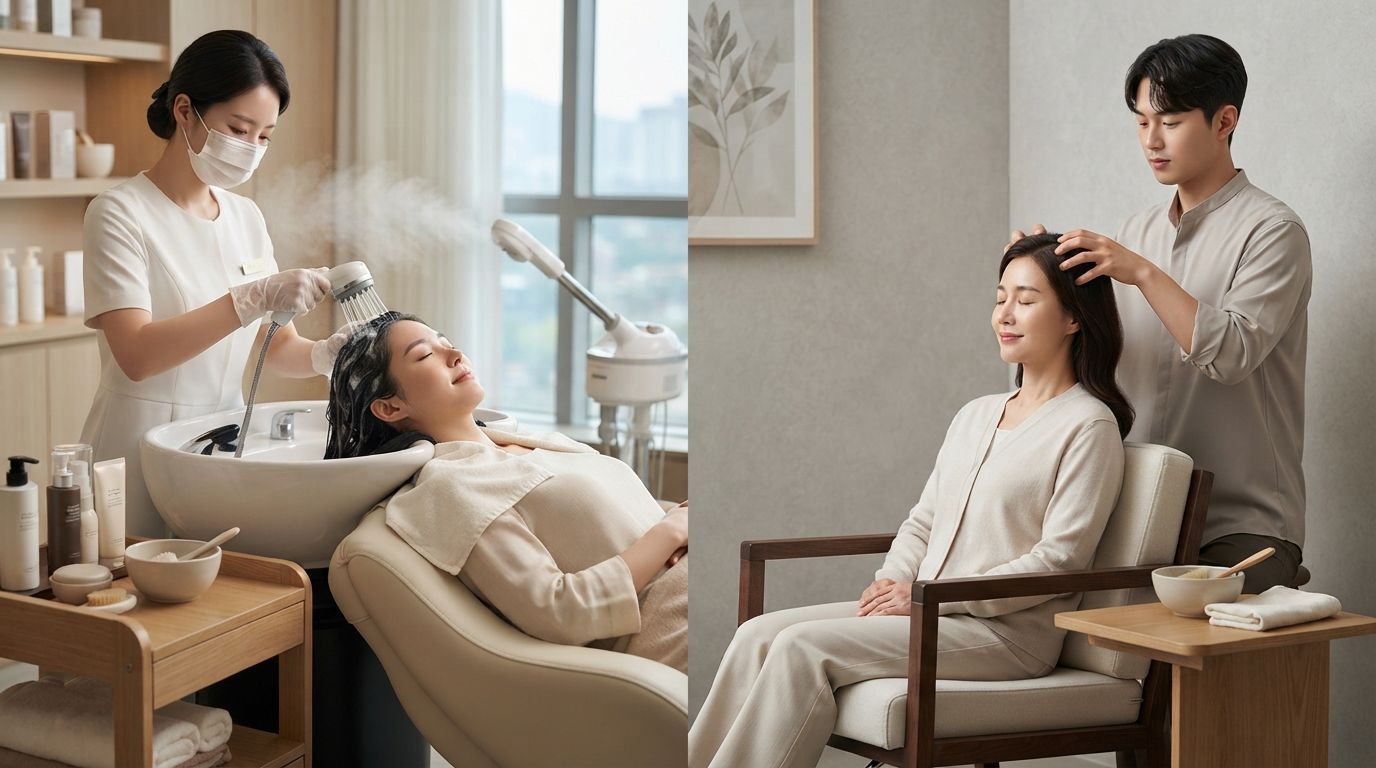
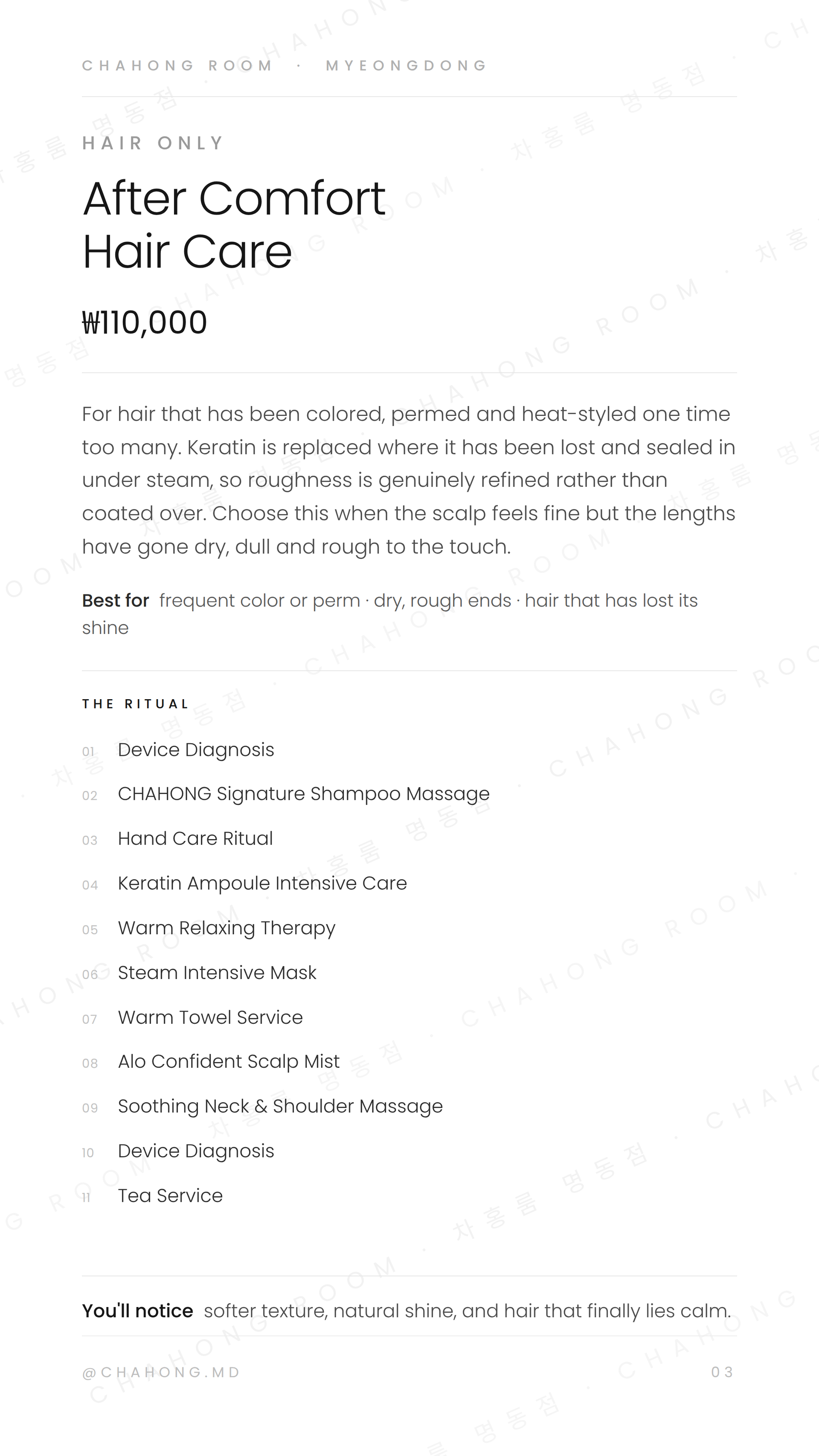
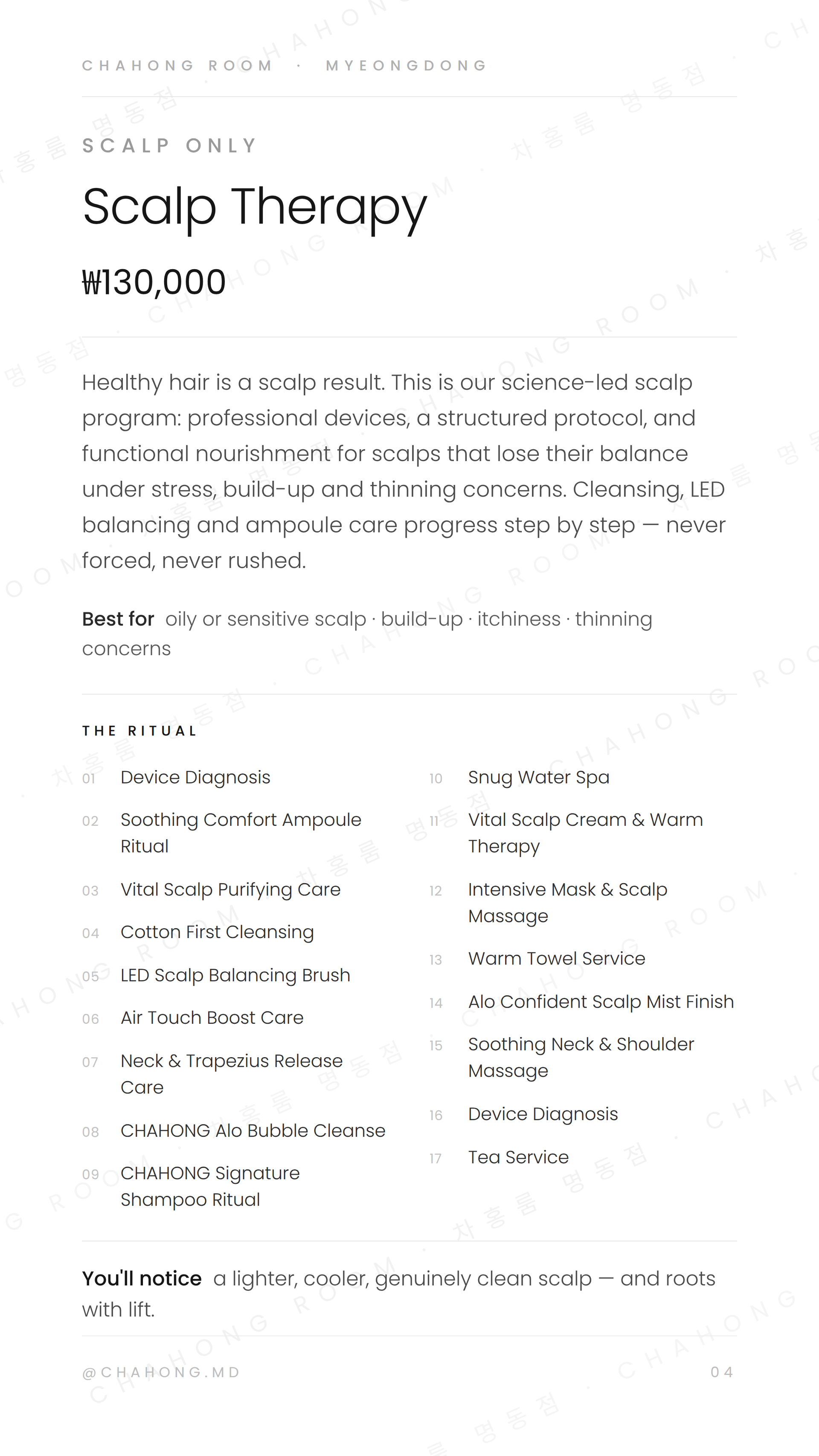
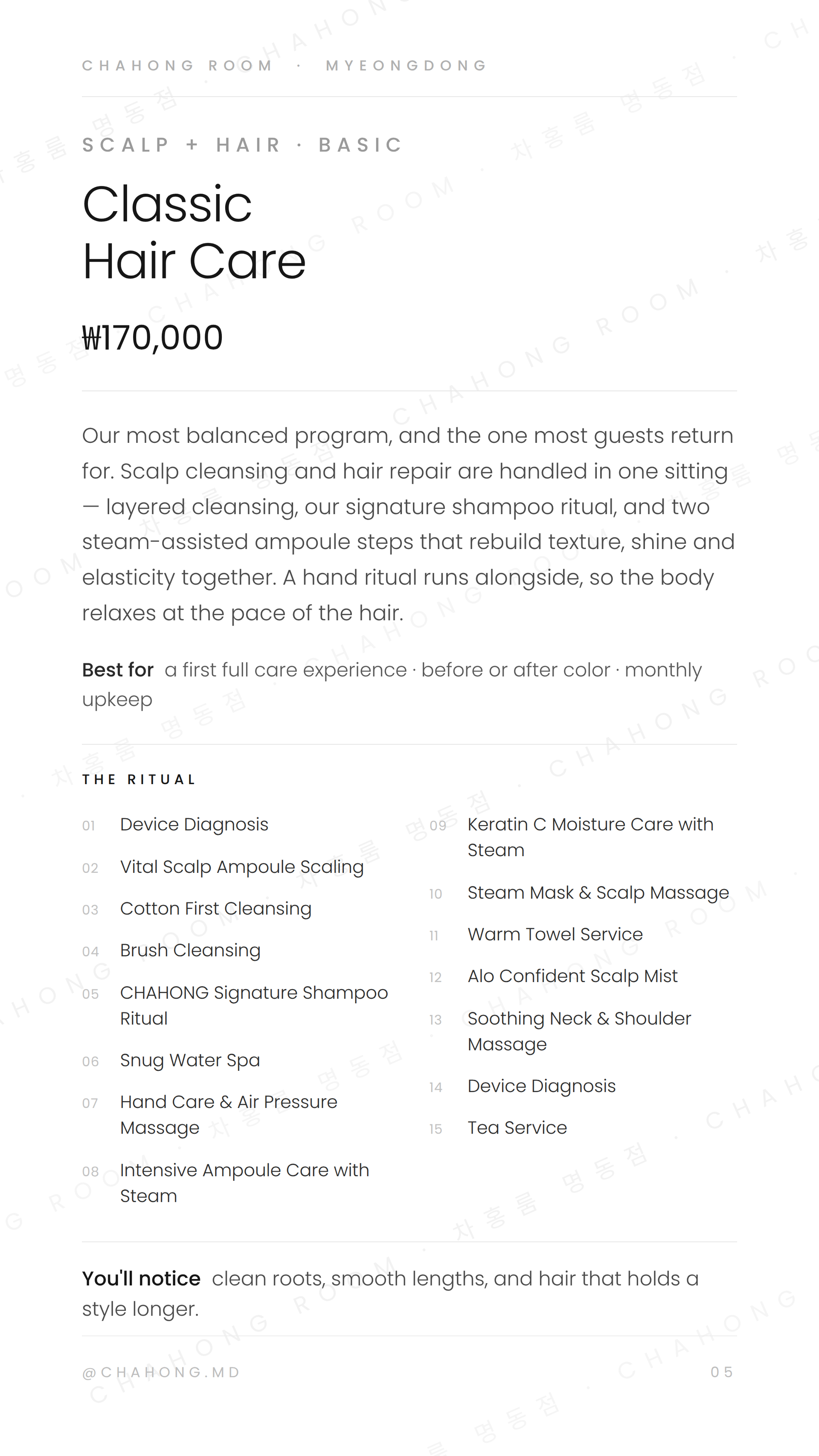
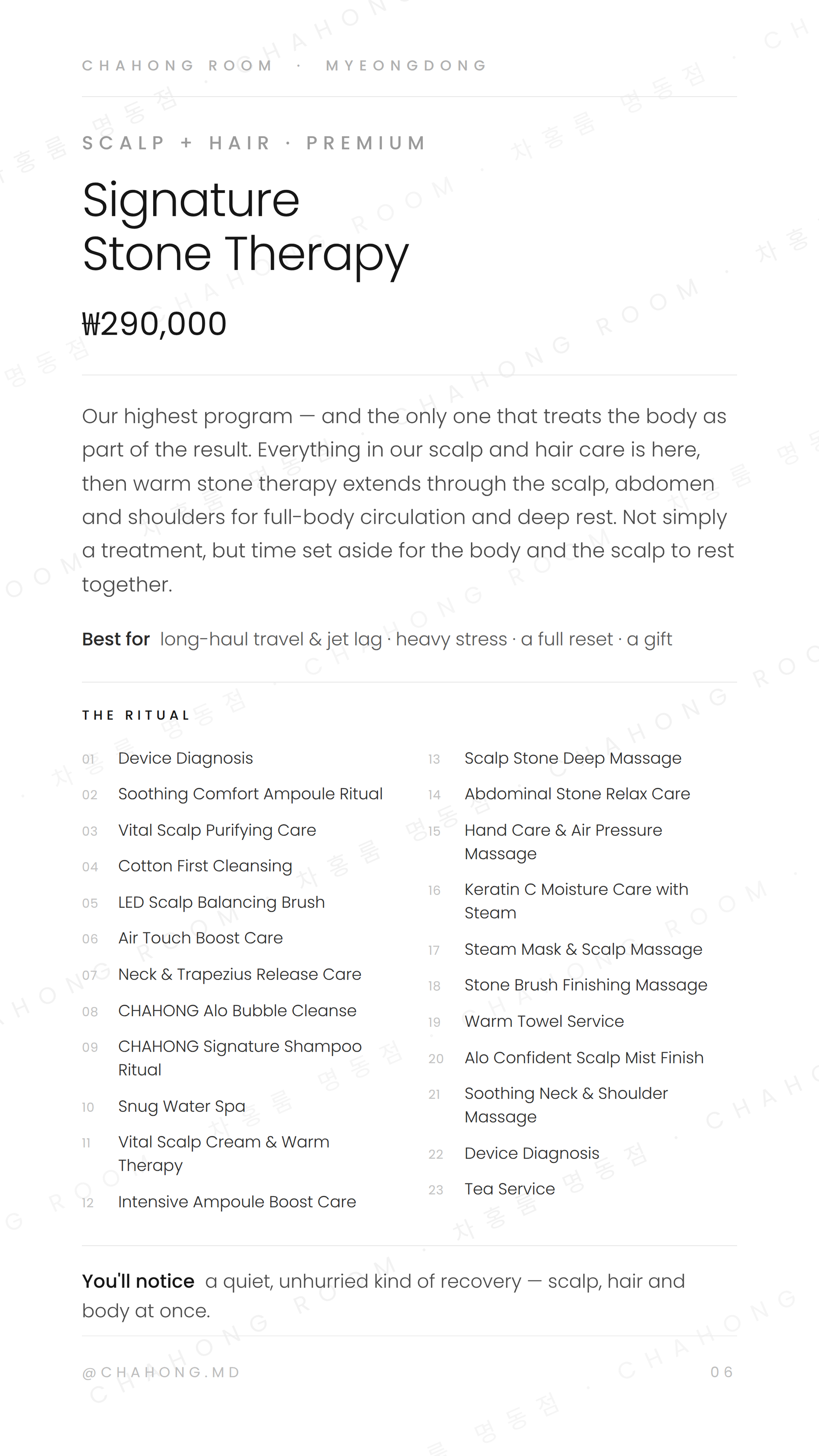
The exact process depends on the provider and the condition of the scalp. A Korean scalp-care or head spa session may include several stages.
1. Scalp Assessment
The scalp may first be examined to identify dryness, visible flakes, oil levels, sensitivity, or buildup. This helps determine whether a gentle moisturizing approach or another type of scalp care is appropriate.
2. Gentle Scalp Cleansing
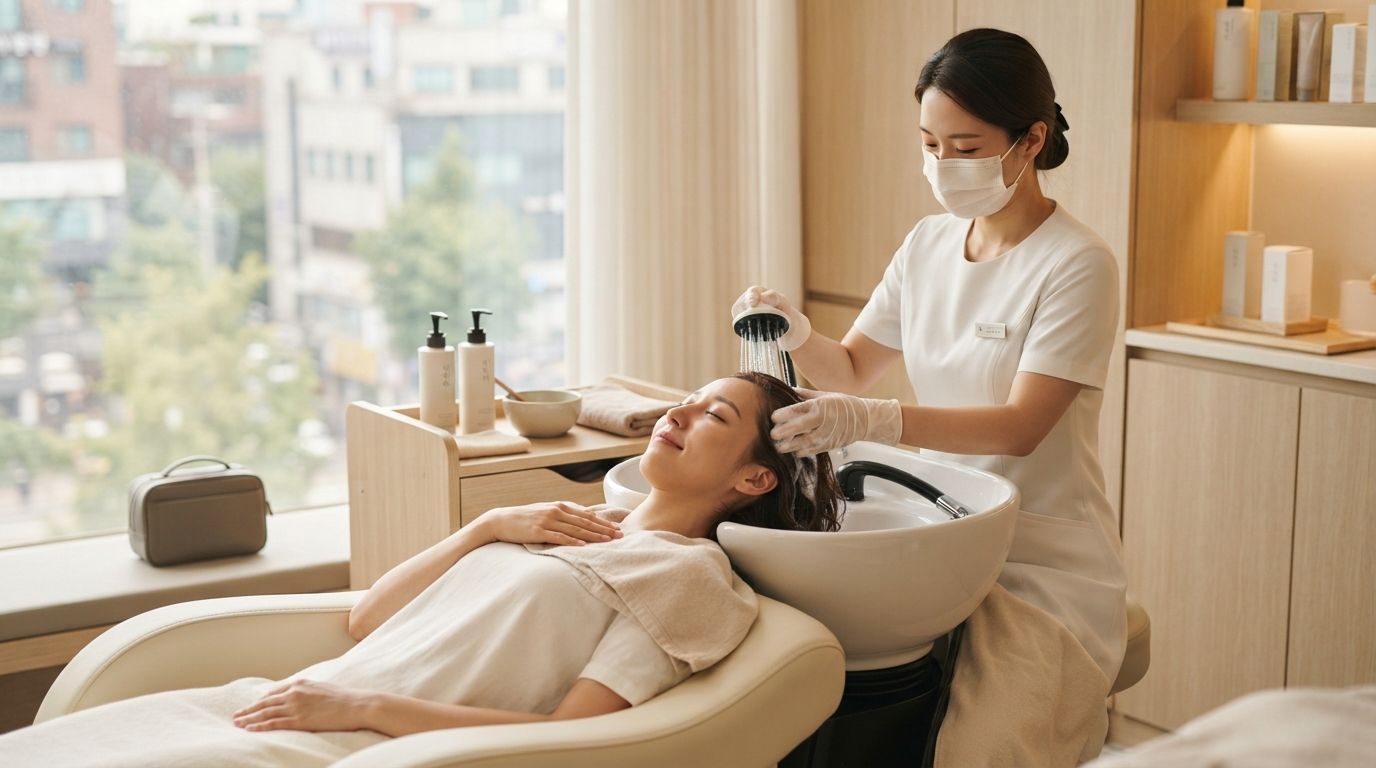
A mild cleansing step removes sweat, surface impurities, and product residue without unnecessarily stripping the scalp.
3. Hydration and Soothing Care
Moisture-supporting or calming products may be applied to help improve the feeling of tightness and dryness.
4. Scalp Massage
A gentle massage may be incorporated into a head spa treatment. This can make the session relaxing, although massage itself should not be considered a treatment for an underlying scalp disease.
5. Finishing Care
The session may finish with scalp-conditioning products and hair drying or styling, depending on the service.
Dry Scalp Treatment vs. Dandruff Treatment
These concerns can look similar but should not automatically be treated in the same way.
Dry scalp treatment may be more appropriate when:
- The scalp feels tight or dry
- Flakes are relatively small and dry
- There is little or no excessive oil
- Symptoms are associated with frequent washing or environmental dryness
- The main goal is scalp comfort and moisture support
Dandruff-focused care may be more appropriate when:
- Flaking repeatedly returns
- There are noticeable white or yellow flakes
- The scalp is oily as well as flaky
- Itching is persistent
- Symptoms continue despite changing the hair-care routine
Persistent dandruff can also be associated with conditions such as seborrheic dermatitis, psoriasis, eczema, or other scalp disorders. In these situations, salon-style scalp care may not address the underlying cause.
Who May Consider Dry Scalp Treatment in Seoul?
A professional scalp-care session may be worth considering if you experience:
- Dry or tight scalp
- Mild flaking
- Occasional scalp itchiness
- Scalp discomfort after coloring or chemical treatments
- Seasonal dryness
- Dryness after frequent shampooing
- A desire for hydration-focused Korean scalp care
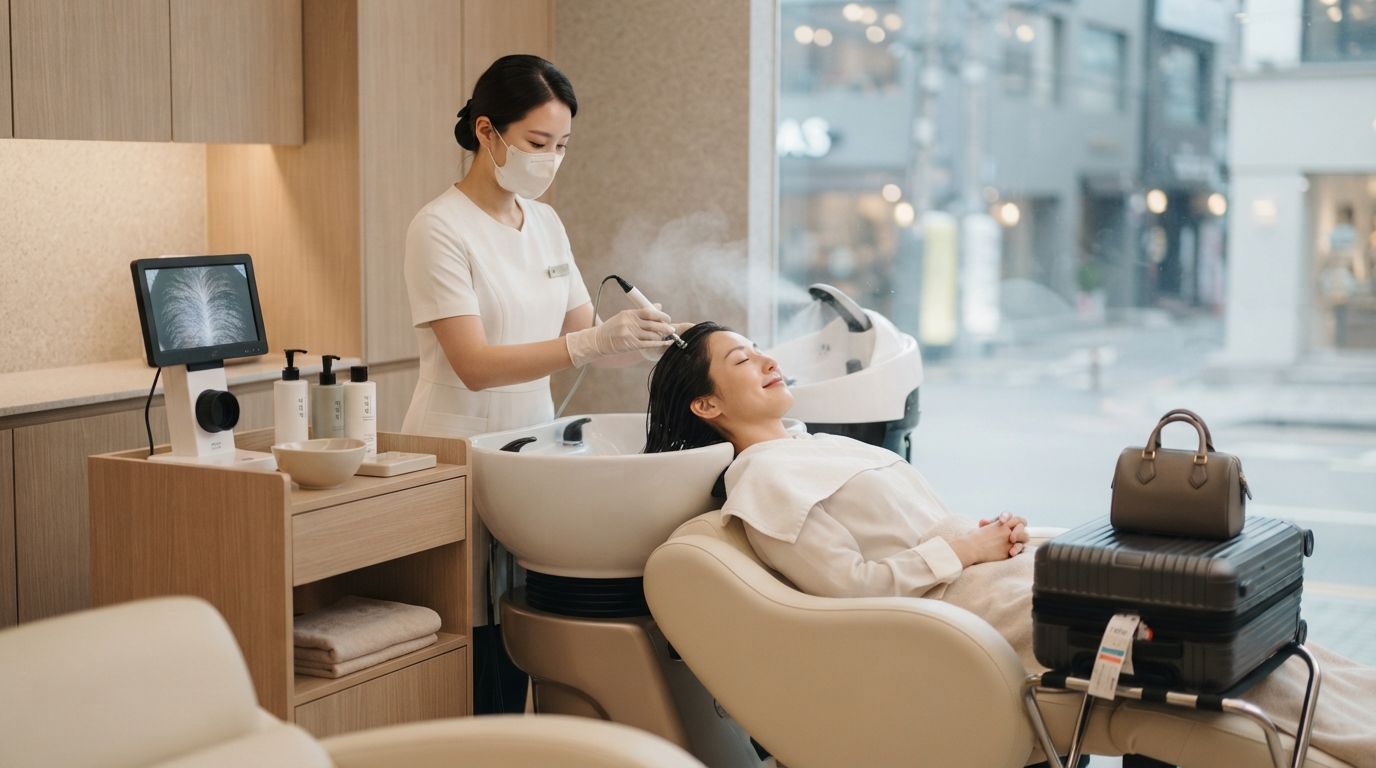
International visitors may also consider a scalp treatment while in Seoul, particularly if travel, weather changes, or a different hair-care routine has made the scalp feel uncomfortable.
How Long Does a Dry Scalp Treatment Take?
Treatment duration varies by provider and by the number of steps included. A basic scalp-care service may be relatively short, while a more comprehensive Korean head spa can include assessment, cleansing, treatment application, massage, and finishing care.
Before booking, ask:
- How long is the complete session?
- Is scalp analysis included?
- Is hydration treatment included?
- Is massage part of the service?
- Is hair drying or styling included?
- Is the treatment suitable for sensitive scalps?
How Often Should You Get Dry Scalp Treatment?
There is no universal schedule. The appropriate frequency depends on the severity of dryness, scalp sensitivity, hair-care routine, season, and the type of treatment being performed.
Some people may only need occasional professional care alongside a suitable home routine. Others with recurring symptoms may need a more structured approach.
Avoid excessive exfoliation or aggressive cleansing simply because the scalp feels flaky. Over-treatment can potentially increase irritation rather than improve comfort.
When Should You See a Dermatologist?
Professional medical evaluation is more appropriate when symptoms are persistent, severe, or unusual.
Consider seeking medical assessment if you have:
- Significant redness or inflammation
- Severe or persistent itching
- Burning or pain
- Thick or widespread scaling
- Sores or oozing areas
- Sudden or unexplained hair loss
- Symptoms that repeatedly return
- No improvement after changing your routine
Different scalp conditions can appear similar, so persistent symptoms may require an accurate diagnosis before treatment is selected.
Dry Scalp Care for International Visitors in Seoul
For international patients and visitors, it is useful to clarify what type of service you are booking. A head spa or scalp-care session is generally focused on cleansing, hydration, comfort, and relaxation. A medical dermatology consultation is different and is intended to evaluate possible scalp disorders.
Before your appointment, consider asking whether:
- English-language consultation is available
- Scalp analysis is included
- The service is suitable for dry or sensitive skin
- Medical consultation is available if symptoms appear abnormal
- Aftercare instructions are provided
This distinction can help you choose a service that matches your actual scalp concern.
Benefits and Limitations of Dry Scalp Treatment
Potential benefits of appropriate scalp care can include:
- Improved scalp comfort
- Reduced feeling of tightness
- Better removal of surface buildup
- Temporary improvement in dryness or flaking
- A more comfortable hair-care routine
- Relaxation during a head spa session
However, results depend on the underlying cause. A cosmetic scalp treatment cannot be expected to cure every condition that causes dryness or scaling.
Conclusion
Dry scalp treatment in Seoul can include gentle cleansing, hydration-focused scalp care, soothing treatments, and Korean head spa services. These options may be useful for uncomplicated dryness, tightness, or mild flaking.
If symptoms are persistent, severe, inflamed, or accompanied by significant hair loss, it is better to seek professional evaluation rather than assuming the problem is simply dry skin. Choosing treatment based on the underlying scalp condition is an important part of safe and effective care.
Frequently Asked Questions
Is dry scalp the same as dandruff?
No. Dry scalp and dandruff can both produce flakes, but they can have different causes and may require different approaches.
Can a Korean head spa help with dry scalp?
A hydration-focused head spa may improve scalp comfort and provide gentle cleansing and moisture-supporting care. It should not be considered a medical treatment for an underlying scalp disease.
How often should I get dry scalp treatment?
There is no fixed schedule. Frequency depends on scalp condition, sensitivity, lifestyle, season, and the type of treatment.
Can dry scalp cause hair loss?
Dryness itself does not explain every case of hair loss. If noticeable or persistent hair shedding occurs alongside scalp symptoms, professional evaluation can help determine the possible cause.
Should I exfoliate a dry scalp?
Not necessarily. Excessive exfoliation can irritate an already sensitive or dry scalp. A gentle approach is generally more appropriate unless a professional recommends otherwise.
When should I see a dermatologist for a dry scalp?
Seek professional assessment if you have persistent itching, significant redness, pain, sores, thick scaling, recurring symptoms, or unexplained hair loss.