Korean Head Spa for Dandruff
Korean Head Spa for Dandruff
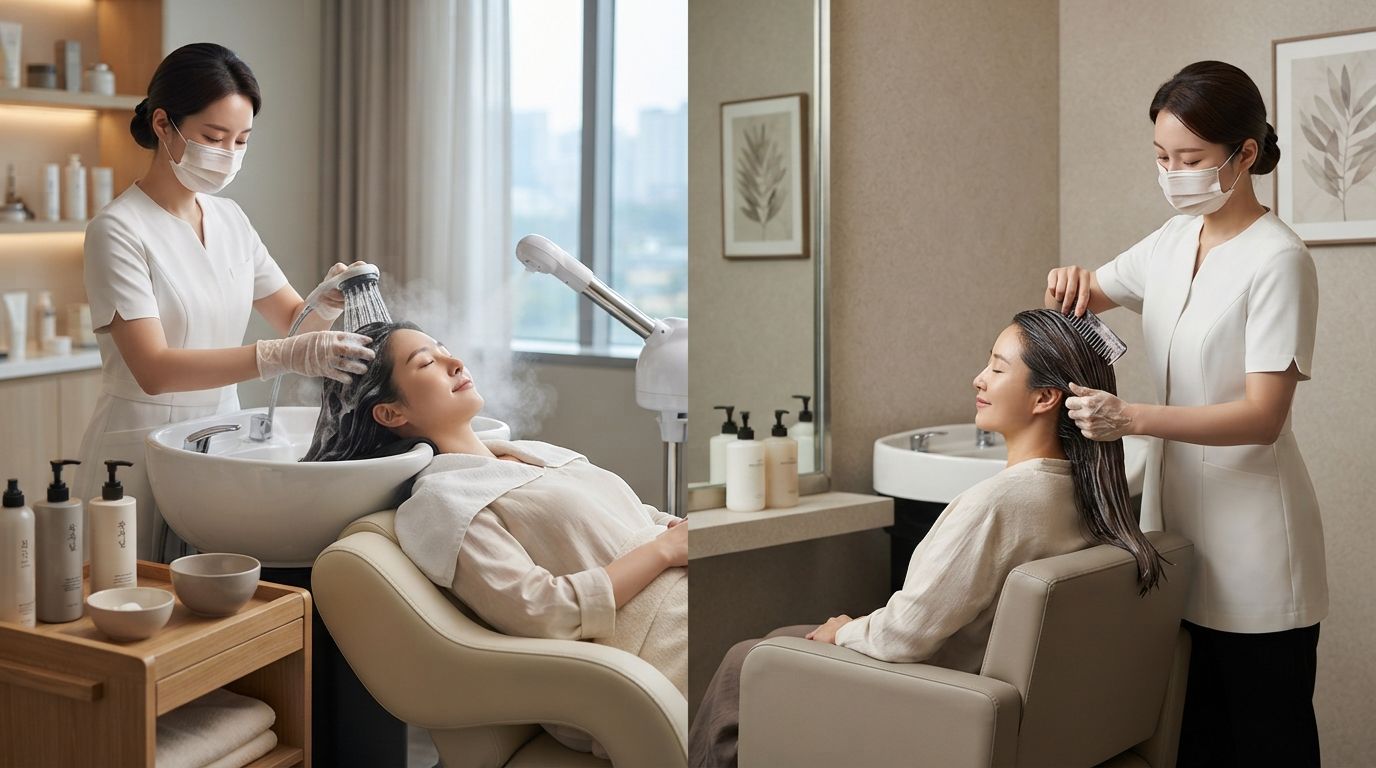
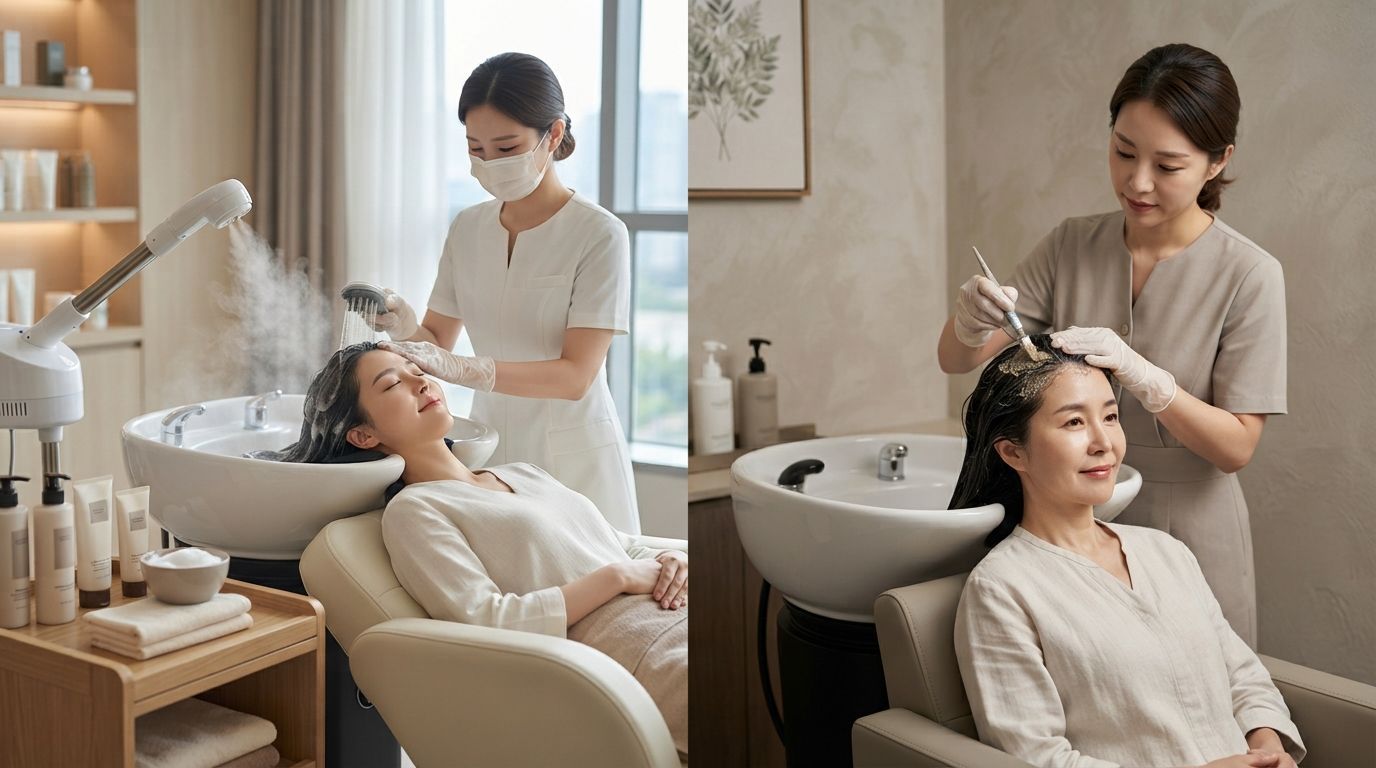
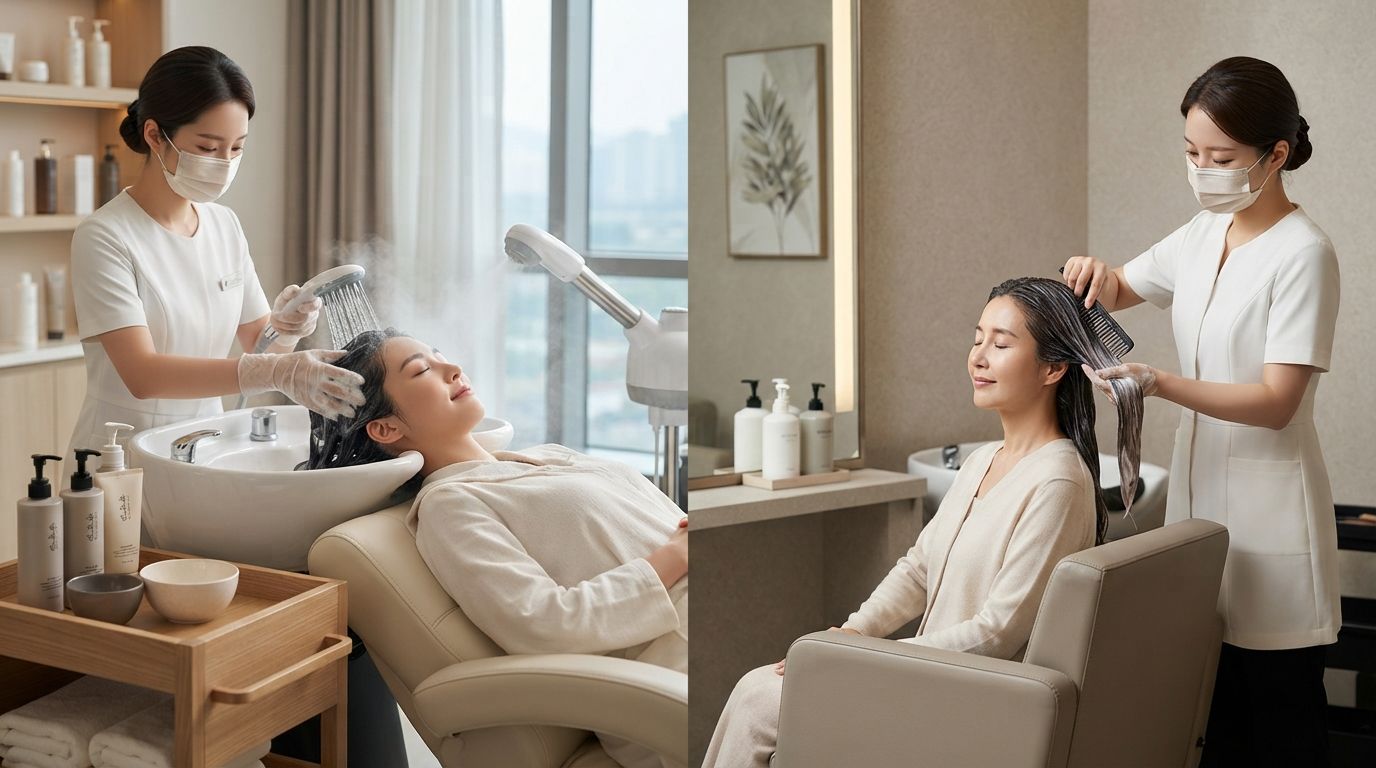
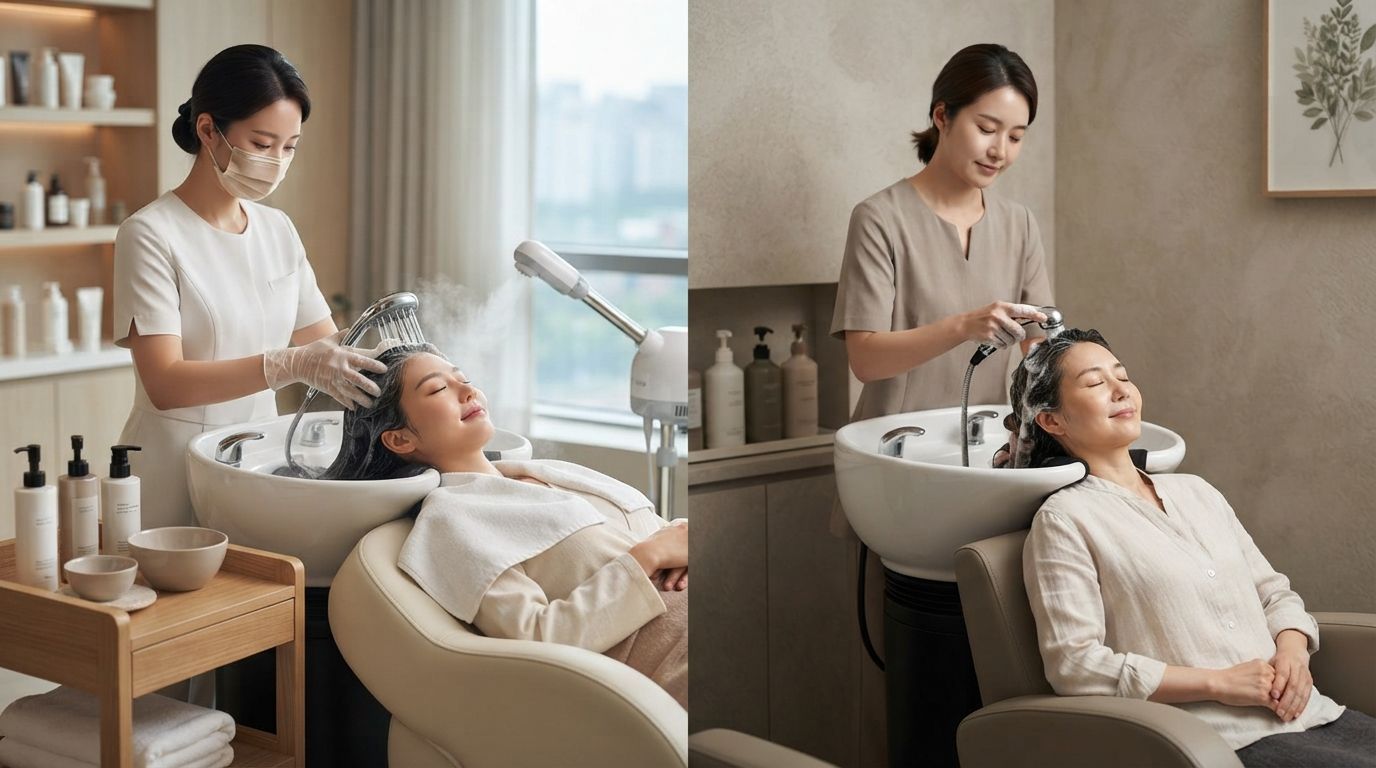
A Korean head spa can be a useful scalp-care option for people with mild dandruff, scalp buildup, excess oil, or a heavy-feeling scalp, but it should not be considered a medical cure for dandruff. Korean head spa treatments commonly combine scalp analysis, cleansing, exfoliation, massage, and conditioning or hydration care.
For persistent or severe dandruff, the priority is identifying the underlying cause. Dandruff can be associated with oily skin, hair-care habits, seborrheic dermatitis, psoriasis, eczema, or other scalp conditions. Medical treatment may therefore be more appropriate than a cosmetic head spa alone.
Can a Korean Head Spa Help With Dandruff?
A Korean head spa may help remove loose flakes, excess sebum, dead skin cells, sweat, and product buildup from the scalp. This can leave the scalp feeling cleaner and more comfortable.
However, there is an important distinction between scalp cleansing and dandruff treatment.
A head spa can address surface buildup, while medically treating dandruff may require an anti-dandruff shampoo or other treatment directed at the underlying scalp condition. Common anti-dandruff ingredients include ketoconazole, selenium sulfide, salicylic acid, zinc pyrithione, sulfur, and coal tar, depending on the product and individual situation.
When a Head Spa May Be Appropriate
A Korean head spa may be worth considering when your main concerns are:
- Mild visible flakes
- Excess scalp oil
- Product buildup
- Sweat accumulation
- A heavy or unclean scalp feeling
- Dryness related to cosmetic buildup
- Relaxation combined with scalp care
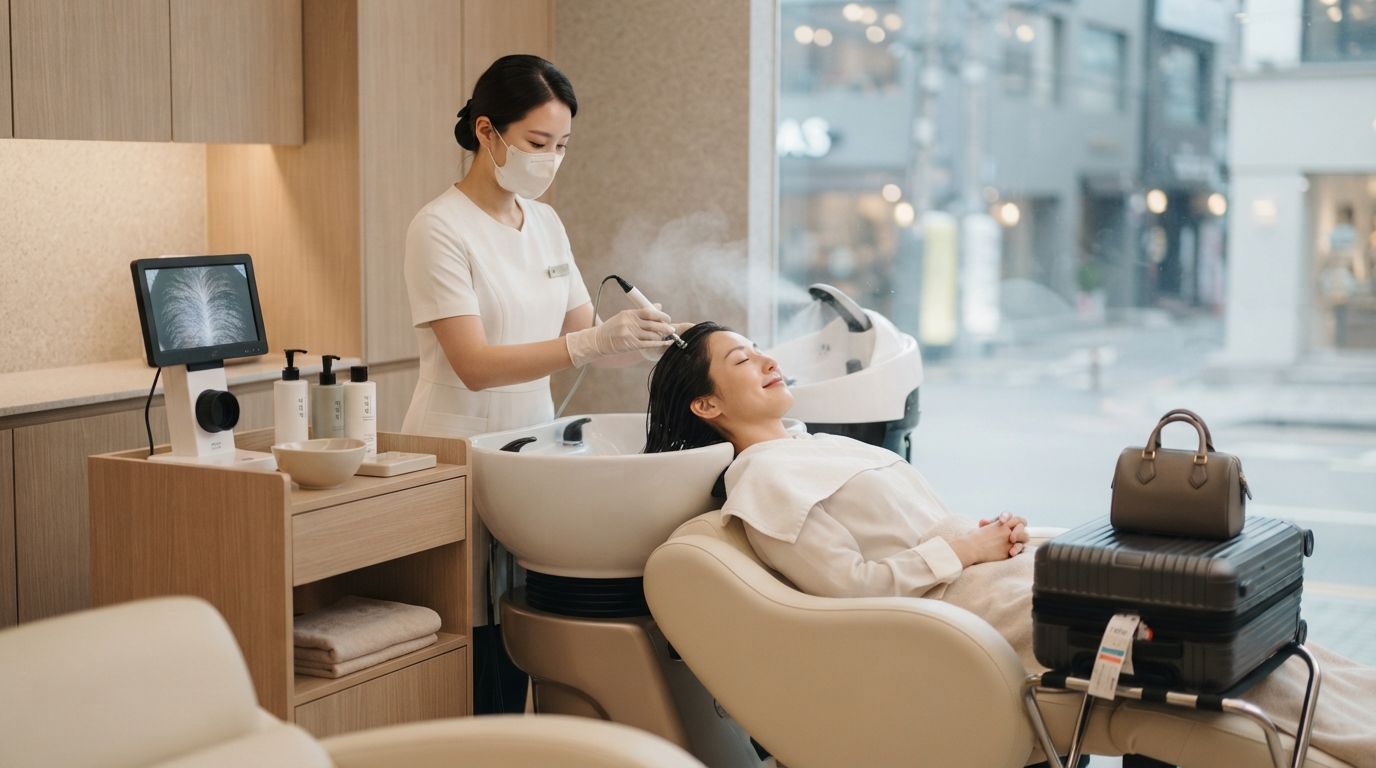
It can also be appealing to international visitors looking for a Korean beauty and wellness experience while visiting Seoul.
When a Head Spa Is Not Enough
A head spa should not replace medical evaluation when dandruff is persistent, severe, or accompanied by significant inflammation.
A dermatologist may be appropriate if you have:
- Persistent or worsening dandruff
- Severe itching
- Red or swollen scalp
- Thick or extensive scaling
- Painful scalp lesions
- Pus-filled bumps
- Unexplained hair loss
These symptoms can occur with conditions that require diagnosis and condition-specific treatment.
What Happens During a Korean Head Spa for Dandruff?
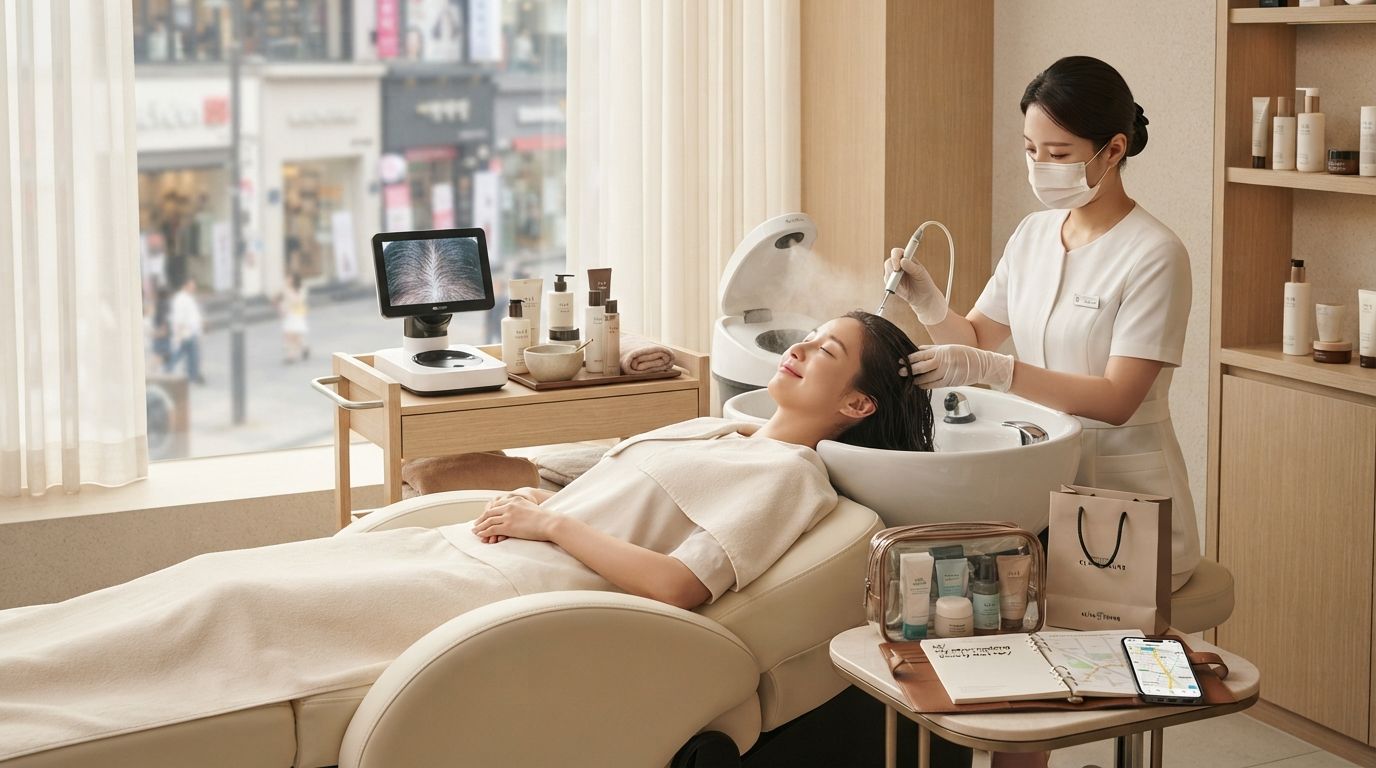
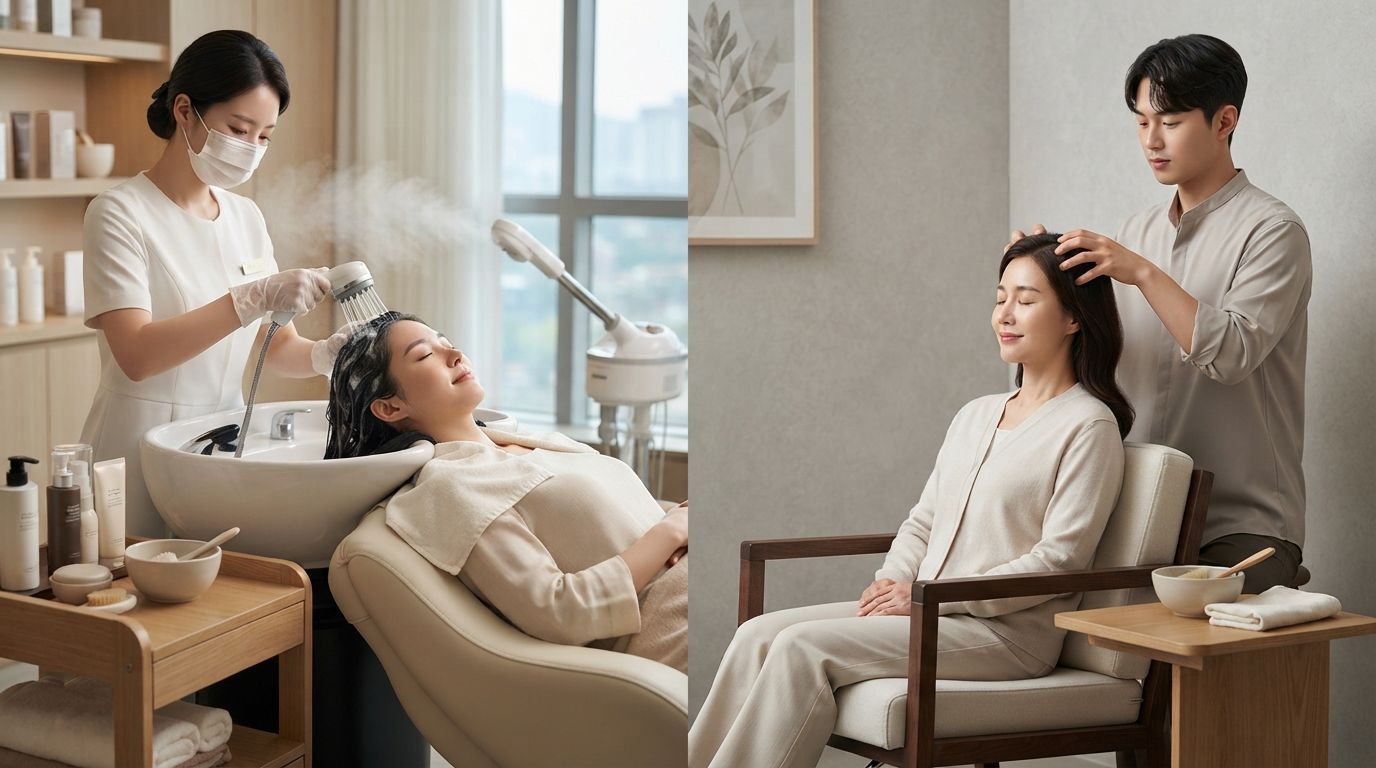
The exact process varies by provider, but a scalp-focused Korean head spa may involve several stages.
Scalp Assessment
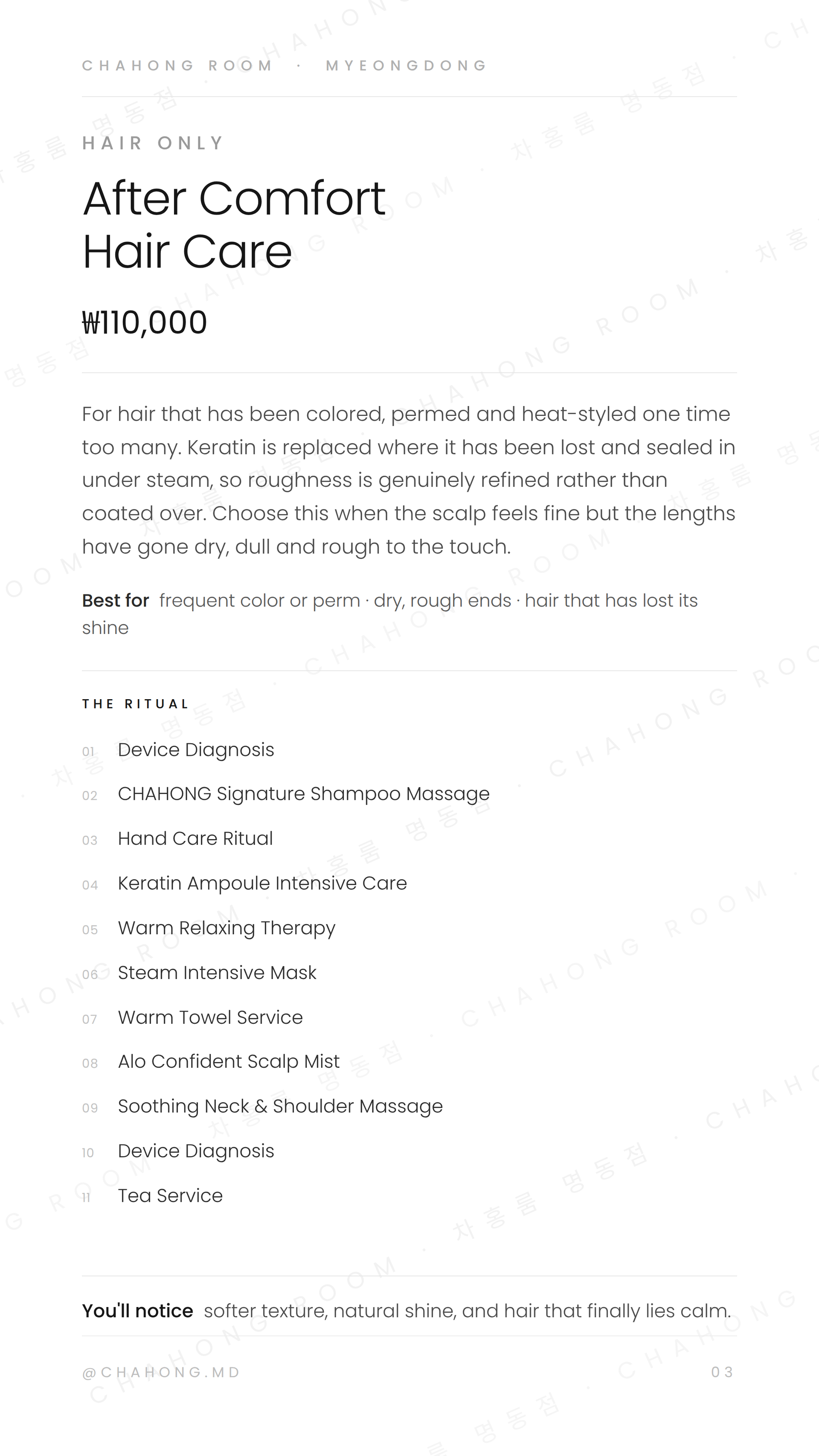
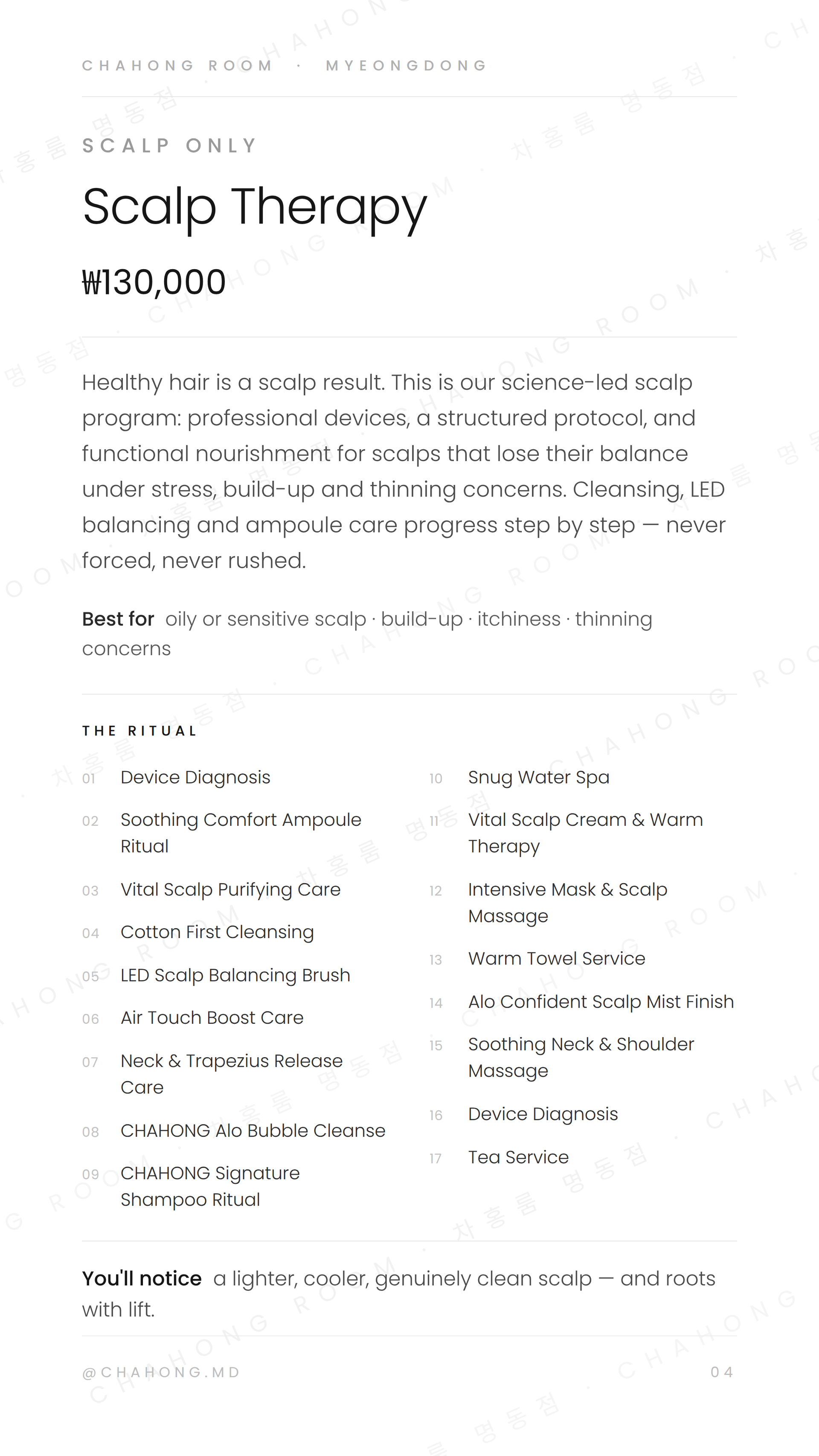
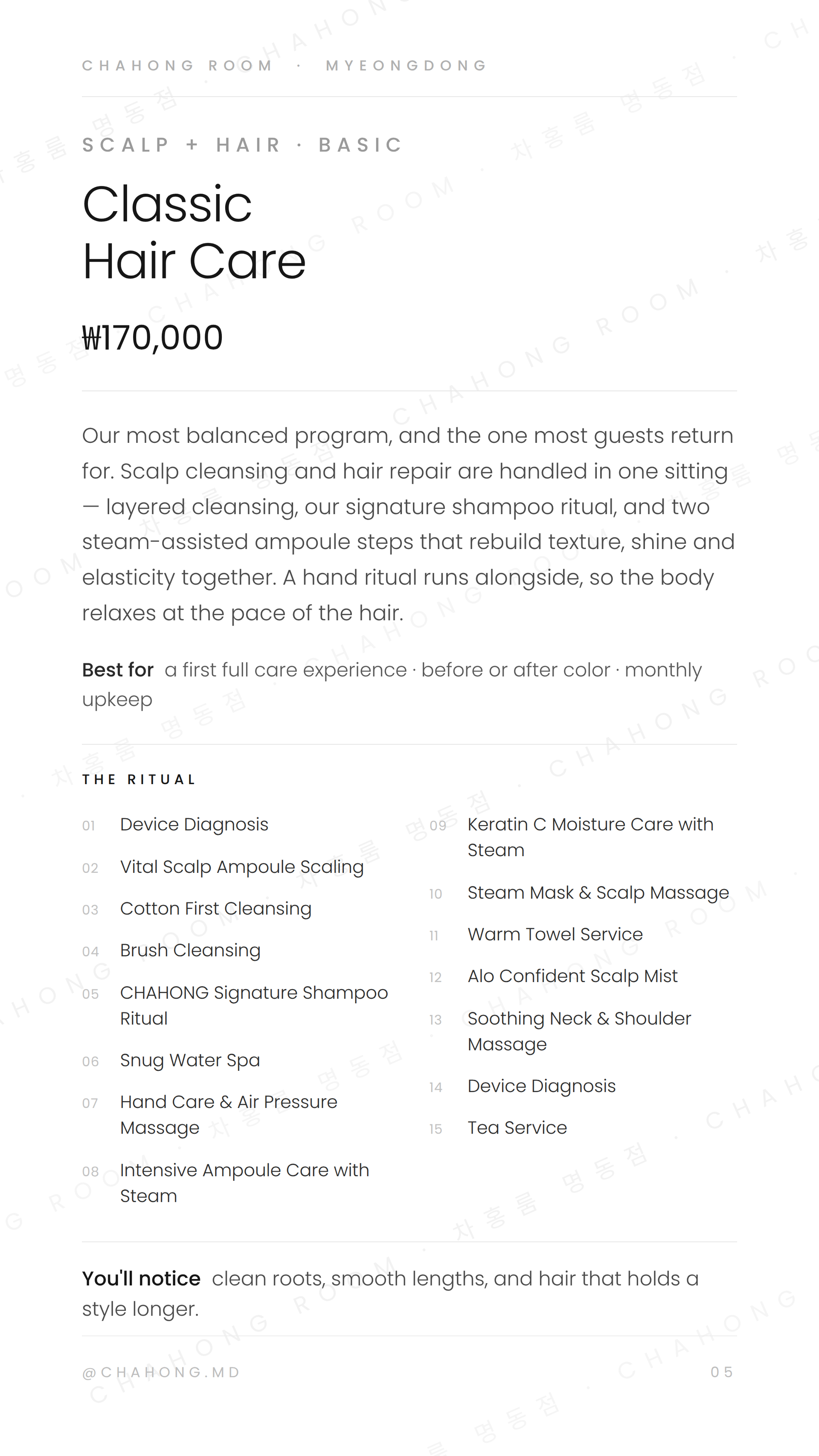
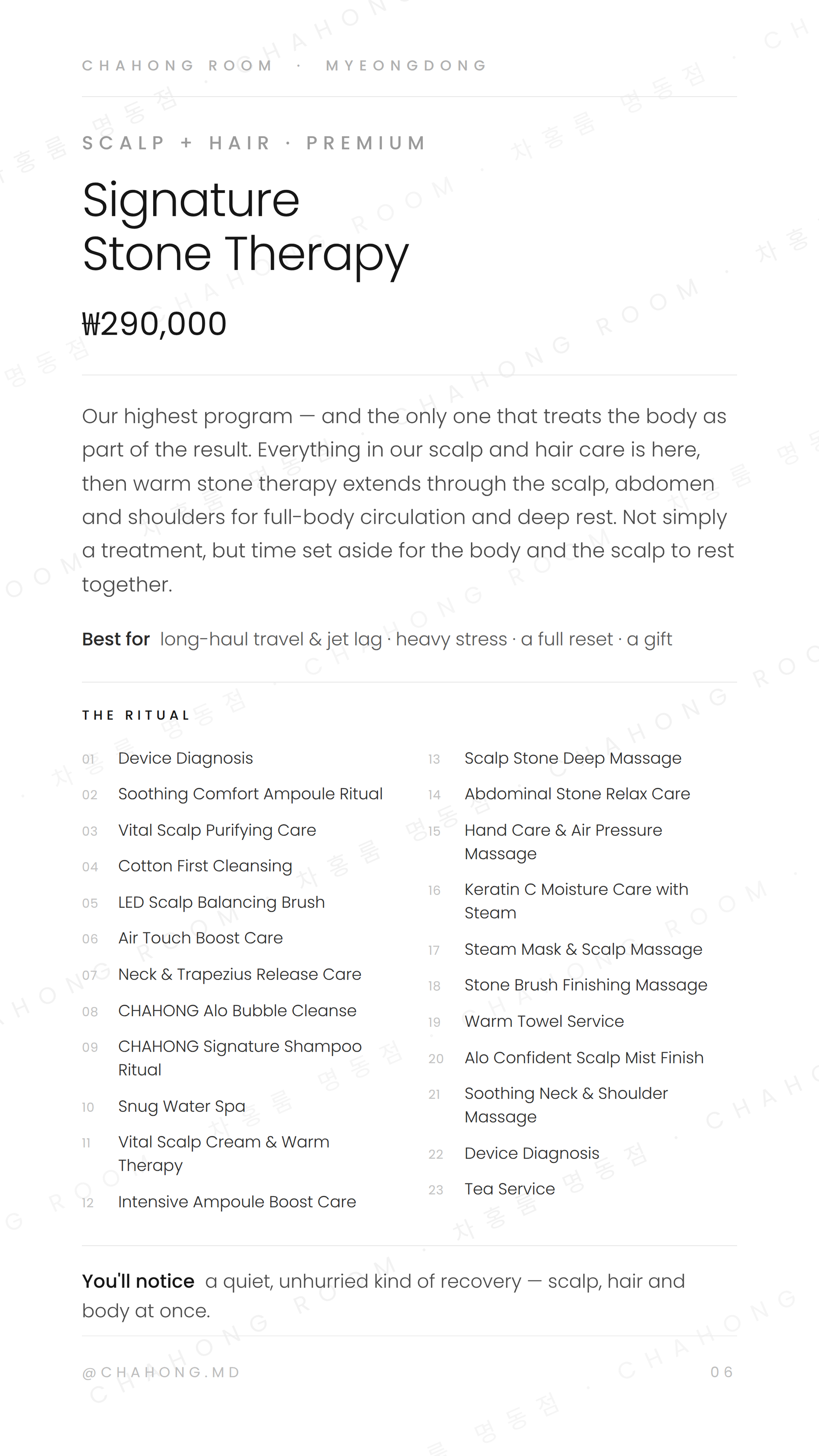
The session may begin with an examination or scalp analysis to identify visible oiliness, buildup, dryness, or flaking.
This can be useful because dandruff does not always have the same appearance. A flaky scalp may instead be affected by dryness, product irritation, or another dermatological condition.
Deep Scalp Cleansing
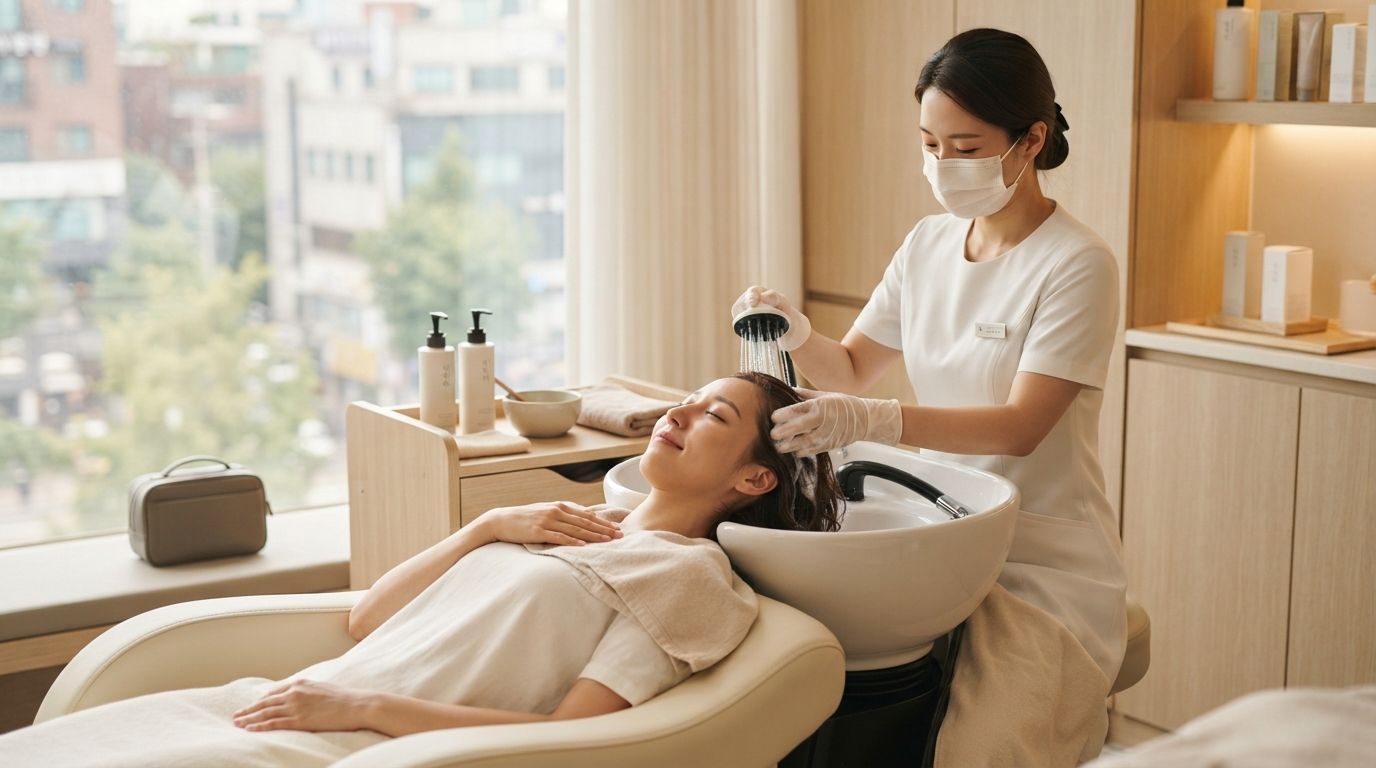
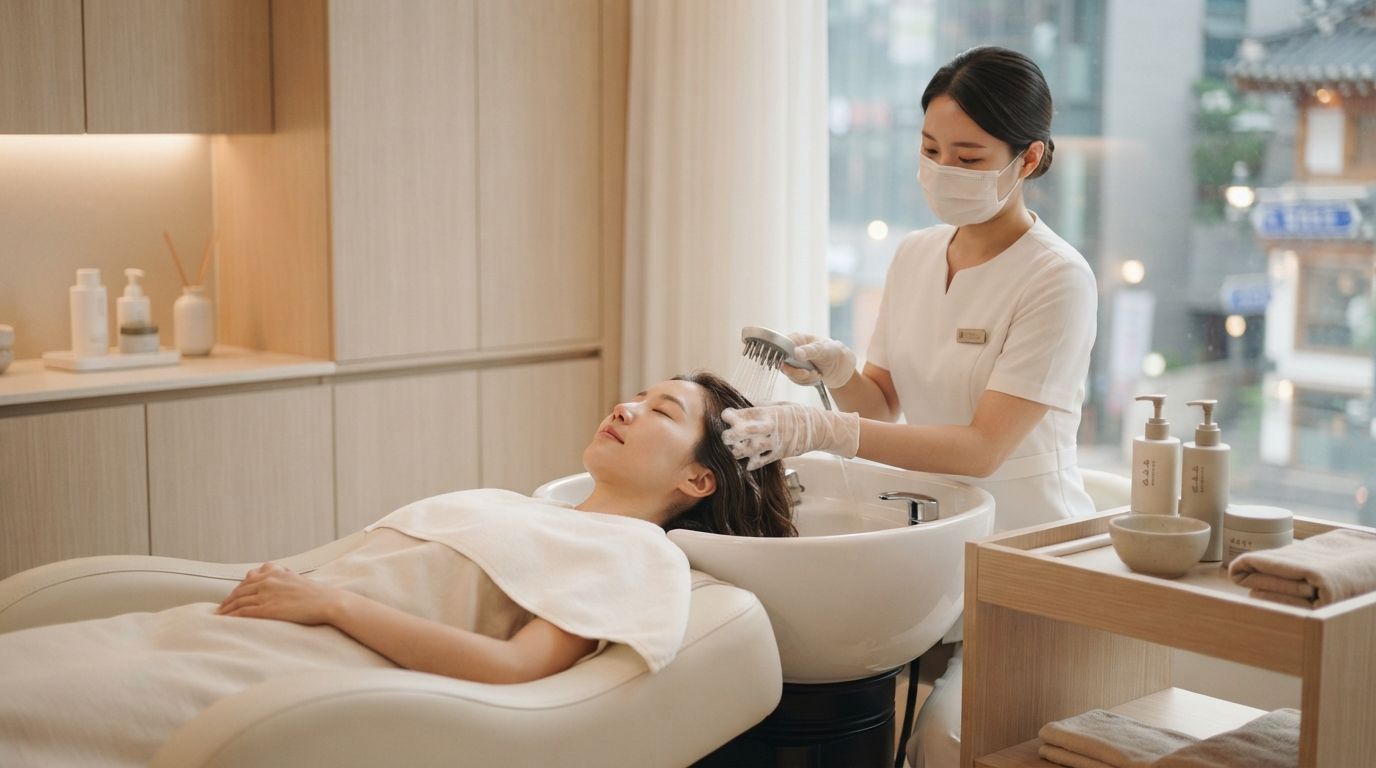
The scalp is cleansed to remove excess sebum, sweat, styling residue, and loose debris.
This can make the scalp feel fresher, but cleansing does not permanently change how much sebum the sebaceous glands produce.
Gentle Exfoliation
Some head spa programs include scalp scaling or exfoliation to loosen accumulated dead skin and residue.
Gentle treatment is preferable to aggressive scrubbing. Excessive exfoliation may irritate the scalp, particularly if it is already inflamed or sensitive.
Massage and Relaxation
Head, scalp, neck, and shoulder massage are common elements of Korean head spa experiences. These steps are primarily associated with relaxation and comfort rather than medical treatment of dandruff.
Hydration or Conditioning Care
After cleansing, some programs apply moisturizing or conditioning products to the scalp or hair. The specific products vary between providers.
For an irritated scalp, product selection matters because fragrances, essential oils, or other ingredients may cause irritation in sensitive individuals.
Korean Head Spa vs Medical Dandruff Treatment
These approaches have different purposes and should not be treated as interchangeable.
Korean Head Spa
- Primarily focuses on scalp cleansing and wellness
- May remove excess oil and surface flakes
- Often includes exfoliation and massage
- Can provide a temporary feeling of freshness and cleanliness
- Does not necessarily treat the underlying cause of dandruff
- May be suitable for mild buildup-related scalp concerns
Medical Dandruff Treatment
- Focuses on identifying and managing the underlying scalp problem
- May involve medicated shampoos or topical treatments
- Can address dandruff associated with conditions such as seborrheic dermatitis
- Requires treatment appropriate to the individual's symptoms and diagnosis
- May involve ongoing maintenance because some scalp conditions can recur
The appropriate approach depends on whether the primary issue is surface buildup or an underlying scalp condition.
How Often Should You Get a Head Spa for Dandruff?
There is no universal schedule that applies to everyone. Frequency depends on scalp oiliness, buildup, sensitivity, hair-care habits, and the type of treatment being performed.
More frequent or more aggressive exfoliation is not necessarily better. If the scalp becomes dry, irritated, or increasingly sensitive after treatment, the treatment approach may need to be changed.
For actual dandruff management, following the directions for an appropriate dandruff shampoo is more important than relying on repeated cosmetic cleansing.
What Should You Ask Before Booking?
If you are considering a Korean head spa specifically because of dandruff, ask the provider:
- Does the treatment include a scalp assessment?
- Is the service designed for scalp buildup or actual dandruff?
- What exfoliating products are used?
- Can the treatment be adjusted for sensitive skin?
- Does the session include deep cleansing?
- How long does the treatment take?
- Is English-language consultation available?
- Should I see a dermatologist instead?
These questions are particularly useful for international visitors who may not be familiar with the difference between Korean scalp-care services and medical dermatology.
Risks and Limitations
A Korean head spa is not completely risk-free simply because it is non-invasive. Exfoliation, cleansing products, fragrances, or massage can cause temporary irritation or sensitivity in some people.
The biggest limitation is that a head spa does not necessarily treat the cause of dandruff. If the flaking is caused by seborrheic dermatitis or another dermatological condition, repeated cleansing may improve the appearance temporarily without controlling the underlying problem.
Aggressive scalp exfoliation can also worsen irritation. A treatment that feels very intensive is not automatically more effective.
Conclusion
A Korean head spa for dandruff can be a useful scalp-care experience when the main concerns are mild flakes, excess oil, buildup, or scalp freshness. Deep cleansing, gentle exfoliation, and relaxation-focused care can improve how the scalp feels and looks temporarily.
However, a head spa should not be confused with medical dandruff treatment. Persistent itching, redness, heavy scaling, painful lesions, or hair loss should be evaluated by a qualified medical professional. For diagnosed dandruff or seborrheic dermatitis, appropriate medicated treatment may be more important than cosmetic scalp cleansing.
FAQs
Does a Korean head spa remove dandruff?
A head spa can remove loose flakes, excess oil, and surface buildup, but it does not necessarily treat the underlying cause of dandruff.
Is a Korean head spa good for an oily, flaky scalp?
It may help cleanse an oily scalp and remove accumulated buildup. If flaking continues despite scalp care, medical assessment may be appropriate.
Can a head spa cure seborrheic dermatitis?
No. A cosmetic head spa should not be considered a cure for seborrheic dermatitis. Medical treatment may be needed to control symptoms and prevent flare-ups.
Should I use dandruff shampoo instead of a head spa?
They serve different purposes. Dandruff shampoo is specifically formulated to manage dandruff, while a head spa primarily provides cleansing and scalp-care services. Appropriate treatment depends on the cause and severity of your symptoms.
Can I get a Korean head spa if my scalp is sensitive?
Possibly, but treatment should be adapted to your scalp condition. If the scalp is inflamed, painful, or severely irritated, professional medical evaluation may be more appropriate before cosmetic scalp treatment.