Korean Scalp Care for Sensitive Scalp
Korean Scalp Care for Sensitive Scalp
Korean scalp care for sensitive scalp focuses on gentle cleansing, hydration, soothing care, and maintaining scalp comfort without unnecessary irritation. It can be useful for people who experience dryness, tightness, mild itching, or discomfort from ordinary hair-care products or environmental changes.
Korean scalp-care routines can include professional scalp analysis, customized cleansing, hydration treatments, and head spa techniques. However, sensitive scalp care should be adapted to the individual's condition. Persistent redness, severe itching, thick scaling, sores, or unexplained hair loss may indicate a scalp condition that requires medical evaluation rather than cosmetic scalp care.
What Is Korean Scalp Care for Sensitive Scalp?
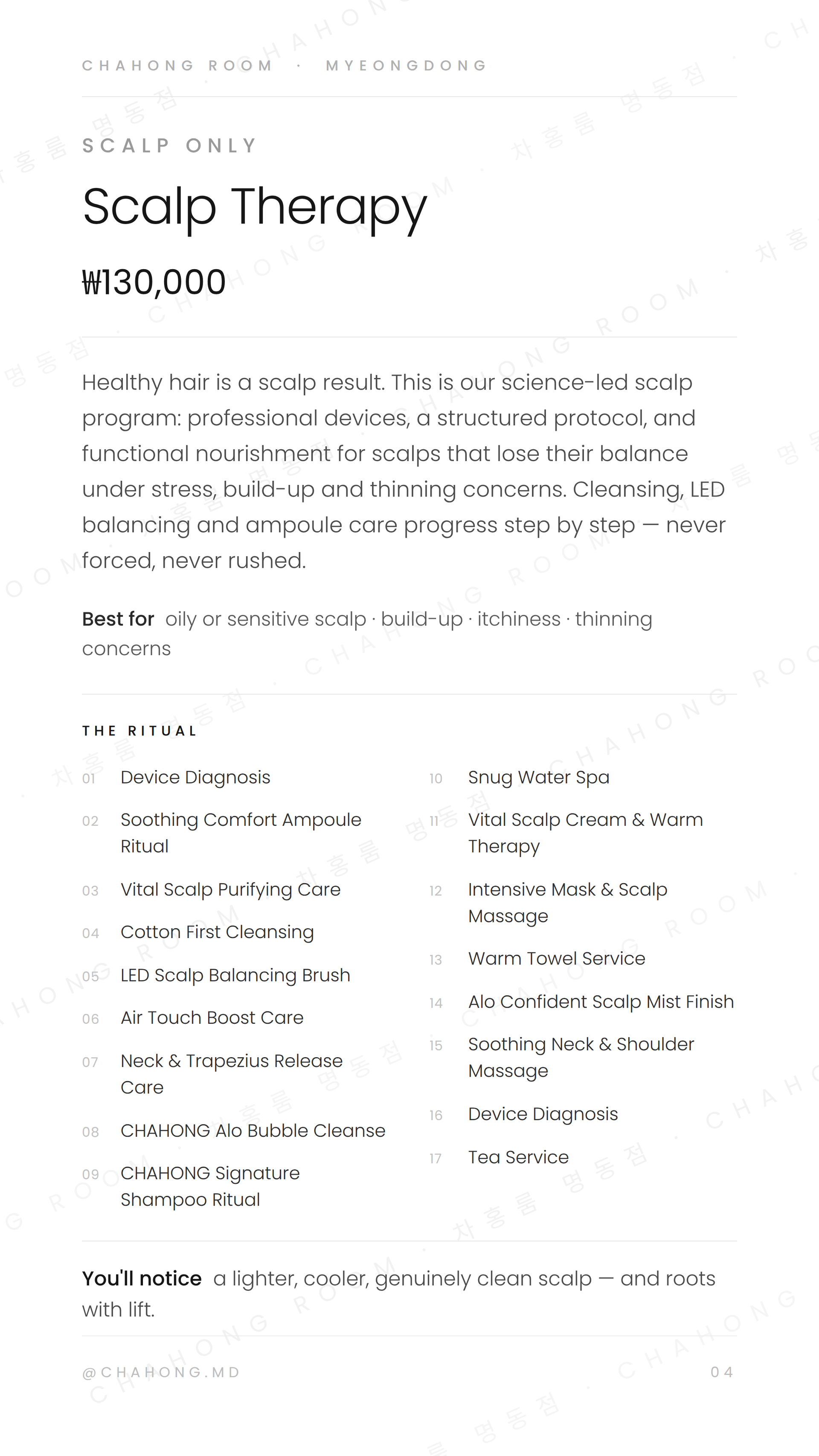
Korean scalp care commonly takes a customized approach to scalp cleanliness, hydration, and overall scalp condition. For sensitive scalps, the focus is generally on minimizing irritation while keeping the scalp clean and comfortable.
A sensitive-scalp routine may include:
- Gentle scalp cleansing
- Hydration-focused treatment
- Soothing scalp products
- Light massage
- Careful removal of surface buildup
- Limited or gentle exfoliation
- Scalp analysis before treatment
The goal is not to use the strongest cleansing or exfoliation possible. For sensitive skin, excessive stimulation can potentially increase discomfort.
What Causes Scalp Sensitivity?
A sensitive scalp can develop for different reasons, and sensitivity itself is not a specific diagnosis.
Common contributing factors include:
- Dry scalp
- Frequent shampooing
- Hot water
- Harsh cleansing products
- Hair dye or chemical treatments
- Fragranced products
- Excessive heat styling
- Aggressive brushing or scratching
- Dry environmental conditions
- Existing scalp conditions
If sensitivity begins shortly after using a new hair product or hair dye, irritation or contact dermatitis may be possible. Symptoms can include itching, redness, burning, swelling, dryness, or scaling. (aad.org)
What Does Korean Scalp Care Involve?
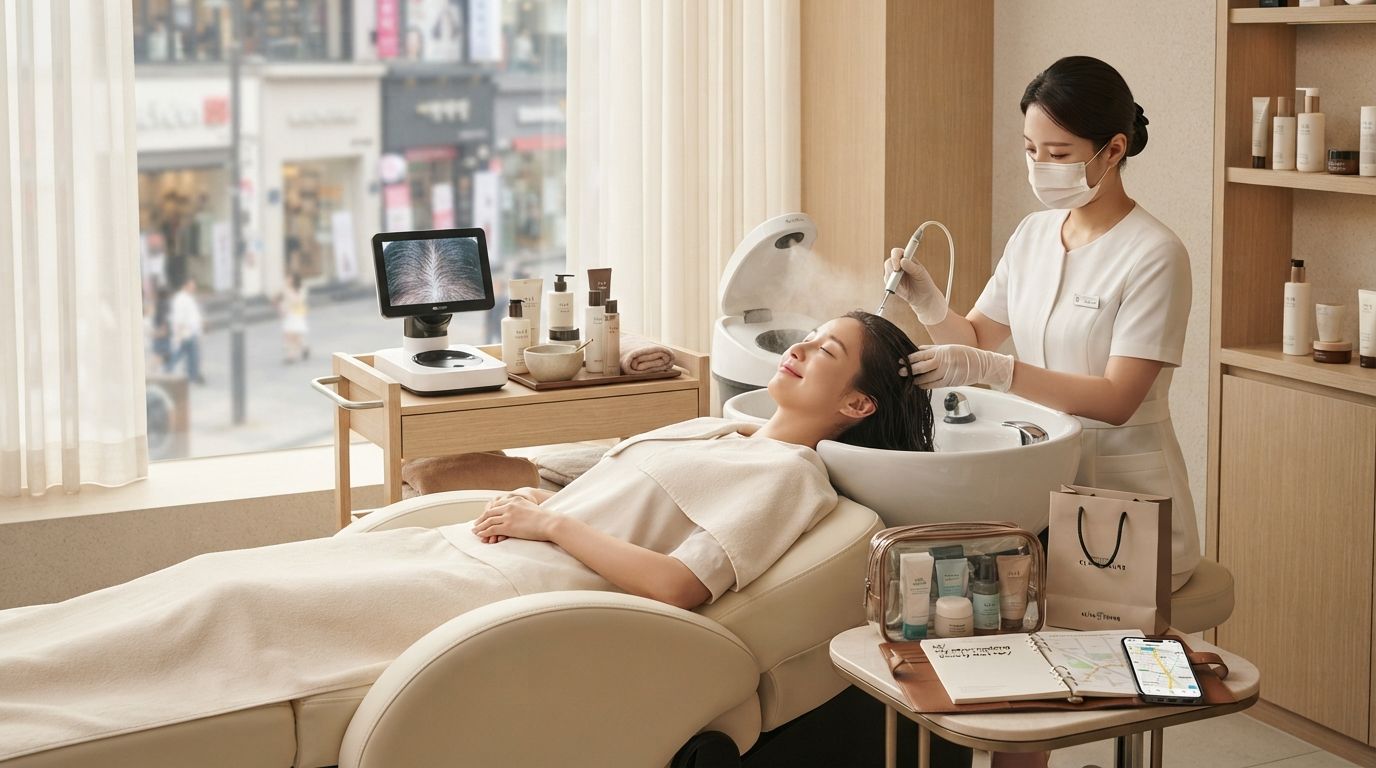
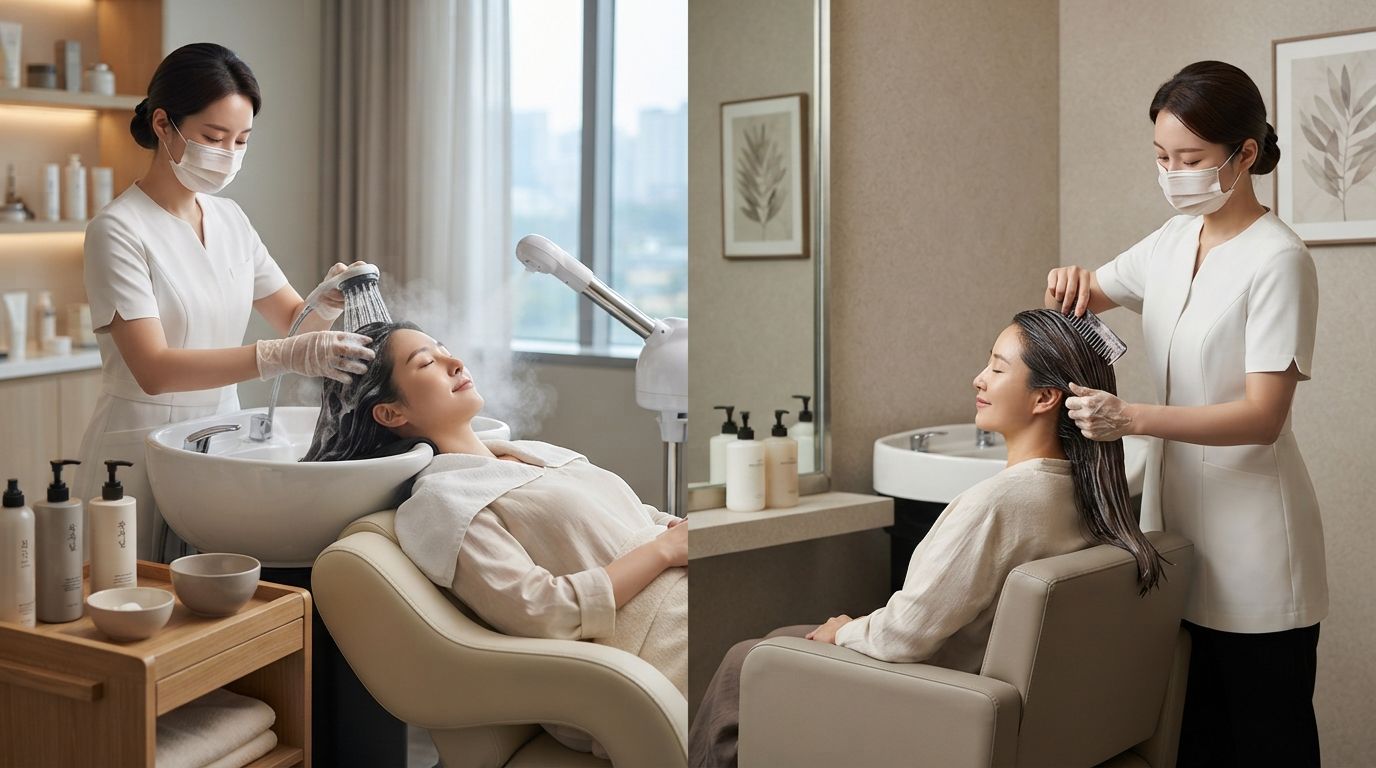
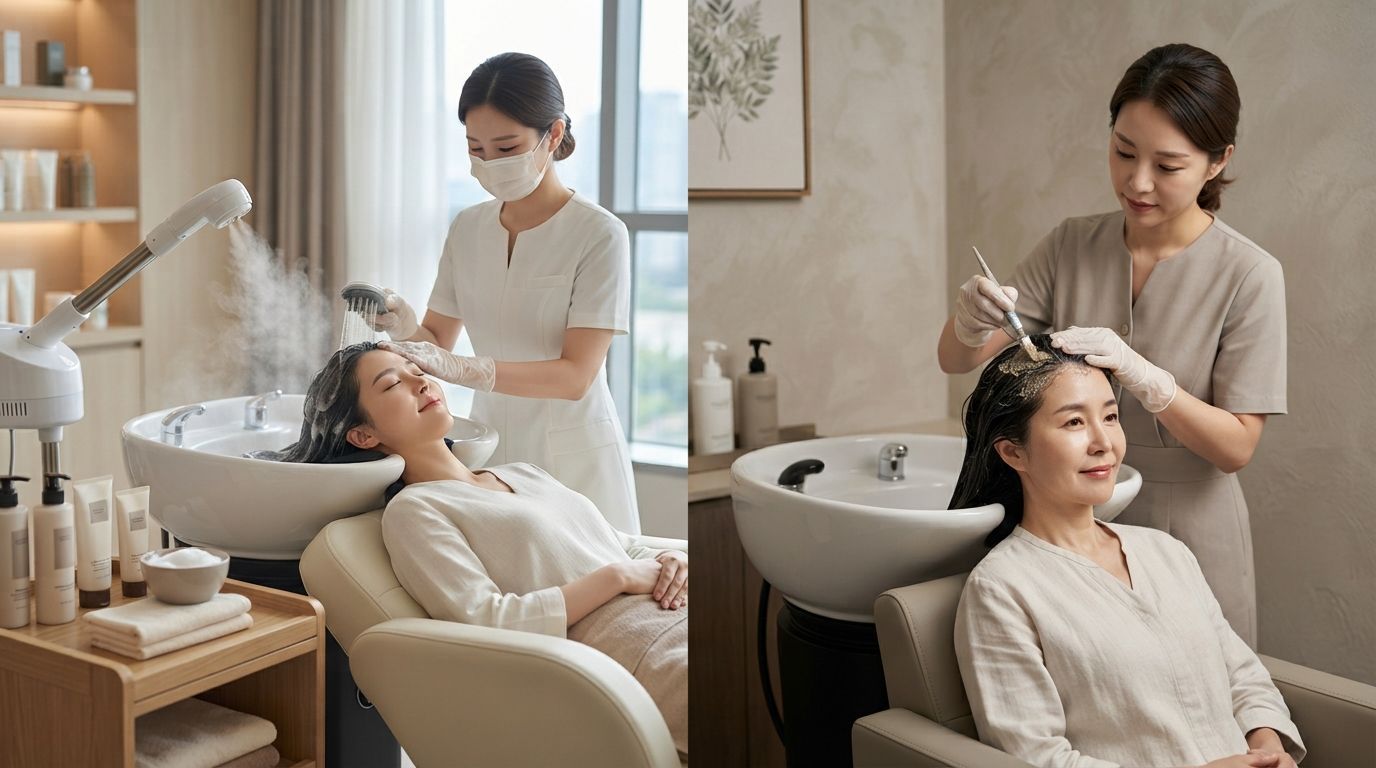
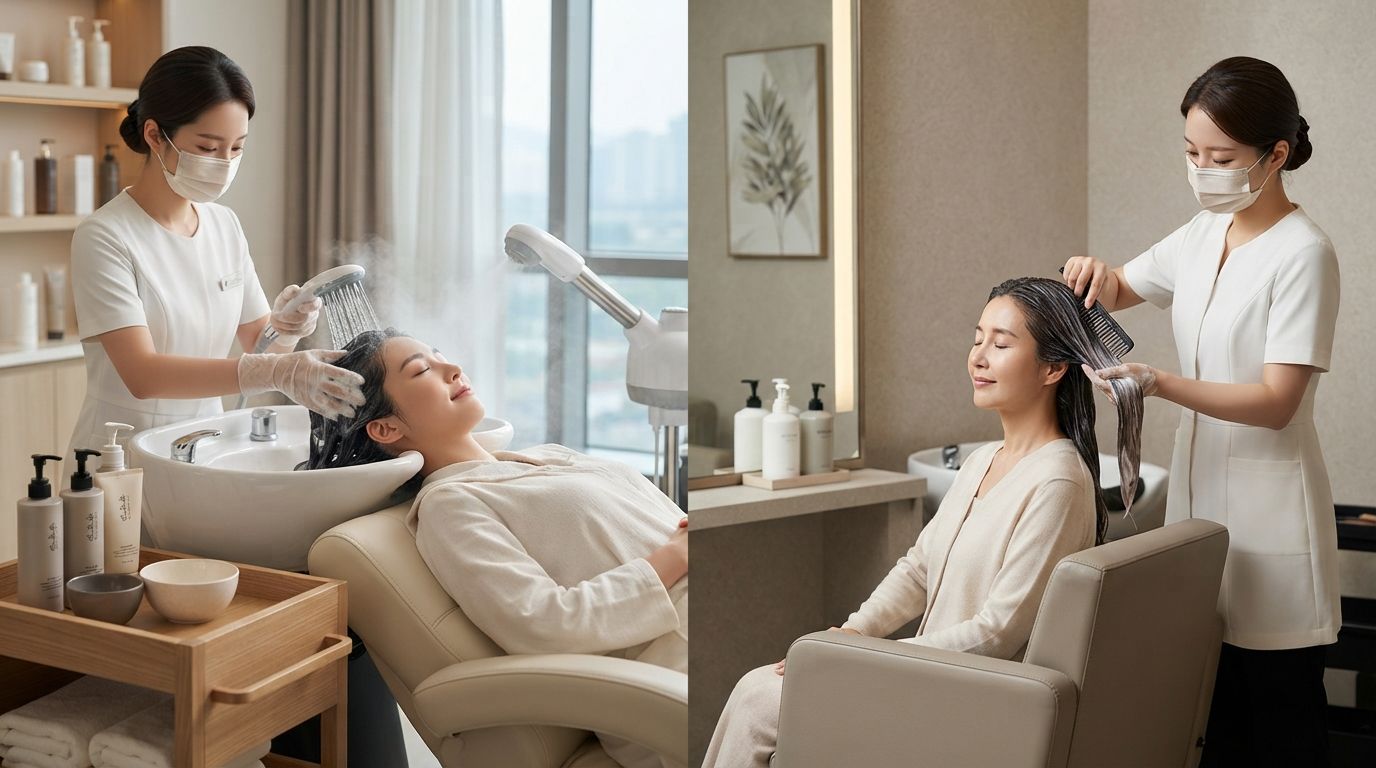
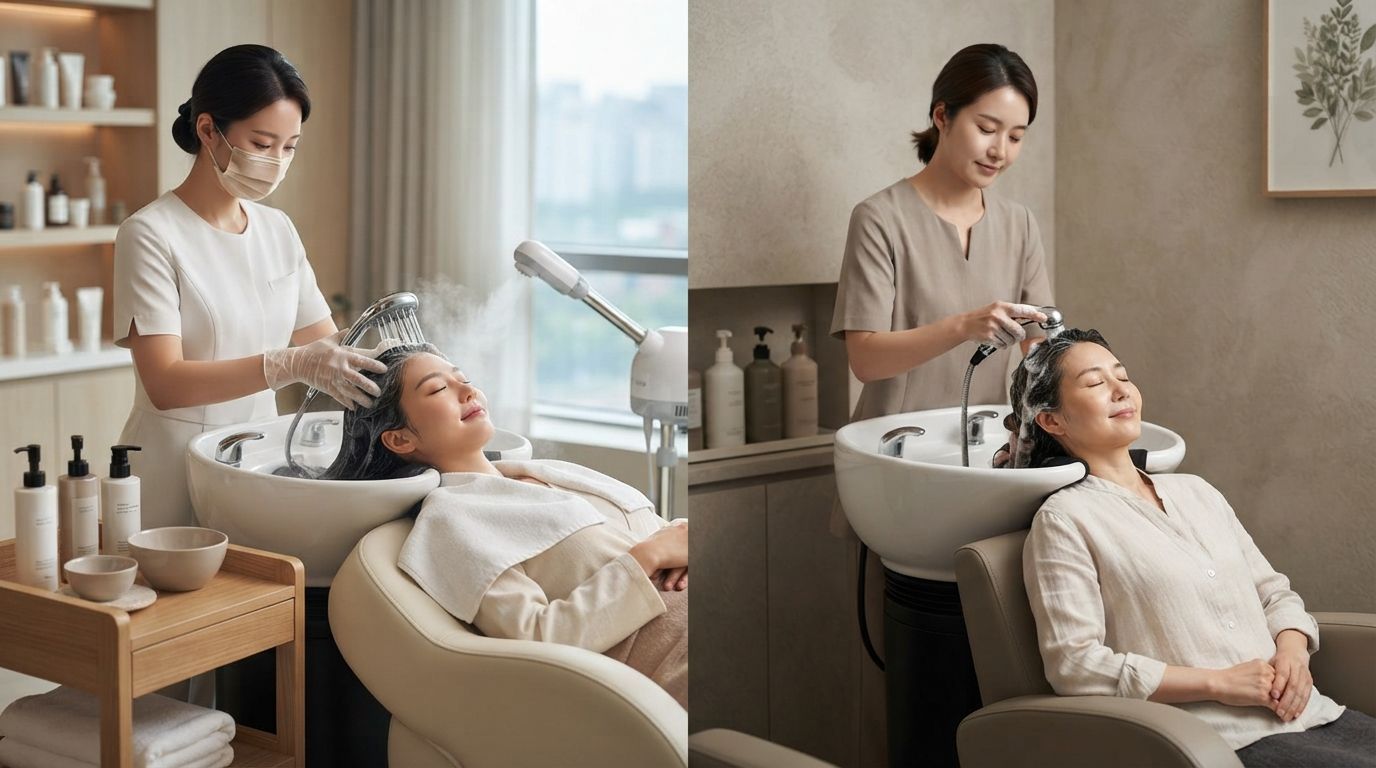
The exact process varies between providers, but a sensitive-scalp treatment may involve several stages.
Scalp Analysis
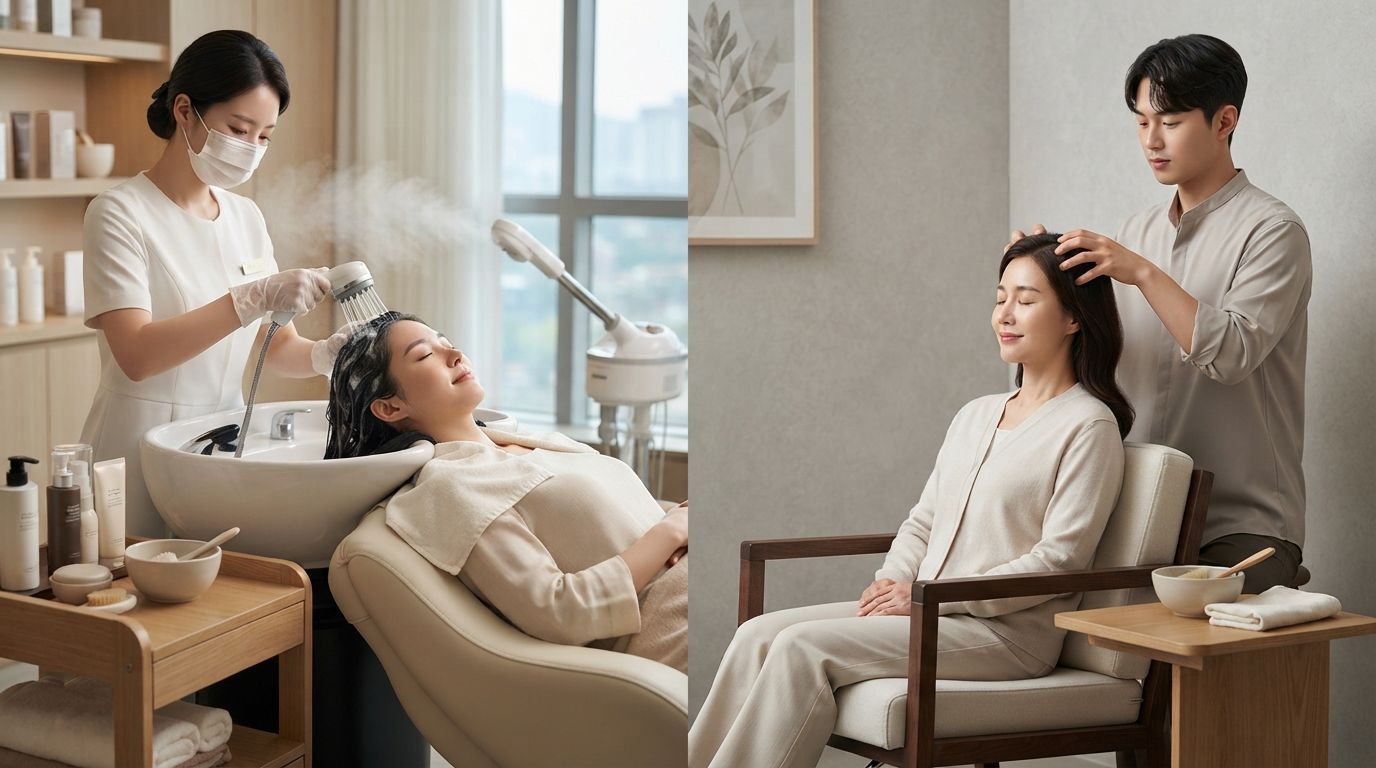
The provider may examine the scalp for dryness, oiliness, flakes, buildup, and visible irritation. This can help determine whether the treatment should emphasize hydration, cleansing, or soothing care.
Gentle Cleansing
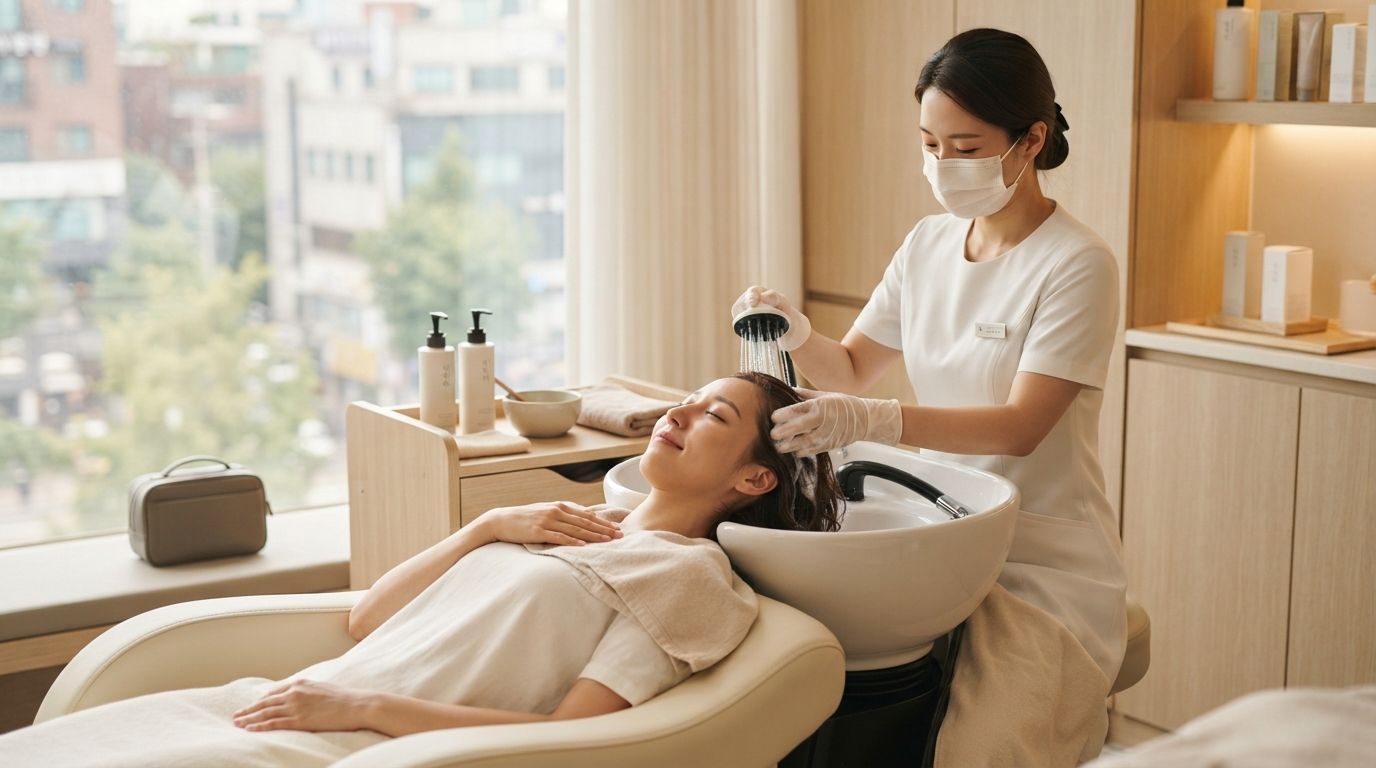
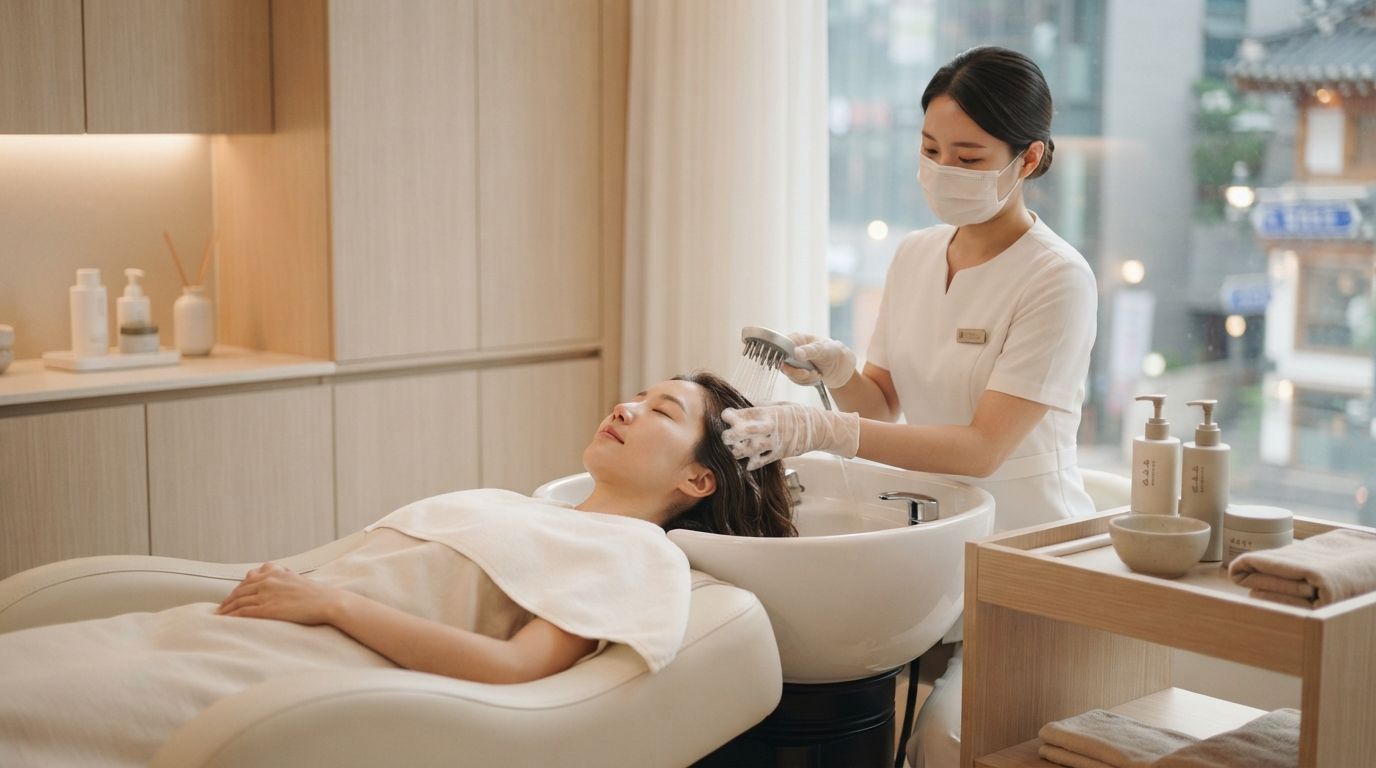
A mild cleansing step removes sweat, excess oil, and product residue. For a sensitive scalp, avoiding excessive friction is important.
Thorough rinsing is also important because remaining shampoo or other products may contribute to irritation. (aad.org)
Hydration and Soothing Treatment
A hydration-focused treatment may help improve the feeling of dryness and tightness. Soothing products may also be selected when the scalp feels easily irritated.
Gentle Massage
A Korean head spa may include scalp massage as part of the experience. For sensitive scalps, pressure should remain comfortable and should not cause pain or burning.
Finishing Care
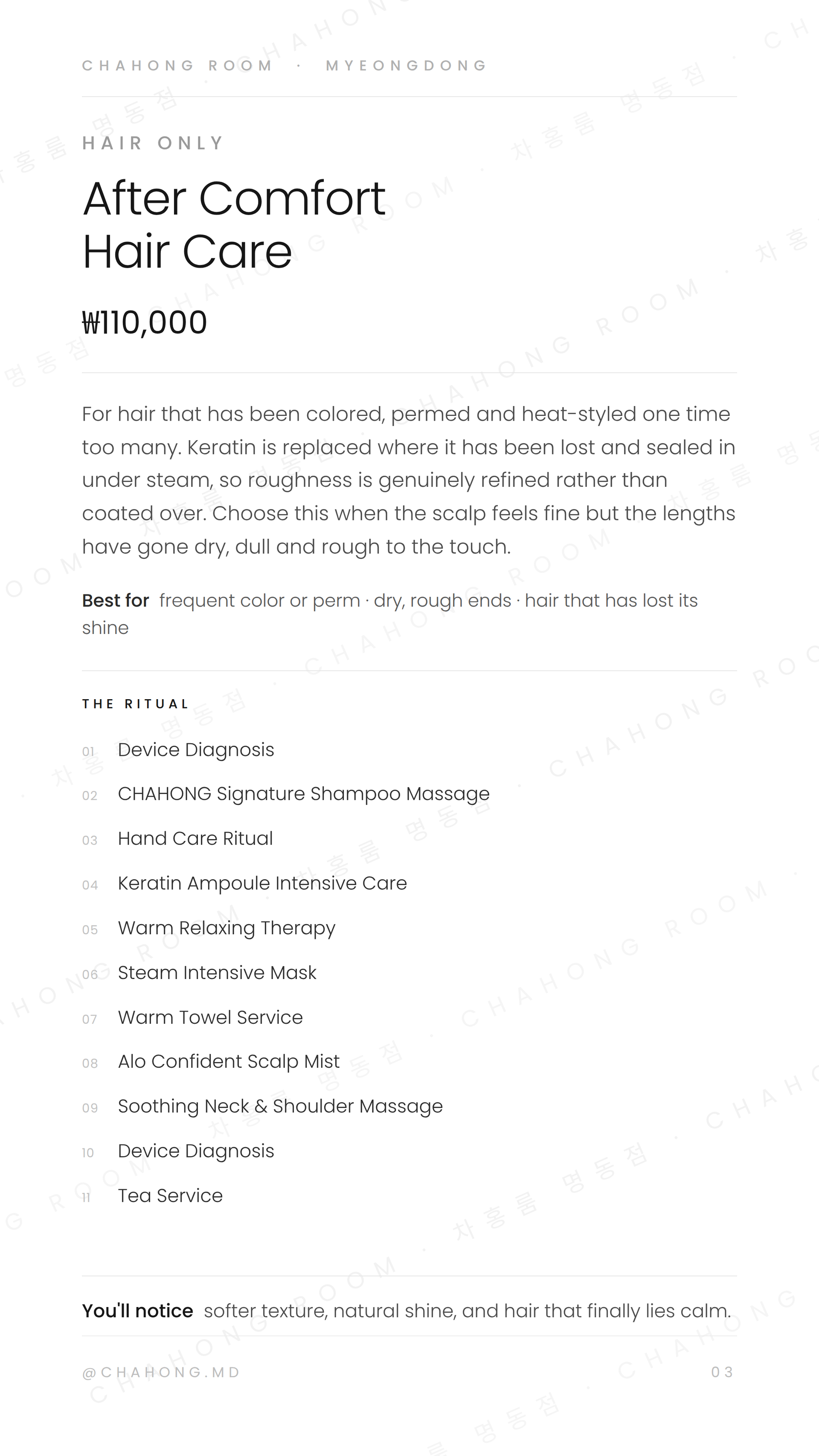
The treatment may conclude with scalp-conditioning products and gentle hair drying. Depending on the program, additional hair care may be included.
Korean Scalp Care vs. Intensive Scalp Treatment
Sensitive scalps do not necessarily benefit from more aggressive treatment.
Gentle Korean scalp care may emphasize:
- Mild cleansing
- Hydration
- Soothing products
- Light massage
- Reduced friction
- Gentle or limited exfoliation
- Customized treatment intensity
More intensive scalp treatments may emphasize:
- Deeper cleansing
- Stronger exfoliation
- More extensive buildup removal
- Oil-control treatments
- Greater scalp stimulation
If your scalp is already sensitive, discuss the treatment intensity before beginning rather than assuming an intensive program will produce better results.
Is Scalp Exfoliation Suitable for Sensitive Skin?
It depends on the condition of the scalp.
Gentle exfoliation may help remove surface buildup in some cases, but frequent or aggressive exfoliation can increase irritation. This is particularly important when the scalp is already red, itchy, burning, or uncomfortable.
Before treatment, ask whether exfoliation can be reduced or skipped. A sensitive-scalp treatment may be better focused on gentle cleansing and hydration.
Who May Consider Korean Scalp Care?
Korean scalp care may be suitable for people who experience:
- Mild scalp sensitivity
- Dryness or tightness
- Occasional itching
- Mild flaking
- Product buildup
- Discomfort after frequent shampooing
- Sensitivity after coloring or styling
- Seasonal scalp dryness
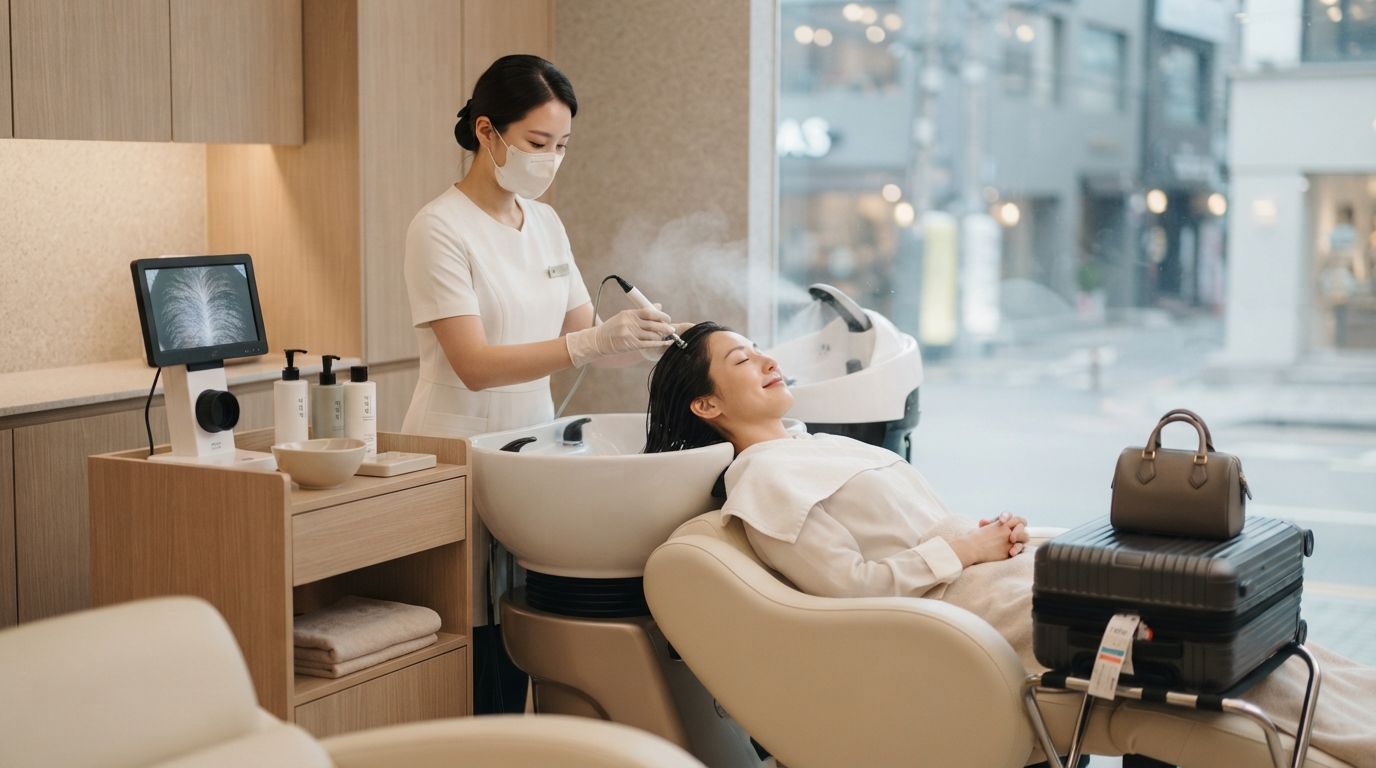
It can also be an option for international visitors who want to experience Korean scalp-care or head spa treatments while visiting Seoul.
However, cosmetic scalp care is not appropriate for every scalp problem.
How Long Does Korean Scalp Care Take?
Treatment duration depends on the provider and selected program.
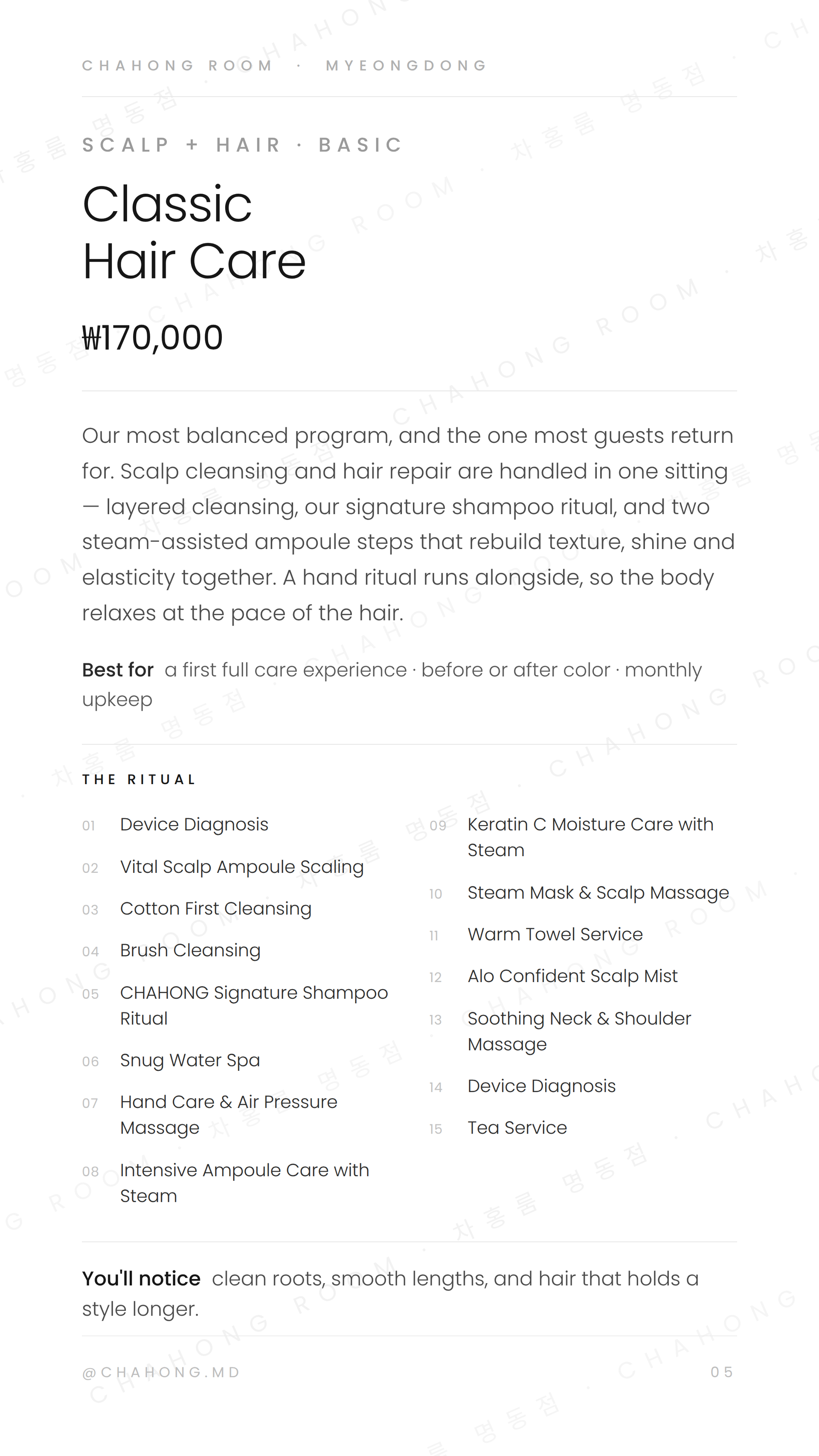
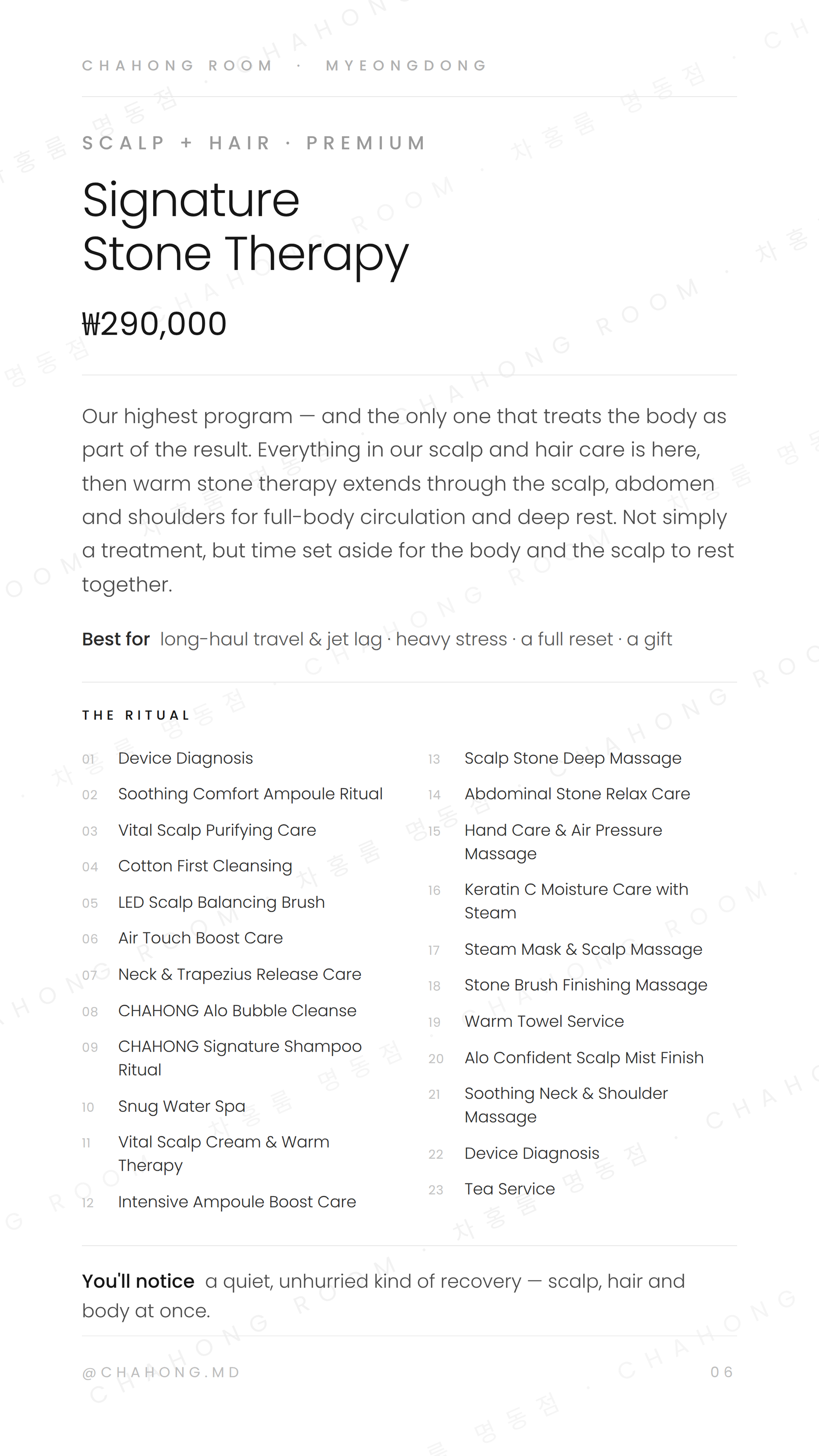
A basic scalp-care session may focus on assessment, cleansing, and hydration. A longer Korean head spa may include scalp analysis, cleansing, treatment application, massage, and finishing care.
Before booking, ask:
- How long is the complete session?
- Is scalp analysis included?
- Is exfoliation included?
- Can exfoliation be skipped?
- What products are used?
- Is the treatment suitable for sensitive skin?
- Can massage pressure be adjusted?
Knowing the treatment steps in advance can help you choose a service that matches your scalp.
How Often Should Sensitive Scalp Care Be Done?
There is no universal frequency.
Occasional professional scalp care may be enough for someone with mild dryness or sensitivity. Your ideal schedule depends on scalp condition, daily hair-care habits, treatment intensity, and how your scalp responds.
If sensitivity repeatedly returns, increasing the number of scalp treatments may not solve the problem. Recurring symptoms should be evaluated to determine whether an underlying condition is contributing to the sensitivity.
Sensitive Scalp Care at Home
Professional scalp care should be supported by a gentle home routine.
Consider:
- Washing with a mild shampoo suitable for your scalp
- Avoiding very hot water
- Rinsing products thoroughly
- Avoiding aggressive scratching
- Limiting frequent exfoliation
- Reducing unnecessary heat styling
- Introducing new products one at a time
- Stopping products that consistently cause irritation
- Being cautious with heavily fragranced products if your scalp is reactive
If a specific product appears to trigger itching, redness, or burning, discontinuing it may help prevent continued irritation. (aad.org)
When Is Korean Scalp Care Not Enough?
A scalp-care treatment should not replace medical evaluation when symptoms suggest an underlying condition.
Consider seeing a dermatologist if you experience:
- Persistent or severe itching
- Significant redness
- Burning or pain
- Thick or widespread scaling
- Sores or crusting
- Oozing
- A persistent rash
- Sudden or unexplained hair loss
- Symptoms that continue despite gentle scalp care
Conditions such as seborrheic dermatitis, psoriasis, eczema, and infections can affect the scalp and may require targeted treatment. (aad.org)
Korean Scalp Care for International Visitors in Seoul
Seoul offers a wide range of Korean scalp-care and head spa experiences. International visitors should explain their scalp sensitivity before treatment rather than simply requesting a standard program.
Useful questions include:
- Is English-language assistance available?
- Is scalp analysis included?
- Can the treatment be customized?
- What products will be applied?
- Can strong exfoliation be avoided?
- Can massage pressure be adjusted?
- What aftercare is recommended?
If you have an active scalp problem, ask whether the provider recommends medical evaluation before receiving a cosmetic treatment.
Benefits and Limitations
Appropriate Korean scalp care may provide:
- Gentle cleansing
- Improved feeling of hydration
- Reduced feeling of tightness
- Removal of surface residue
- Temporary improvement in scalp comfort
- Relaxation
However, these benefits do not mean that the underlying cause of sensitivity has been treated.
If sensitivity is caused by dermatitis, psoriasis, infection, or another medical condition, targeted treatment may be necessary.
Conclusion
Korean scalp care for sensitive scalp emphasizes gentle cleansing, hydration, soothing care, and customized treatment intensity. It can be a comfortable option for people experiencing mild dryness, tightness, occasional itching, or sensitivity from everyday hair care.
For a sensitive scalp, aggressive exfoliation and excessive stimulation may be counterproductive. Communicating your symptoms and preferences before treatment can help the provider adjust the session.
Persistent redness, severe itching, pain, thick scaling, sores, or unexplained hair loss should be evaluated professionally rather than managed solely through cosmetic scalp treatments.
Frequently Asked Questions
What is Korean scalp care for sensitive scalp?
It is a gentle approach to scalp care that may combine cleansing, hydration, soothing products, scalp analysis, and light massage while minimizing unnecessary irritation.
Is Korean scalp care suitable for sensitive skin?
It can be, provided the treatment is appropriately customized. Tell the provider about your sensitivity before treatment and ask whether strong exfoliation or stimulation can be avoided.
Should I exfoliate a sensitive scalp?
Not necessarily. Gentle exfoliation may be appropriate in some situations, but excessive exfoliation can irritate sensitive skin. If the scalp is already inflamed or painful, professional assessment may be more appropriate.
Can Korean scalp care help an itchy scalp?
It may improve mild itching associated with dryness or surface buildup. Persistent or severe itching can have other causes and may require medical evaluation.
How often should I receive Korean scalp care?
There is no fixed schedule. Frequency should depend on your scalp condition, treatment intensity, home-care routine, and response to treatment.
When should I see a dermatologist?
Seek professional evaluation if scalp sensitivity is persistent or severe, or if it is accompanied by significant redness, pain, thick scaling, sores, crusting, or unexplained hair loss.