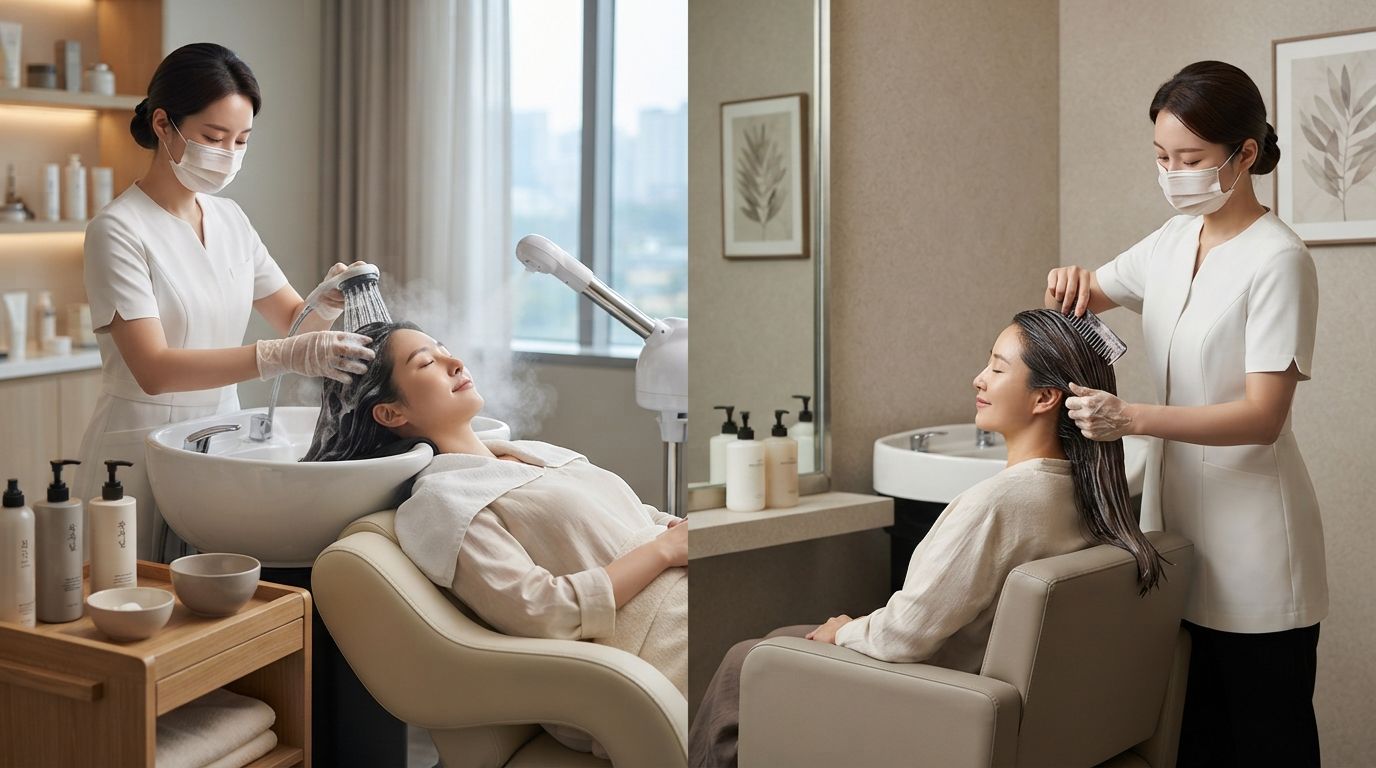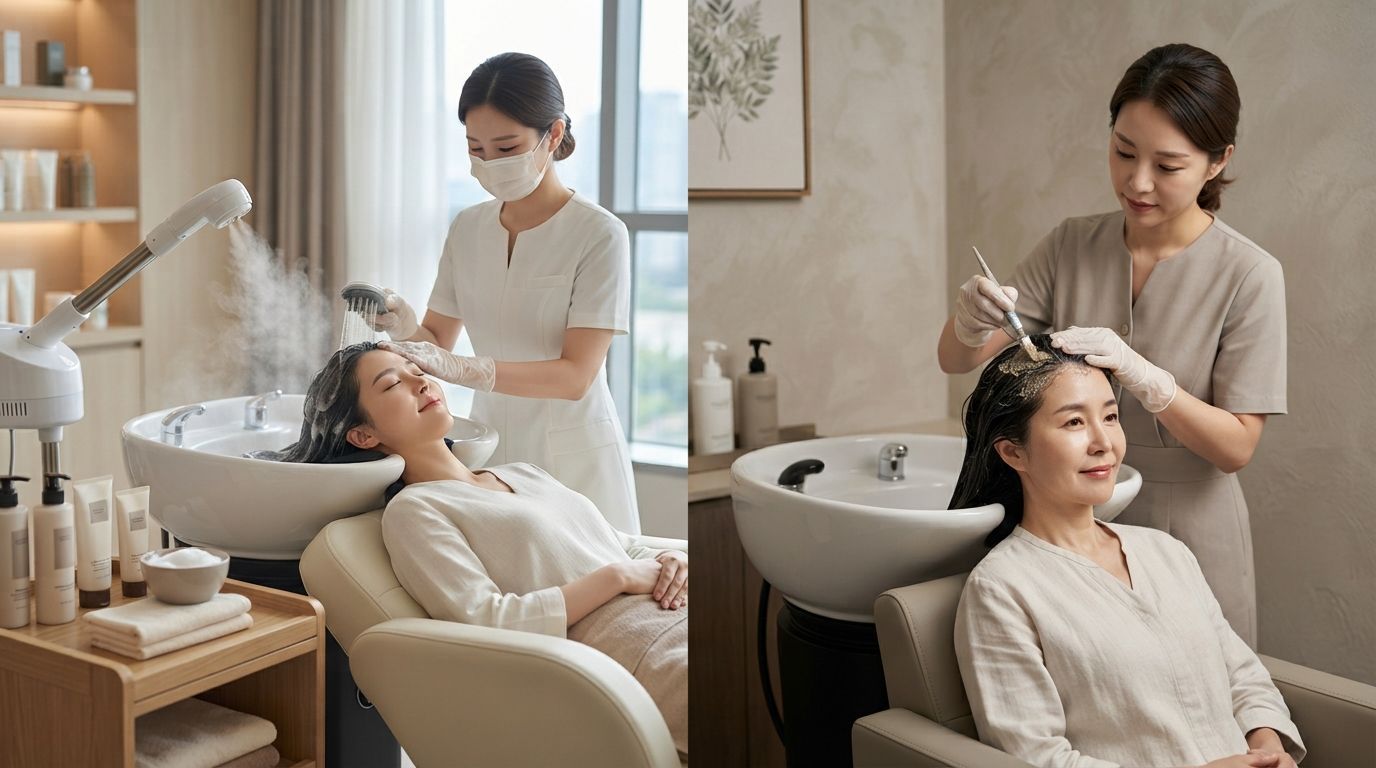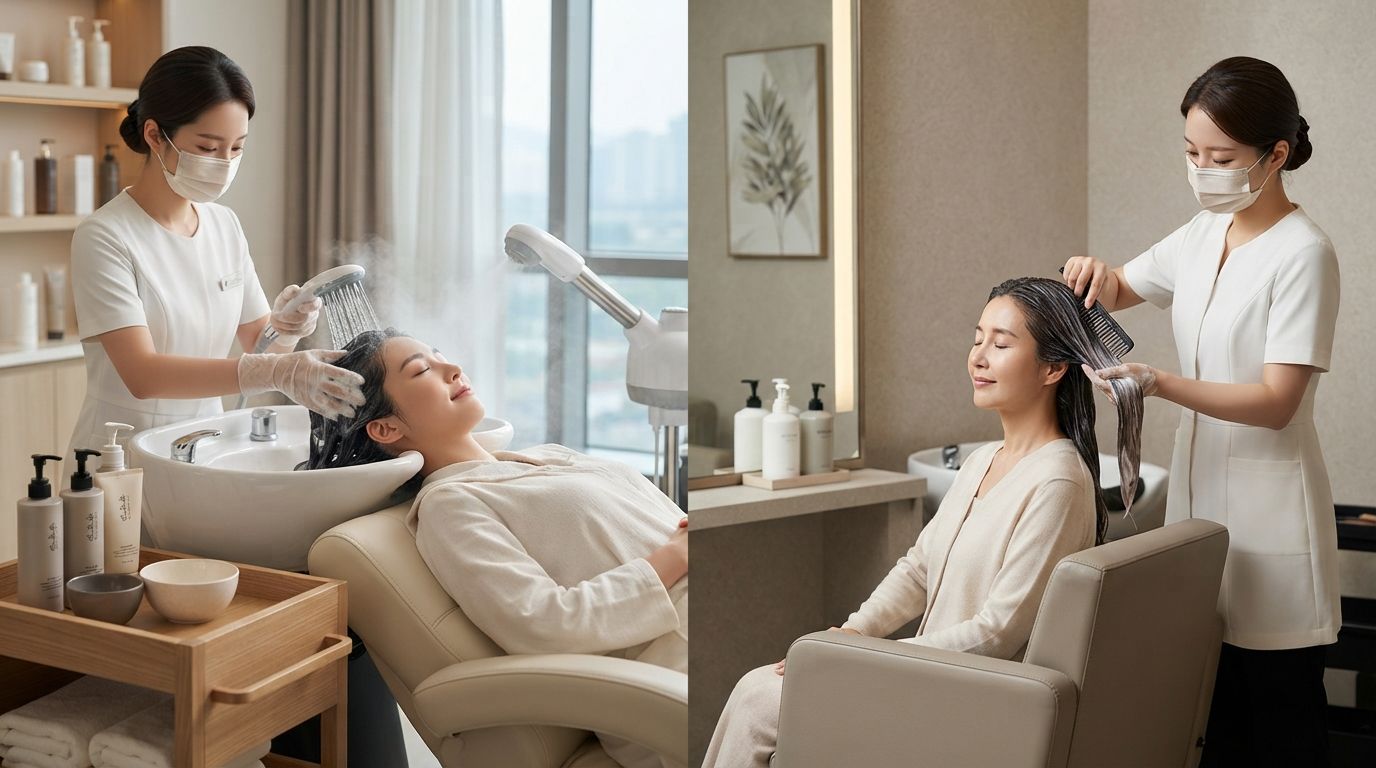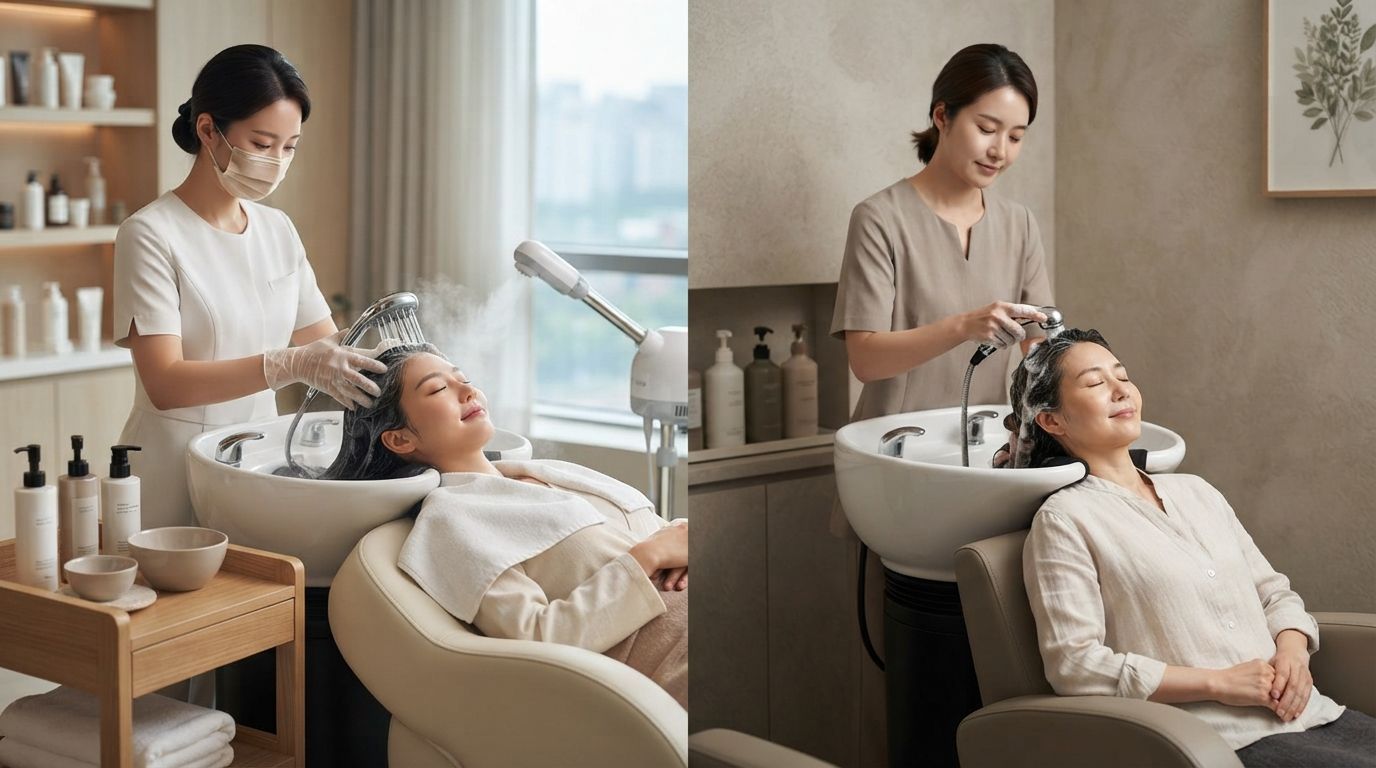
Scalp Deep Cleaning in Myeongdong
Scalp Deep Cleaning in Myeongdong
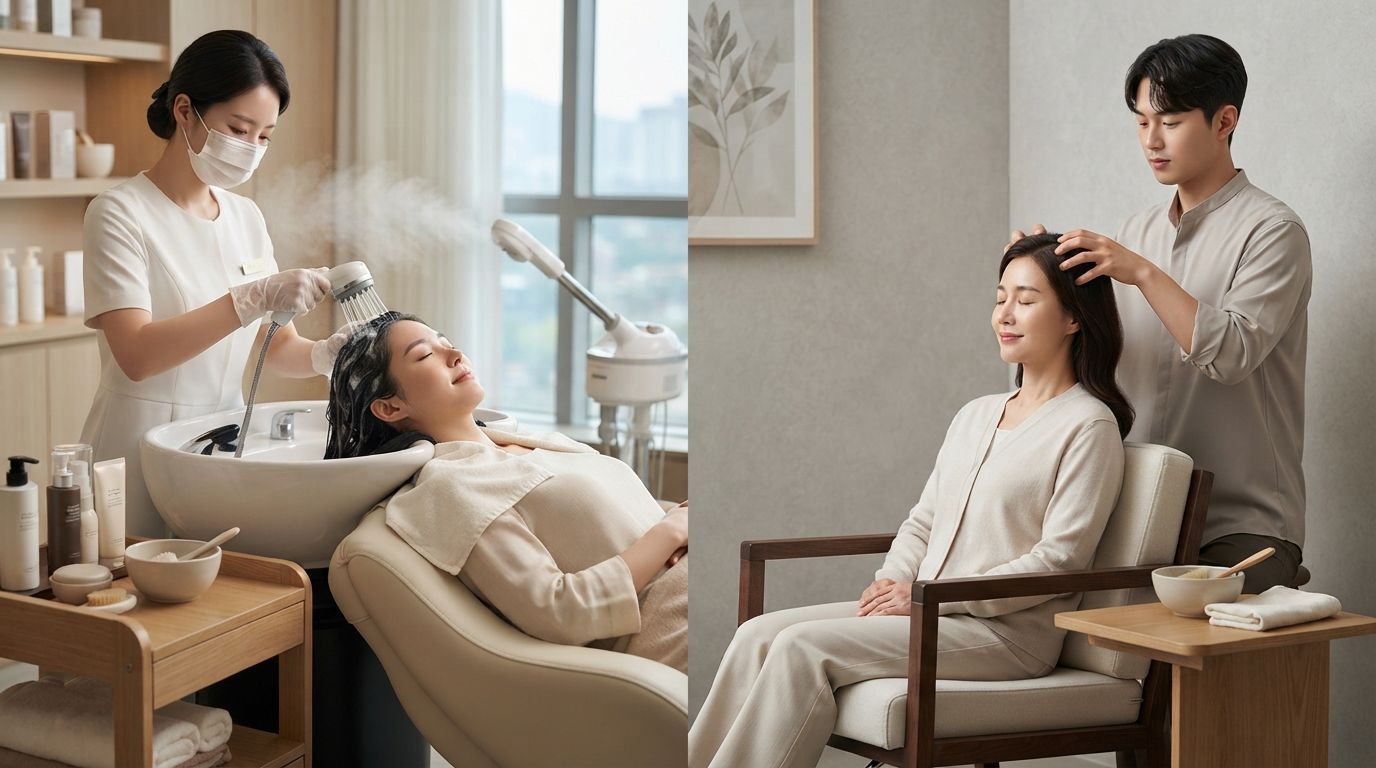
Scalp deep cleaning in Myeongdong is a popular Korean scalp-care option for people dealing with excess oil, product buildup, dead skin, scalp odor, or a heavy feeling after regular shampooing. Unlike ordinary hair washing, a professional scalp-cleaning session may combine scalp analysis, exfoliation, cleansing, massage, and moisturizing care.
The main purpose is to remove accumulated oil, residue, and dead skin from the scalp while keeping the scalp comfortable and balanced. The exact treatment depends on the person's scalp condition, sensitivity, and concerns.
What Is Scalp Deep Cleaning?
Scalp deep cleaning is a professional cleansing treatment designed to go beyond routine shampooing. It may be offered as part of a Korean head spa or specialized scalp-care program.
A typical deep-cleaning approach may include:
- Scalp condition assessment
- Gentle exfoliation or scalp scaling
- Removal of excess sebum and product residue
- Thorough scalp washing
- Scalp massage
- Moisturizing or soothing care
- Hair drying and finishing
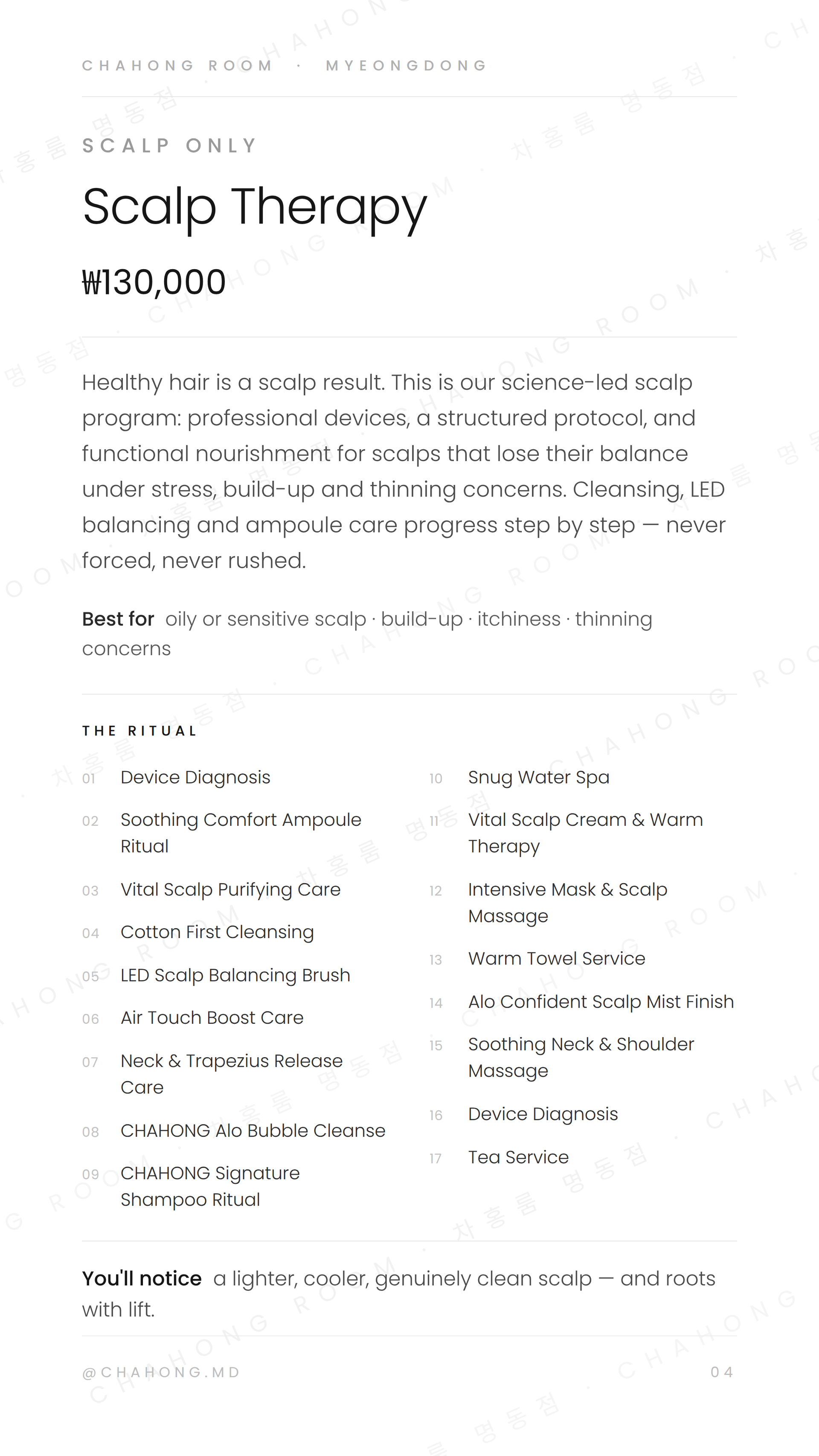
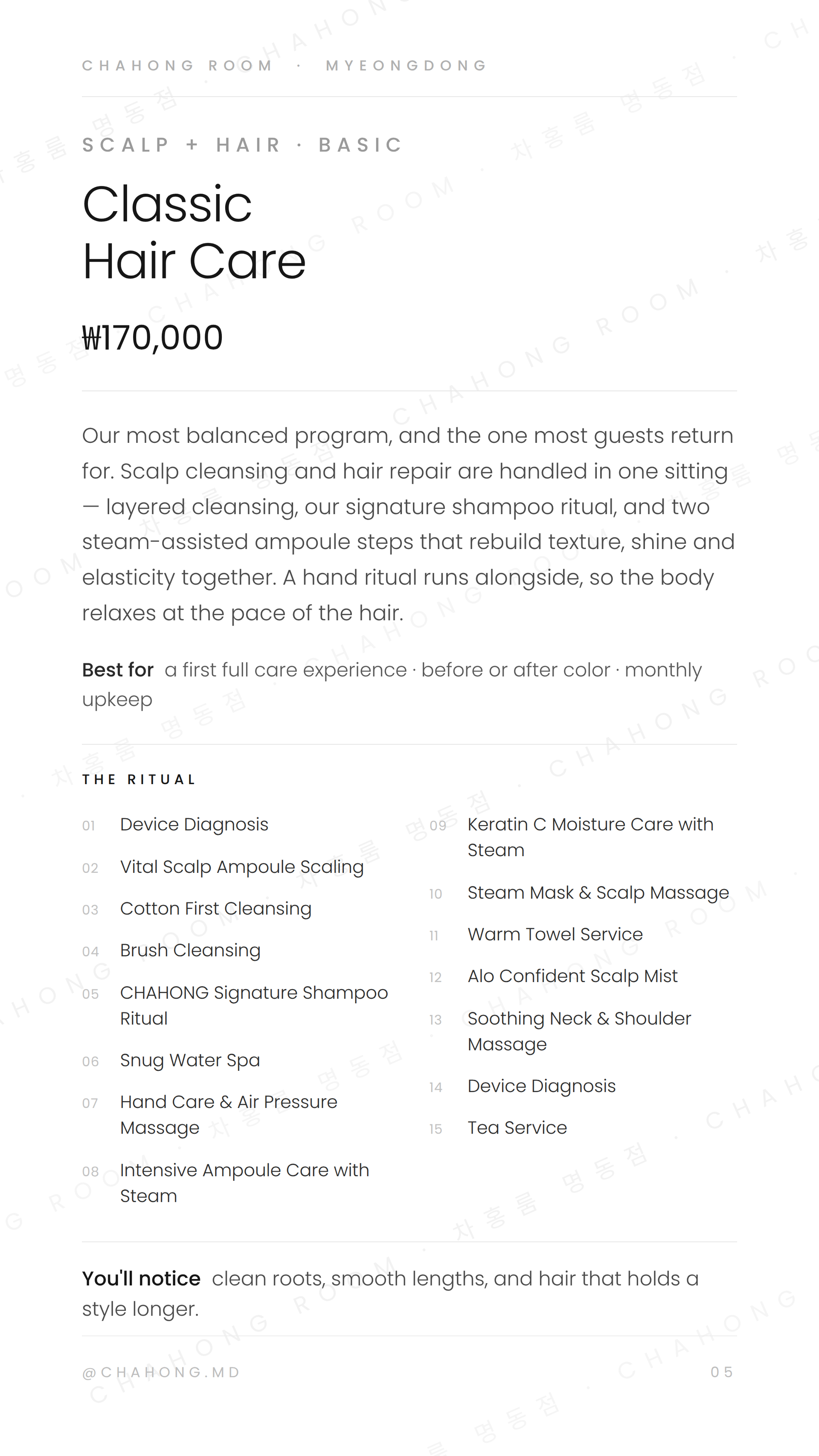
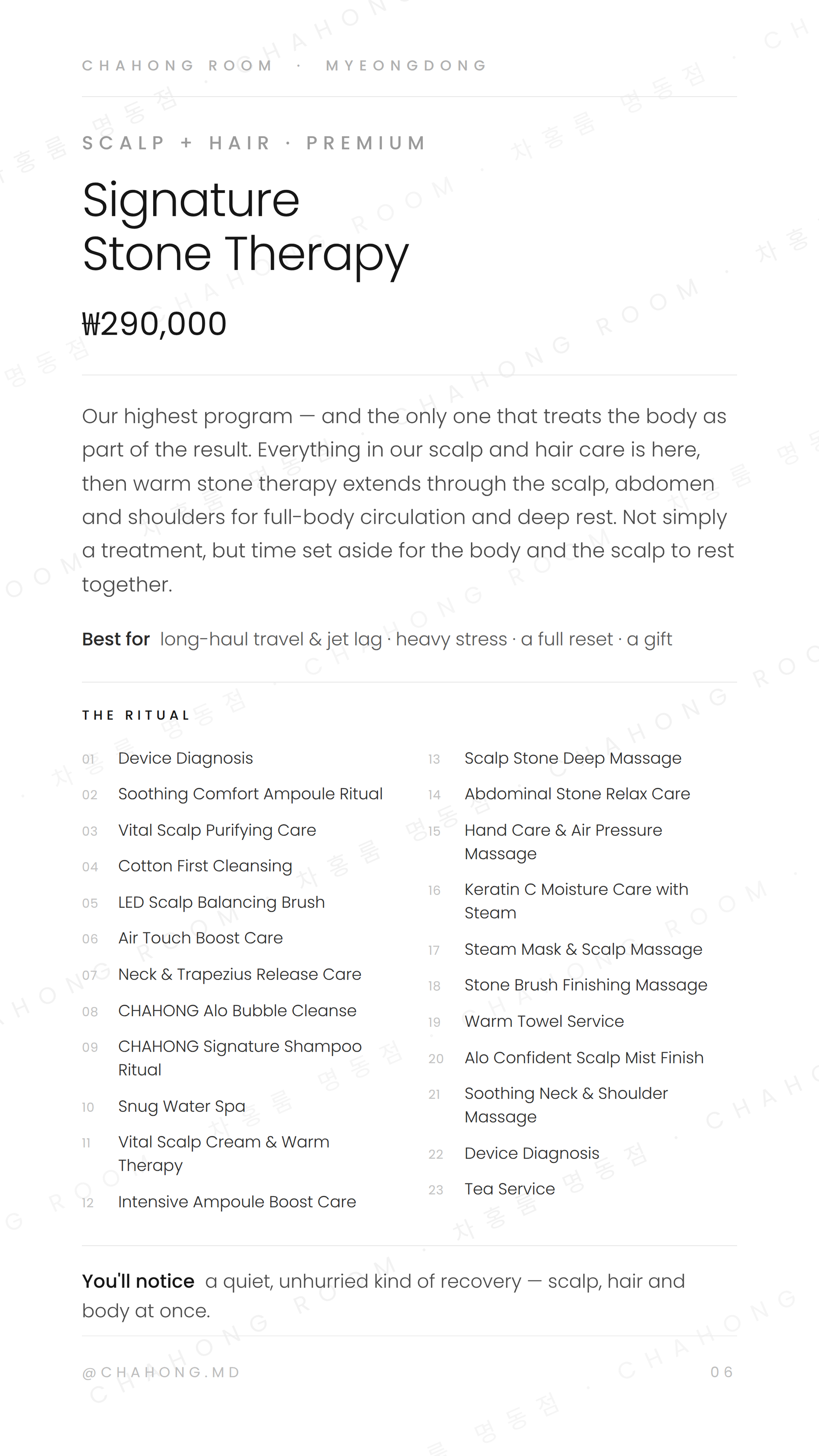
The specific steps vary between providers and treatment programs. Some Myeongdong scalp-care programs describe multi-step processes that combine exfoliation, deep cleansing, massage, and moisturizing treatments.
Why Consider Deep Scalp Cleaning in Myeongdong?
Excess Oil and Sebum
An oily scalp can accumulate sebum more quickly, particularly when combined with sweat, styling products, or infrequent washing. Deep cleansing can help remove surface buildup and leave the scalp feeling cleaner and lighter.
However, professional cleansing does not permanently reduce the body's natural production of sebum. If excessive oil is persistent or accompanied by inflammation, a dermatology assessment may be more appropriate.
Product and Dead Skin Buildup
Hair sprays, dry shampoo, styling products, sebum, and dead skin cells can accumulate on the scalp. This may contribute to a coated or heavy sensation.
A professional scalp treatment may use controlled exfoliation and cleansing to remove this buildup without relying on aggressive scrubbing.
Scalp Odor and Heavy Feeling
Sweat and sebum can contribute to scalp odor. Thorough cleansing may temporarily improve freshness and comfort, particularly after travel, humid weather, or extensive use of styling products.
What Happens During a Scalp Deep-Cleaning Treatment?
The exact sequence depends on the provider, but a professional session commonly follows several stages.
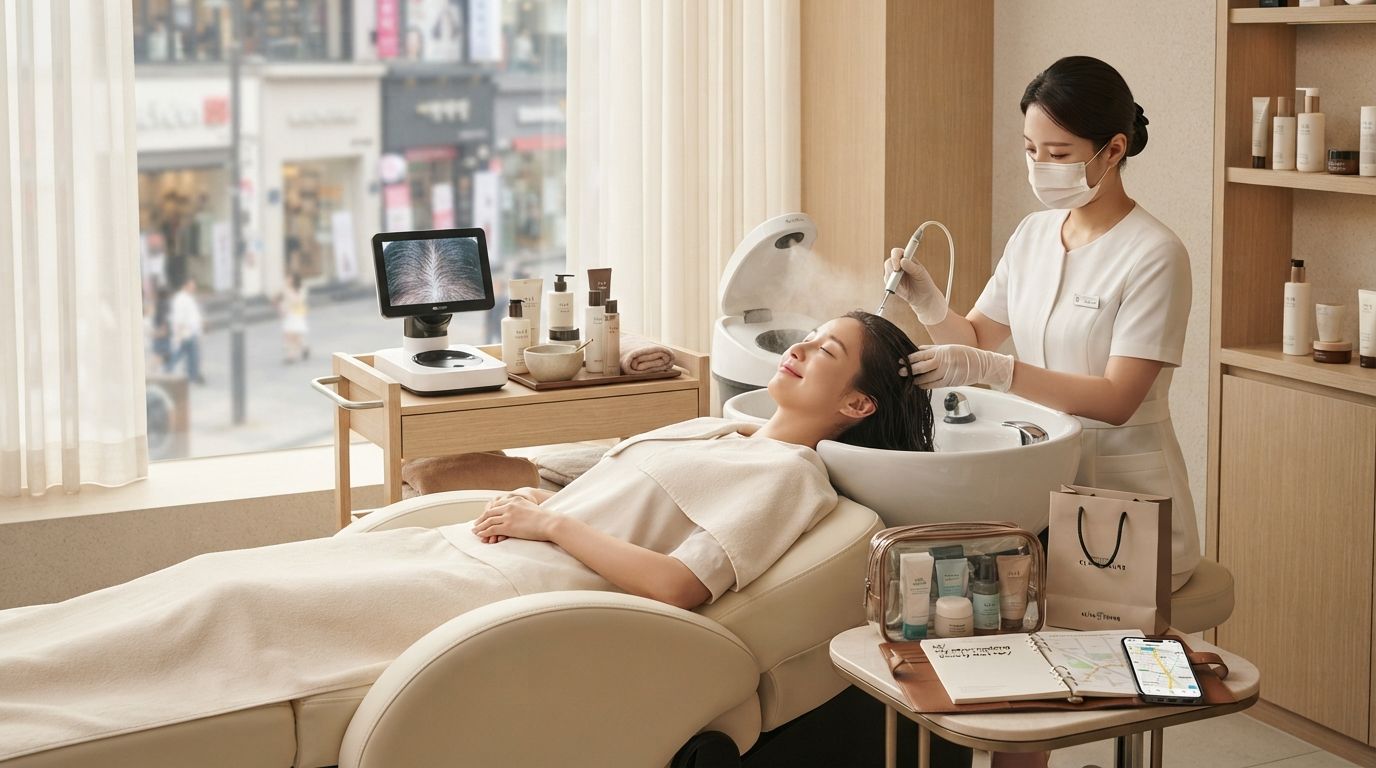
1. Scalp Assessment
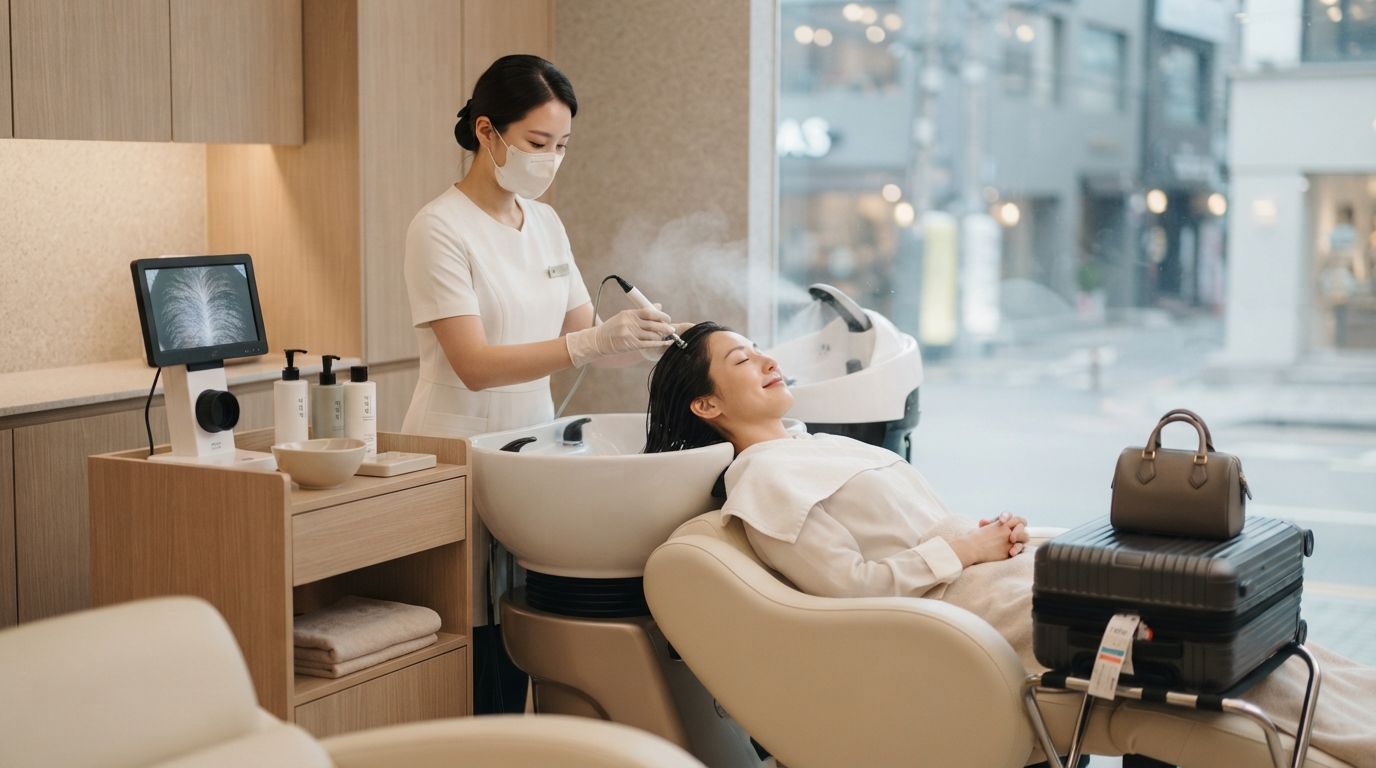
The scalp may first be examined for oiliness, buildup, dryness, flaking, or sensitivity. Some programs use scalp imaging or magnification to help evaluate the condition before and after treatment.
2. Scalp Exfoliation
A gentle exfoliating or scaling step can help loosen dead skin and accumulated residue. The intensity should be appropriate for the scalp rather than based simply on how deeply the provider can scrub.
3. Deep Cleansing
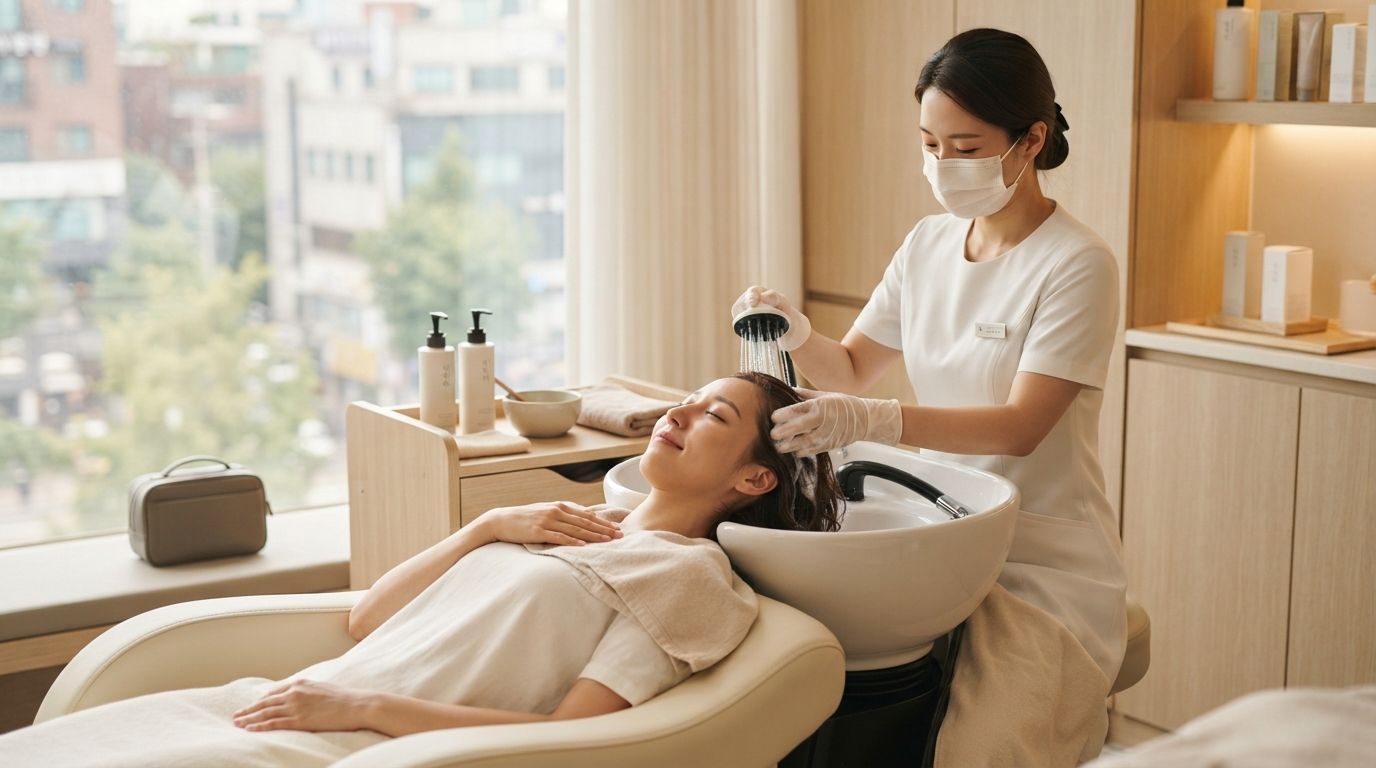
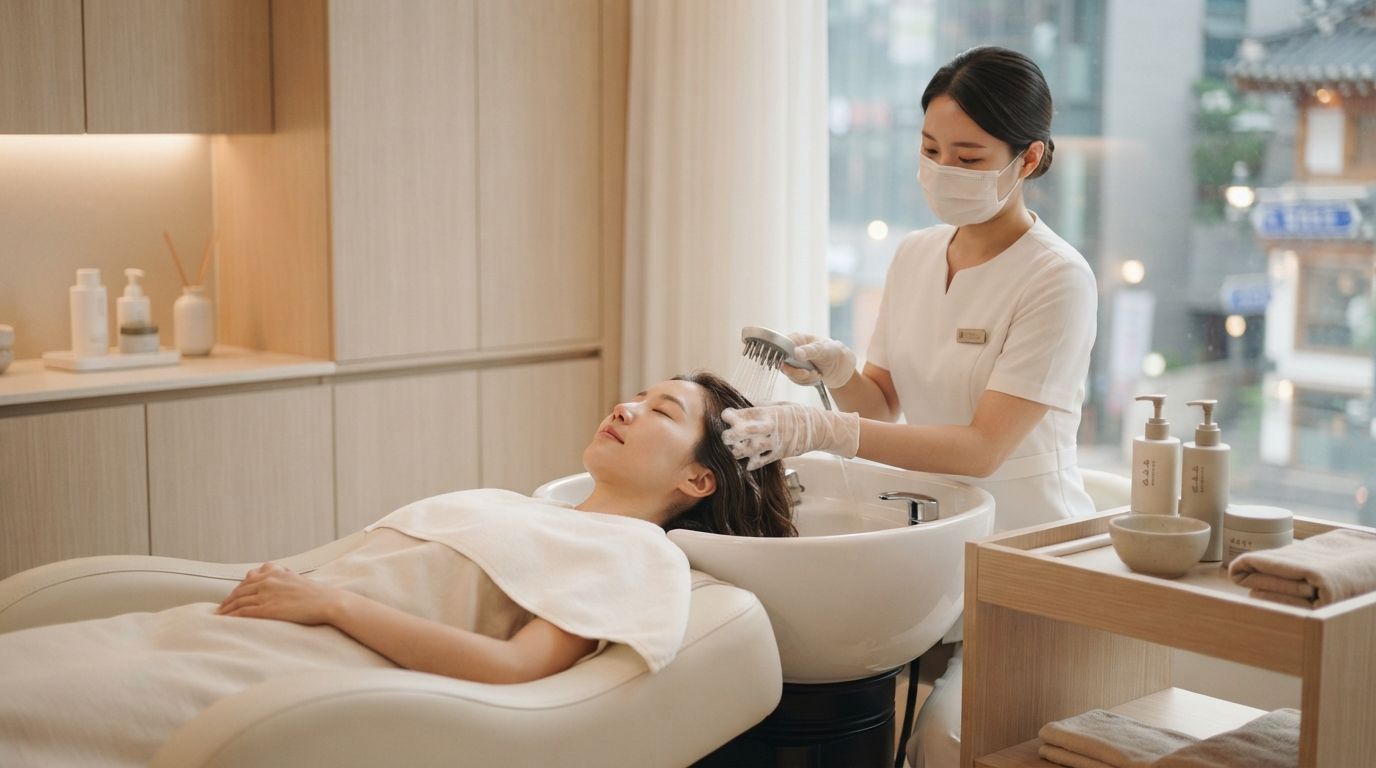
A scalp-focused cleansing process removes loosened debris, excess oil, and product residue. Some Korean head spa programs combine cleansing with water-based or specialized scalp treatments.
4. Massage and Scalp Care
Massage is often included as part of the head spa experience. It can provide relaxation and help relieve temporary scalp and neck tension.
5. Moisturizing or Soothing Finish
After cleansing, some programs apply a moisturizing or balancing treatment. This is particularly relevant when the scalp feels dry or sensitive after cleansing.
Who May Benefit From Scalp Deep Cleaning?
Scalp deep cleaning may be worth considering if you experience:
- Oily or greasy roots
- Visible scalp buildup
- Frequent use of styling products
- A heavy or coated scalp feeling
- Scalp odor
- Mild dryness or flaking associated with buildup
- A desire for professional scalp care during a Seoul trip
It can also be a practical option for travelers who want a dedicated scalp-care session rather than a standard shampoo service.
When Deep Cleaning May Not Be Enough
Deep cleaning is primarily a scalp-care service, not a treatment for every scalp disorder.
Persistent redness, severe itching, painful bumps, significant scaling, sores, or unexplained hair loss may require evaluation by a qualified medical professional. Conditions such as seborrheic dermatitis, psoriasis, eczema, or folliculitis may need condition-specific treatment rather than repeated cosmetic cleansing.
How Often Should You Get Scalp Deep Cleaning?
There is no universal schedule. Frequency depends on scalp oil production, product use, hair-washing habits, sensitivity, and the type of treatment performed.
Some professional scalp programs recommend periodic maintenance, but more frequent treatment is not automatically better. Excessive exfoliation or overly aggressive cleansing may irritate sensitive skin.
A suitable schedule should therefore be based on how your scalp responds rather than simply following a fixed number of sessions.
Scalp Deep Cleaning vs Regular Shampooing
Regular shampooing is essential for everyday scalp hygiene, while professional deep cleaning provides a more structured approach to removing buildup.
The difference is mainly in the depth and process of care, not that ordinary shampoo is ineffective.
A professional session may be useful when:
- Regular washing leaves noticeable buildup
- You use substantial styling products
- Your scalp feels congested or heavy
- You want a more intensive cleansing experience
- You want professional assessment of your scalp condition
For everyday maintenance, however, appropriate home washing remains important.
What Should You Check Before Booking in Myeongdong?
Myeongdong is a major tourist and shopping district in Seoul, and scalp-care services are available in several formats, from relaxing head spas to more structured scalp-care programs.
Before booking, ask:
- Is scalp assessment included?
- What cleansing and exfoliation steps are performed?
- How long does the treatment take?
- Is the service suitable for sensitive scalps?
- What products are applied?
- Is the treatment primarily cosmetic or intended to address a specific scalp condition?
- Is English consultation available if needed?
- What aftercare is recommended?
For international visitors, confirming the treatment duration and communication options in advance can make scheduling easier, particularly when fitting scalp care between sightseeing activities.
Risks and Limitations
Scalp deep cleaning is generally a non-invasive cosmetic care service, but irritation can occur, particularly if exfoliation is too aggressive or unsuitable products are used.
Possible temporary effects include dryness, sensitivity, redness, or irritation. People with an active scalp condition should avoid assuming that deeper cleansing will resolve the underlying problem.
The results are also temporary. A professional treatment can remove existing buildup, but new sebum and residue naturally accumulate over time.
Conclusion
Scalp deep cleaning in Myeongdong can provide a thorough scalp-care experience for people concerned about oil, buildup, product residue, or a heavy scalp feeling. A typical session may combine assessment, exfoliation, deep cleansing, massage, and moisturizing care.
The most important consideration is choosing a treatment appropriate for your scalp condition. If symptoms include persistent inflammation, significant scaling, painful lesions, or hair loss, professional medical evaluation may be more appropriate than cosmetic scalp cleaning alone.
FAQs
Is scalp deep cleaning the same as a head spa?
Not exactly. Deep cleaning is usually the cleansing-focused part of scalp care, while a Korean head spa may combine cleansing with exfoliation, massage, relaxation, and additional scalp treatments.
How long does scalp deep cleaning take in Myeongdong?
Treatment duration varies by provider and program. Some deep-cleansing head spa programs list sessions of approximately 60–90 minutes, while other scalp-care programs may have different durations.
Can scalp deep cleaning remove excess oil?
It can remove existing sebum and buildup from the scalp, which may make the scalp feel cleaner and lighter. It does not permanently stop natural sebum production.
Is scalp deep cleaning suitable for a sensitive scalp?
It may be, but the exfoliation and cleansing methods should be adapted to scalp sensitivity. People with significant irritation or an active scalp disorder should seek appropriate professional advice before treatment.
Does scalp deep cleaning help with dandruff?
It may remove some visible flakes and buildup, but it does not necessarily treat the underlying cause of dandruff. Persistent dandruff or inflammation may require a medical assessment and condition-specific treatment.